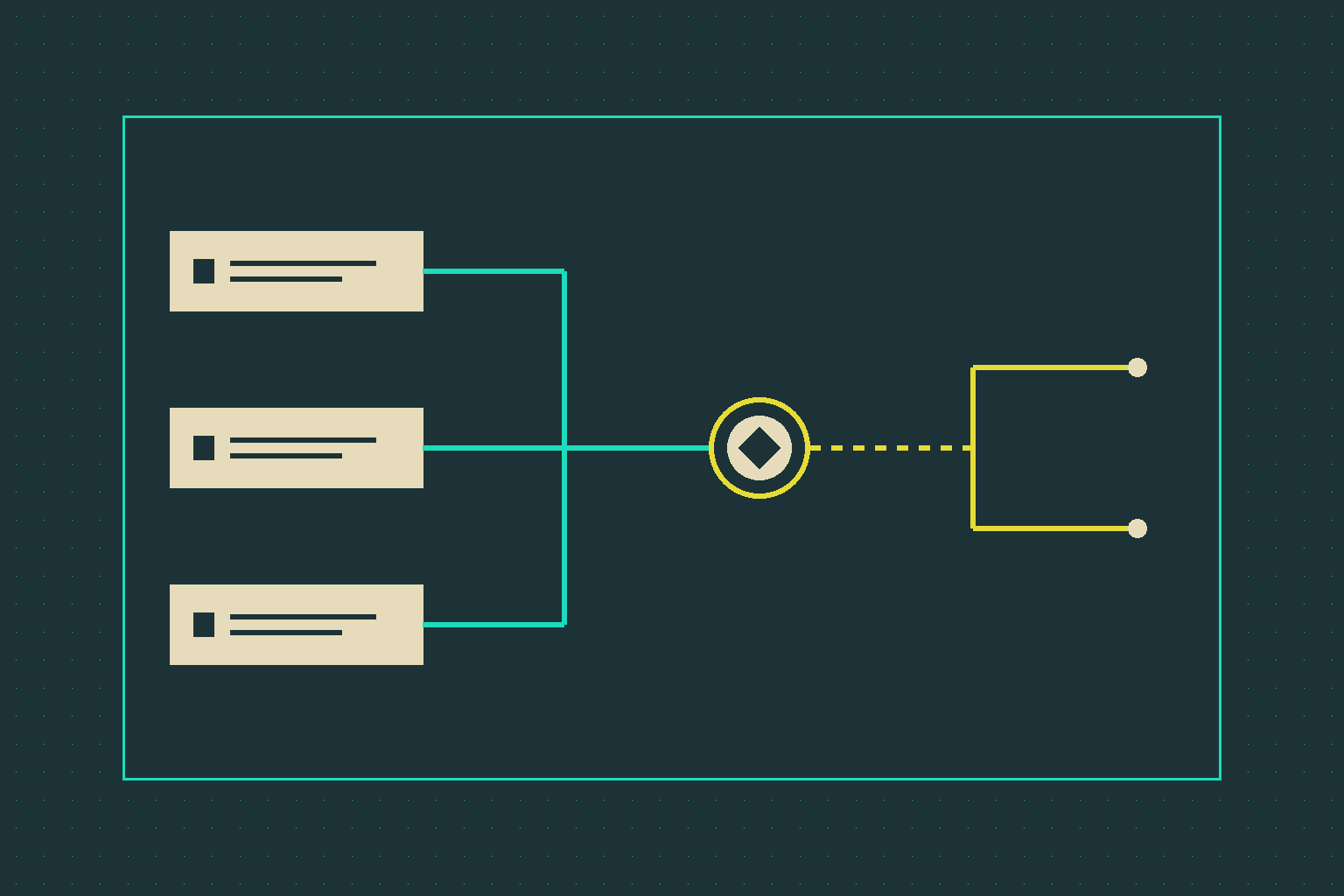
A launch date tells the team when you want to open. It doesn’t tell admissions when to offer a start date or tell a manager whether there is a backup for the first shift. A launch dependency map makes those boundaries visible. It identifies which decisions unlock which activities, who can make those decisions, and what evidence they need.
Build the map around five questions: What are we trying to do? What has to happen first? Who owns that prerequisite? What evidence will they review? What remains on hold until they decide? Put the answers on one page. Keep detailed schedules, training notes, and supporting documents in their existing locations and link to them from the working map. The map should help people make decisions, not become another place they have to update every task.
Start with commitments you don’t want staff to make early
Write down the commitments that would change someone’s plans if they turned out to be wrong. Examples include giving someone a confirmed start date, announcing an opening publicly, asking staff to work a final shift schedule, or distributing arrival instructions to an outside organization. Begin there rather than with a list of every possible launch task.
For each commitment, ask what has to be true before it moves. For example, providing final arrival instructions requires more than the existence of an address. Someone needs to know which entrance is in use, where a person is expected to go first, and how the team will handle a foreseeable change to that path. The operating plan and public wording should refer to the same route. If one changes, the team should know where else the change needs to show up.
Give the person responsible for the decision an explicit choice: approve the commitment as described, hold until more evidence is available, or revise the plan and review the change. Put an actual name against that decision internally. A label like “operations” identifies a team, but not necessarily the individual who can decide or the backup who can act if they are away.
For a broader view of the work that surrounds those decisions, see Alliance’s new program launch and implementation support.
Create one row per decision that affects another team
| Decision | Evidence to review | Owner to name | Can proceed before the decision | Stays on hold until the decision |
|---|---|---|---|---|
| Confirm the arrival route | Dated map and a record of a simulated arrival that highlights any unresolved barrier | Person accountable for approving the arrival plan | Walk the intended route and write draft instructions | Distributing final instructions |
| Move to a confirmed first-week roster | Role-by-shift schedule and documented backup for the work that needs coverage | Person accountable for shift coverage | Draft assignments and simulate one absence | Issuing the draft as the live roster |
| Confirm the first-inquiry workflow | Synthetic test showing how the inquiry reaches its next owner, who acknowledges it, and what they do if it is unresolved | Person accountable for admissions workflow | Rehearse wording and handoffs in a training setting | Relying on that untested path for a new commitment |
| Release the opening communication | Current source for the public facts and the decision record for any dependent activities | Person authorized to release the communication | Write and review copy without distributing it | Posting a launch date or issuing confirmed start information |
Add two dates to each row: when evidence will be reviewed and when the decision will be revisited if a dependency remains open. Use plain statuses: not started, in progress, blocked, or ready for decision. Record issued decisions separately. “Ready for decision” means the owner has the material needed for review. It does not mean they approved it.
If many rows are still open, prioritize the ones that block multiple other actions. A draft name badge and an unresolved first-contact route may both show up on a task list. Only one is likely to change what an outside person can expect to happen. Ask which decision can be made independently and which other teams would have to redo work if it changes.
Turn a facility walk into evidence someone can use
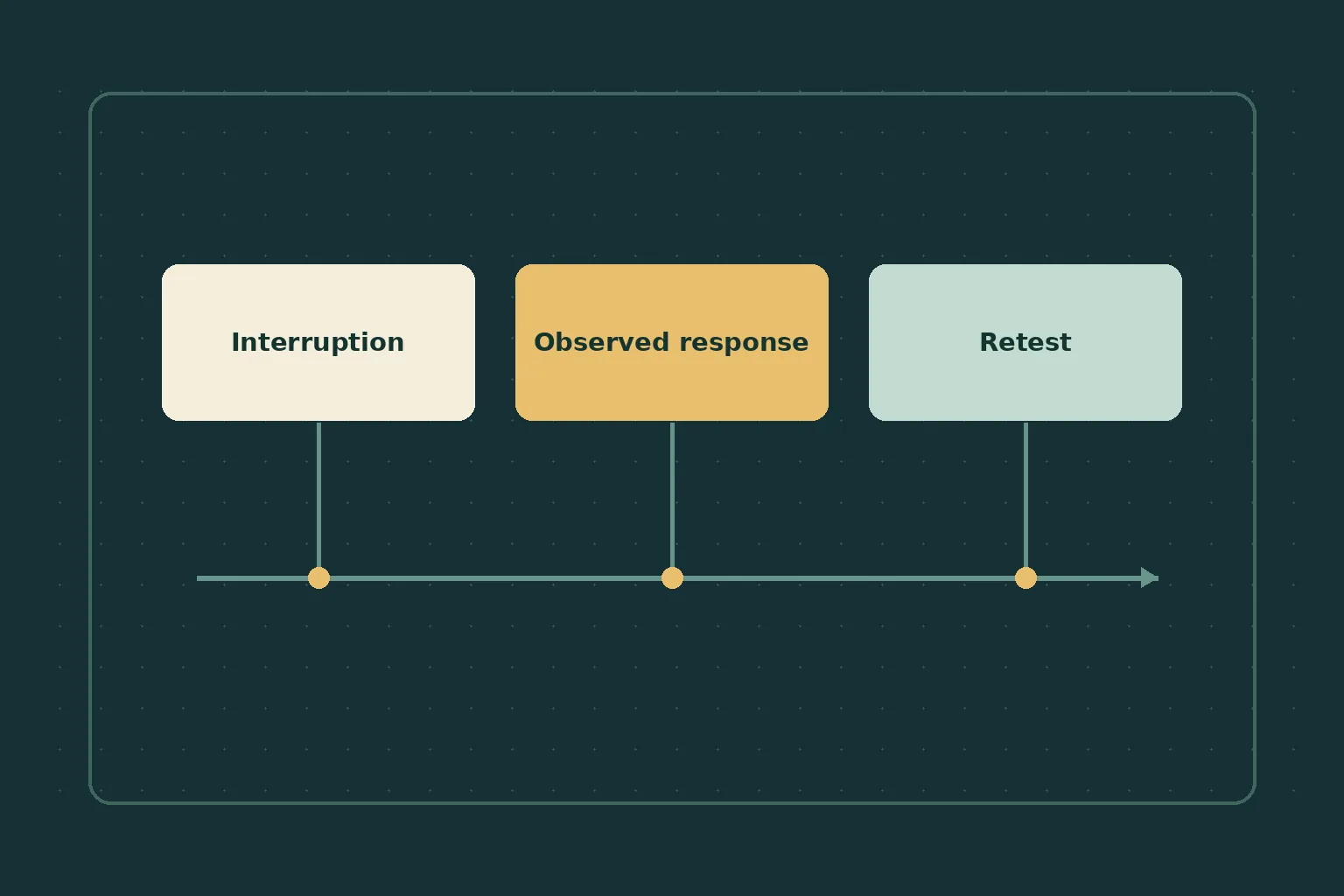
Give a reviewer a starting point and an ordinary task, such as arriving at the building and finding the designated first point of contact. Use a fictional scenario when you can observe without disrupting real activity. Ask the reviewer to record where they needed a hint, where the plan in use differed from the signs or instructions, and whether the intended alternate route made sense. A successfully completed walk with three hints is still a useful finding; it just isn’t evidence that the instructions work without help.
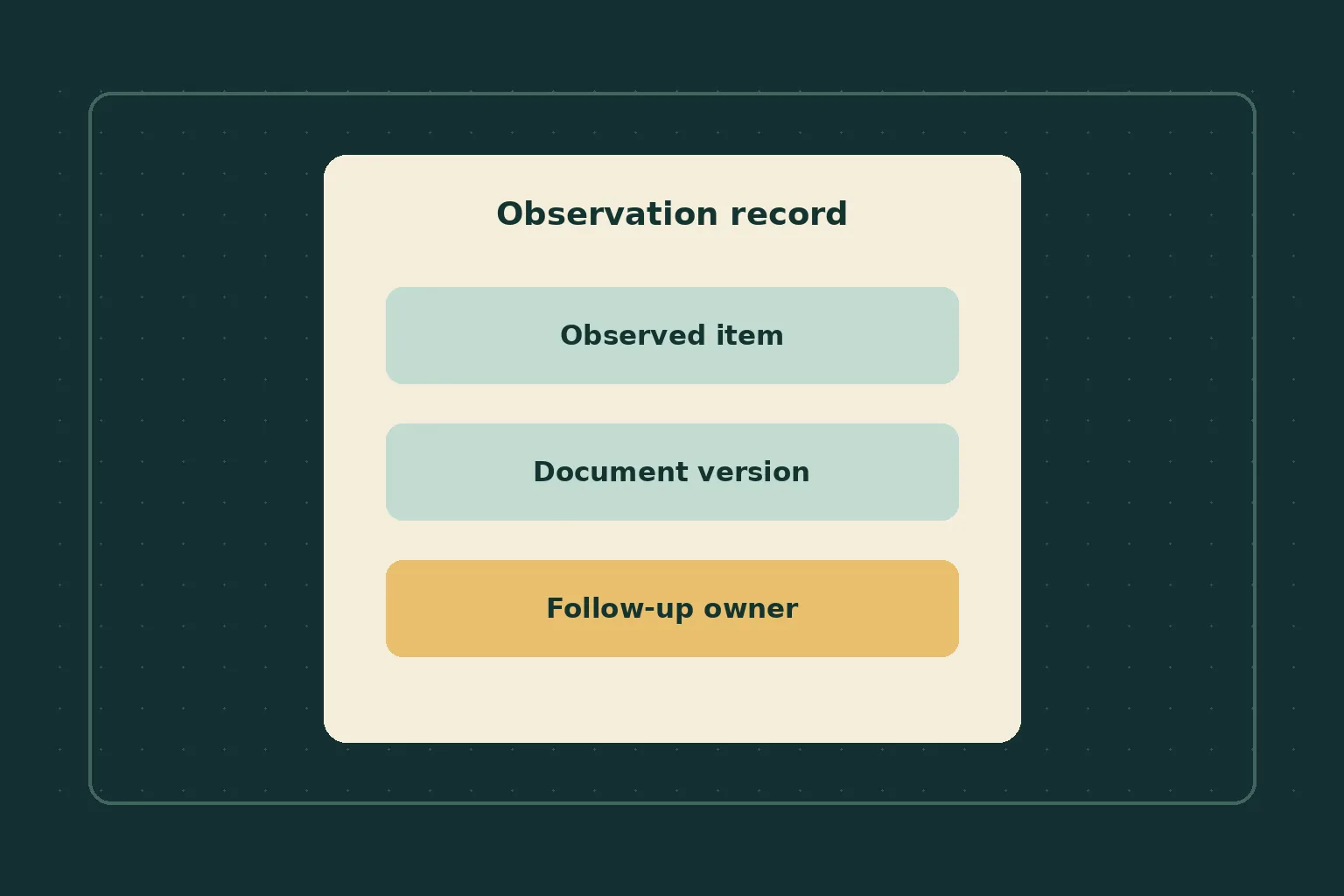
Translate observations into decisions instead of broad judgments. “Arrival workflow needs work” won’t tell a manager which operating plan or public instruction is blocked. “The written arrival note sends people to the south entrance, while the working plan uses the east entrance” gives the owner something to resolve. Capture which version each person followed, what was observed, and whether a fix requires a change to the underlying plan or only to the instructions.
After the owner resolves the discrepancy, repeat the task with someone who didn’t help fix it. Record what they did and what they still needed. Update any affected staff notes, arrival materials, and draft web copy from the same source. This shows the intended route can be followed under the test conditions; it does not make a finding about facility, code, or external approval requirements. See facility planning and operational readiness for the surrounding operational work.
Build the first-week coverage draft without declaring it live
List what work has to happen by shift rather than posting a single roster total. Include the relevant first contact, assignment and acknowledgment of the next action, scheduled administrative steps, and handoff for unresolved work. These are illustrative planning activities, not staffing requirements. Use the organization’s actual assignment rules and have the right owner address questions that fall outside an ordinary business workflow.
Start with one staffing interruption. Suppose the person assigned to a review step is tied up during the first scheduled handoff. Who can acknowledge the task while that person is unavailable? Is the alternate already responsible for another activity at the same time? If the backup can record that the task exists but cannot decide what to do with it, say so. “Covered” should not hide a gap in authority.
Mark gaps against a time block and a specific action. Assign the work of resolving a gap to a person and set a review time. Keep the roster labeled as a draft until the authorized decision owner confirms it. If the launch date moves, verify that the dates tested and the people available still match the new plan before carrying over the old readiness note.
Rehearse the first inquiry independently of the roster decision
A team can practice first contact even while coverage and facility details are being finalized. Keep the rehearsal separate from live records and communications. Ask someone to play a fictional caller who wants a start date before the opening decision has been made. The goal is to see whether staff can state what is known, avoid promising what isn’t, and pass a clear next action to someone who can own it.
Have the next person receive the fictional task with only the information they would normally see. Can they tell what action is due and what is holding it up? If the normal owner isn’t available, does the team know what to use as a backup? A notification to a queue is not necessarily a completed handoff. Look for acknowledgment and ownership, not just proof the task was sent.
Record outcomes as completed without assistance, completed with assistance, or blocked. If the facilitator had to point staff to the right place, note the reason. Repeat the exercise after the fix and separate the results from the original attempt. Admissions department development is relevant when the test uncovers an unresolved responsibility or a gap in the first-contact process.
Decide how a change travels across teams
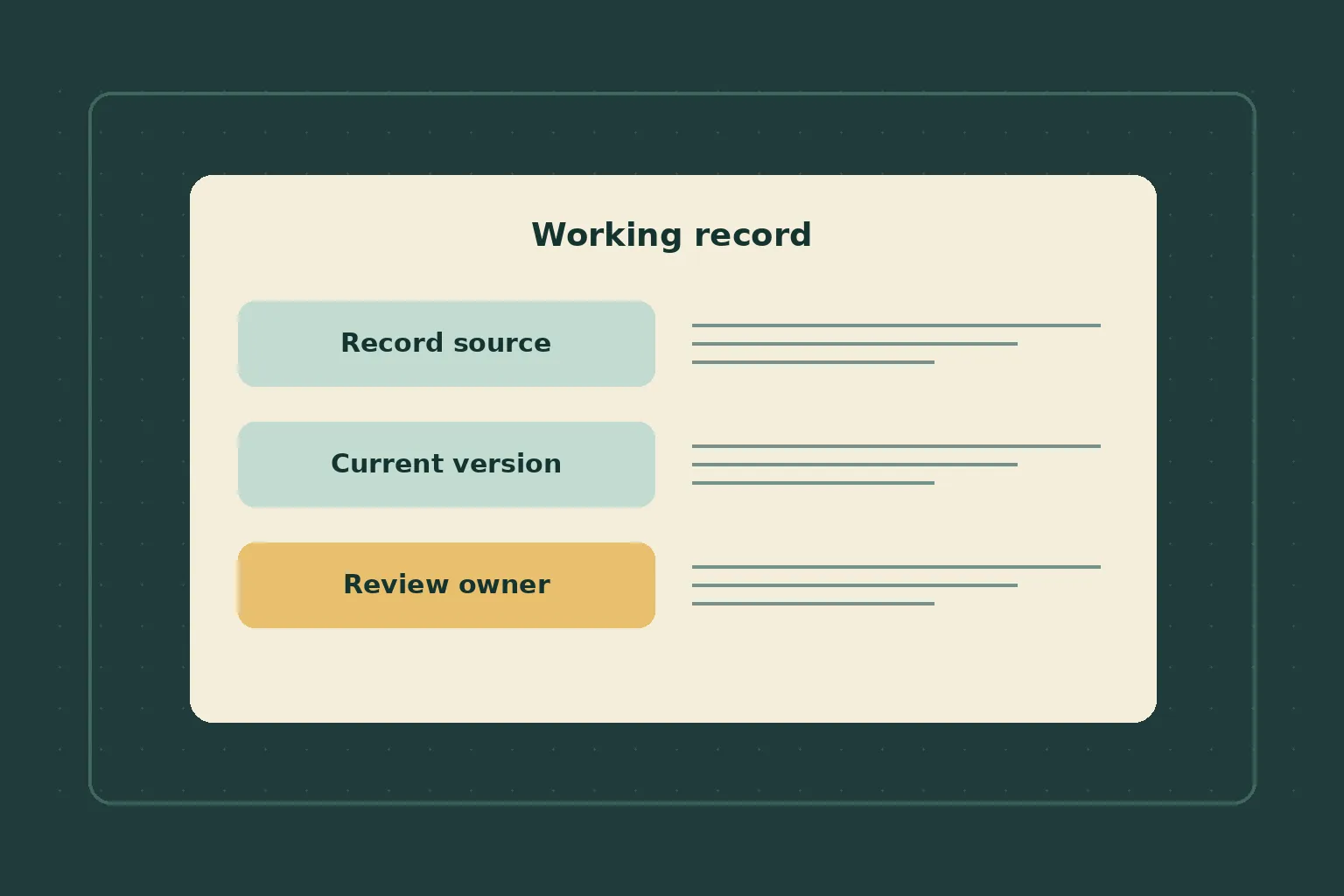
Give each decision one current reference with the scope, decision maker, date, and evidence reviewed. Write down the downstream materials or activities that are affected. For an arrival change, those might include a staff checklist, a draft web page, a prepared email template, and the map used during rehearsal. Don’t rely on someone remembering every place the old fact was copied.
When a fact changes, name an owner for each affected update and ask them to acknowledge when the current version is in use. If a public page or an external document cannot be changed immediately, mark it as an exception with the next authorized action. Don’t present a submitted update as if people can already see it. Don’t let two teams maintain different “final” instructions without an explicit reason and owner.
A small fictional example makes the process concrete: the arrival route changes late in planning, and two new staff members already downloaded a draft map. The owner changes the source, identifies the downloaded material, circulates an approved replacement through the organization’s ordinary process, and asks staff to practice with the new version. The old walkthrough result is still useful as history, but it no longer verifies the route being considered. Workflow development and process improvement is the related business work when version ownership or handoffs repeatedly break.
Make the fallback visible before anyone needs it
Give the backup a specific task rather than asking them to “cover launch.” For example, if the usual decision owner is away, the backup may be able to acknowledge an open question and set a review time without confirming an opening commitment. Write that distinction in the map. Also make clear how the backup learns that the role has passed to them. In a rehearsal, have the normal owner step out after an unresolved item comes in and see whether the backup can identify the current evidence, contact the appropriate person, and leave a next action somebody can pick up. If getting the right information requires messaging the absent owner, fix the route before relying on the fallback.
Run a short review built around what changed
Before the review, ask owners to flag only three things: a new blocker, evidence ready for a decision, or a conclusion that is no longer supported. Read blocked items first so the meeting does not spend its time celebrating completed tasks that won’t unblock the launch. Have the person who owns the decision answer one question: “What can move today, and what remains on hold?” Record the answer before changing instructions elsewhere.
Suppose the simulated first inquiry is routed accurately and acknowledged without help. The proposed roster still lacks a confirmed backup for a certain block, and the arrival plan is under review. Keep the inquiry rehearsal result. It can inform the training work and direct the next rehearsal. Do not use it to declare the roster final, release arrival instructions, or move the opening date ahead. Each of those actions has its own evidence and decision owner.
If the same blocker survives two reviews, ask what would actually resolve it. Perhaps the decision maker has not seen a dated schedule, or two departments disagree about which person is accountable. Give someone the smallest action that would resolve the uncertainty and set the next decision time. If no one can take ownership, keep the affected activity on hold rather than moving it because the review ran out of time.
Check whether a new person could use the map tomorrow
Ask a staff member not involved in building the map to find three answers without coaching: what they may tell someone about the opening, who can settle an unresolved question, and where they should go if the normal owner is absent. Then ask them to locate the version a different department is using. If one question sends them to a draft folder or a months-old message, the map needs a clearer reference or the affected team needs a better handoff.
Save the resolved decisions and the unresolved exceptions as separate lists when you close the planning cycle. Give each remaining exception a responsible owner and a date for revisiting it. Keep the current decision record available to teams that answer inquiries or change public material, and archive outdated copies according to the organization’s usual process. Alliance’s consulting approach describes how planning, workflows, and implementation support can connect across teams.
The map is an internal operating tool, not a substitute for any required approvals or a determination that a program may open. The practical test is narrower: can the team see which work can continue, who makes the next decision, and which commitments must wait?