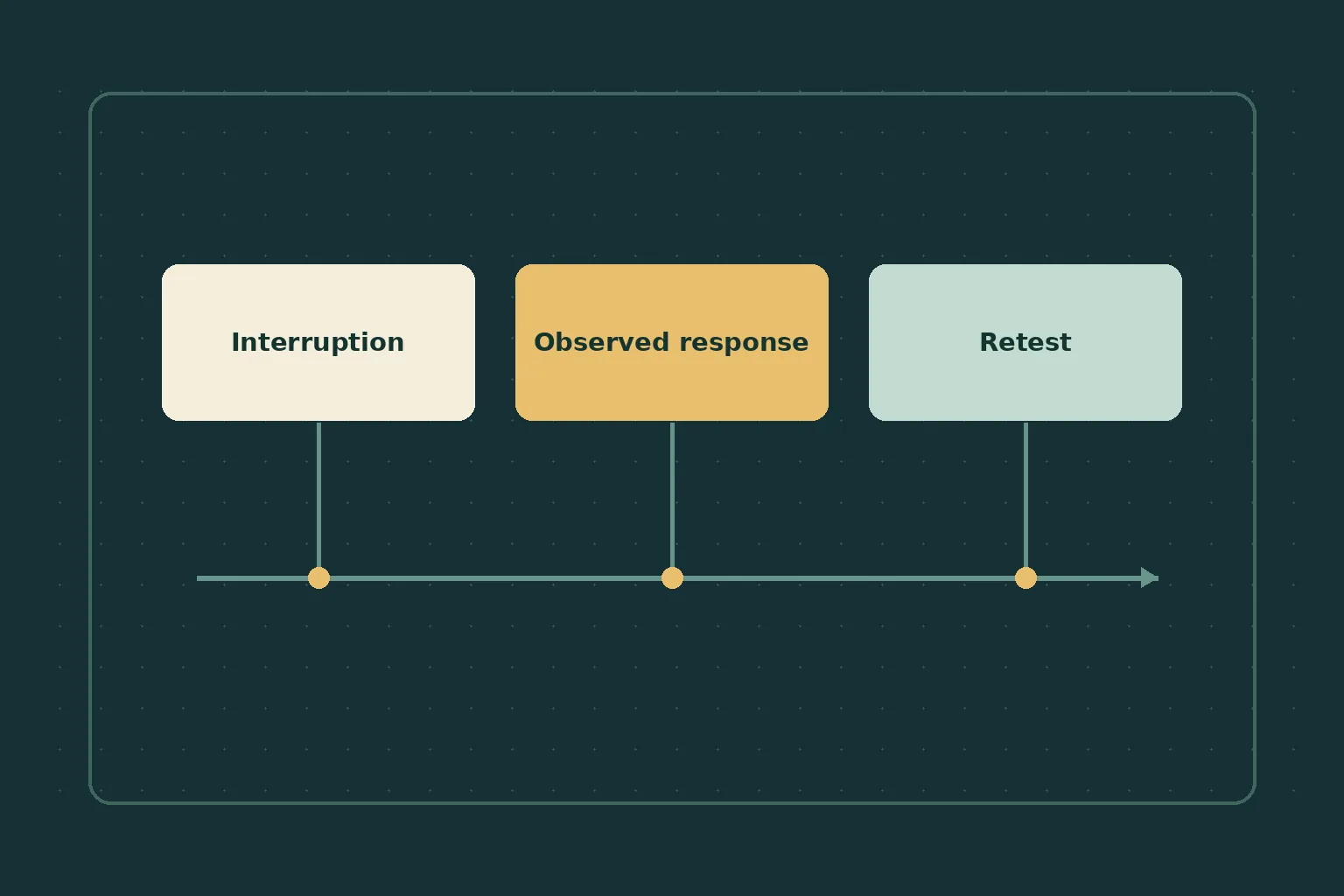
A staff member looks up a room name on the internal directory. The name in the directory differs from the label visible on site, and the local reference sheet uses a third name. None of those observations tells you which name the organization has approved. They tell you precisely which records need to be compared and where the contradiction appears.
A facilities walkthrough can answer a small information question like this without turning into an assessment of the space. Choose a limited set of internal references, note the wording people can see and retrieve, and ask the person responsible for each document to settle any version conflict. The output is a dated worksheet another staff member can check without relying on the observer’s memory.
Define one information question before going on site
Choose one set of references that staff use to describe a location. For example, you might examine how one office and an adjacent meeting room appear on an internal room directory, a local label, and a staff orientation sheet. Keep the group small enough to record exactly what you checked and what you left outside the visit.
State what you want to learn in a sentence. “Can staff identify the current internal reference for these two rooms?” is a question about information retrieval. “Is this building ready?” asks for conclusions that this visit cannot produce. Leave decisions about the space itself with the responsible specialists. Alliance’s facility planning and operational readiness page describes the broader consulting work around site planning.
Name the expected authoritative reference before the visit if an owner has already identified one. If there is no designated source, write “source to be confirmed.” A convenient shared drive file can be easy to find and still be a working copy. The observer should know which sources to inspect without being asked to decide their authority.
Write down what is outside the exercise. The observer will inspect approved internal references and record visible terms. They will leave the site, labels, and records as they found them. They will skip any information they are not authorized to view or capture. This makes it easier to hand the worksheet to another person without expanding the assignment by accident.
Prepare a short request for each reference
Give the observer a small information task before providing file paths. For example, ask them to find the internal room label an orientation note would use, then identify the file and version supporting their answer. Begin with the normal staff reference point, such as the approved orientation index or internal directory. Ask them to capture each step that changed where they looked.
Have the observer note how much help they received. A file located through the intended staff index is a different finding from one located after a colleague forwards a copy. A clue can keep the visit moving. Record the clue when it changes the result, including whether it pointed to an approved index, a private bookmark, or a printed copy with no visible date.
Keep the search bounded. Agree beforehand which documents and locations are part of the visit and how long to spend on a missing reference. If the observer cannot retrieve a document in the agreed time, note where they looked and who can investigate. An incomplete search is evidence about that attempt. It does not establish that a document is missing from every system.
Put direct observations and reported explanations in separate fields
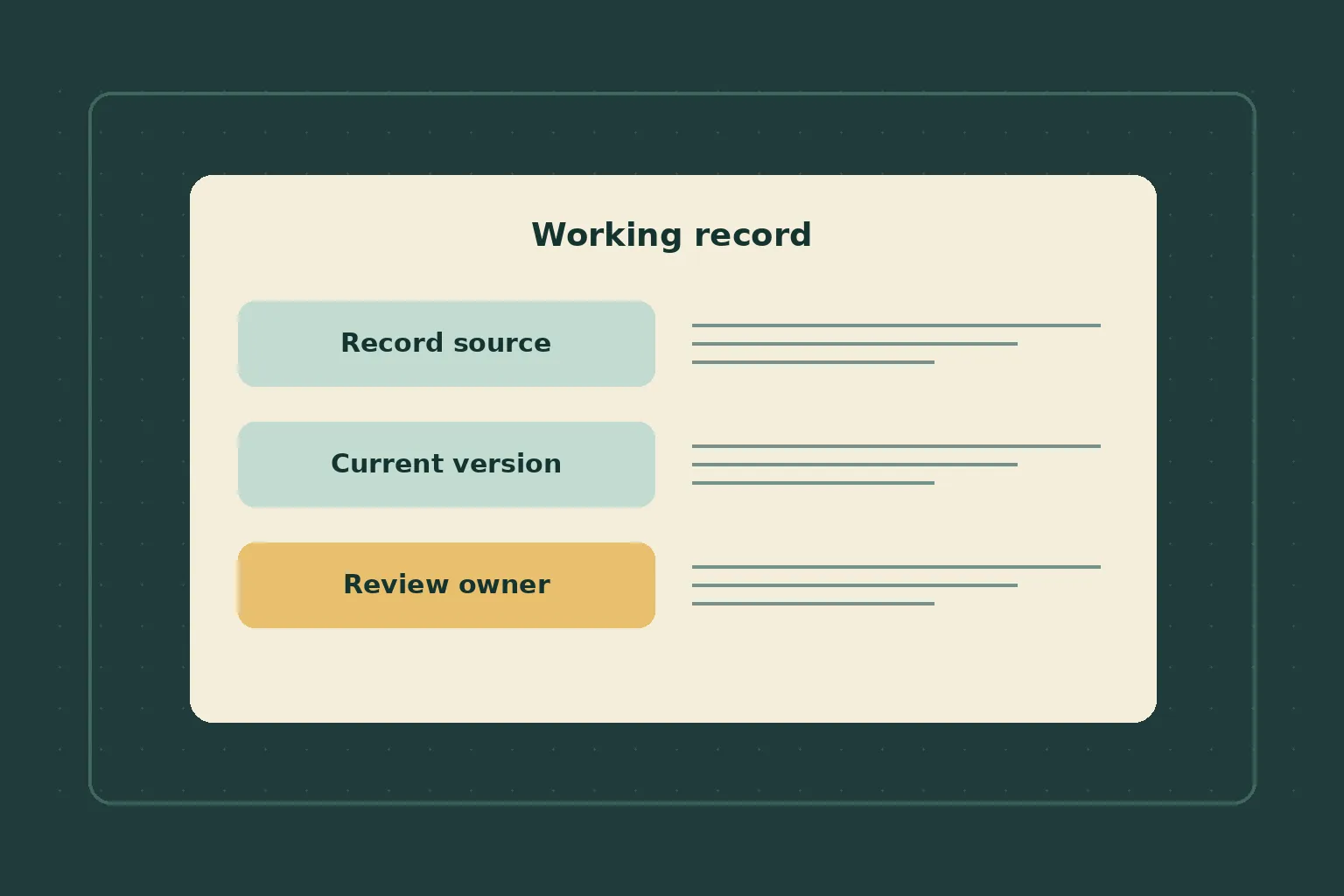
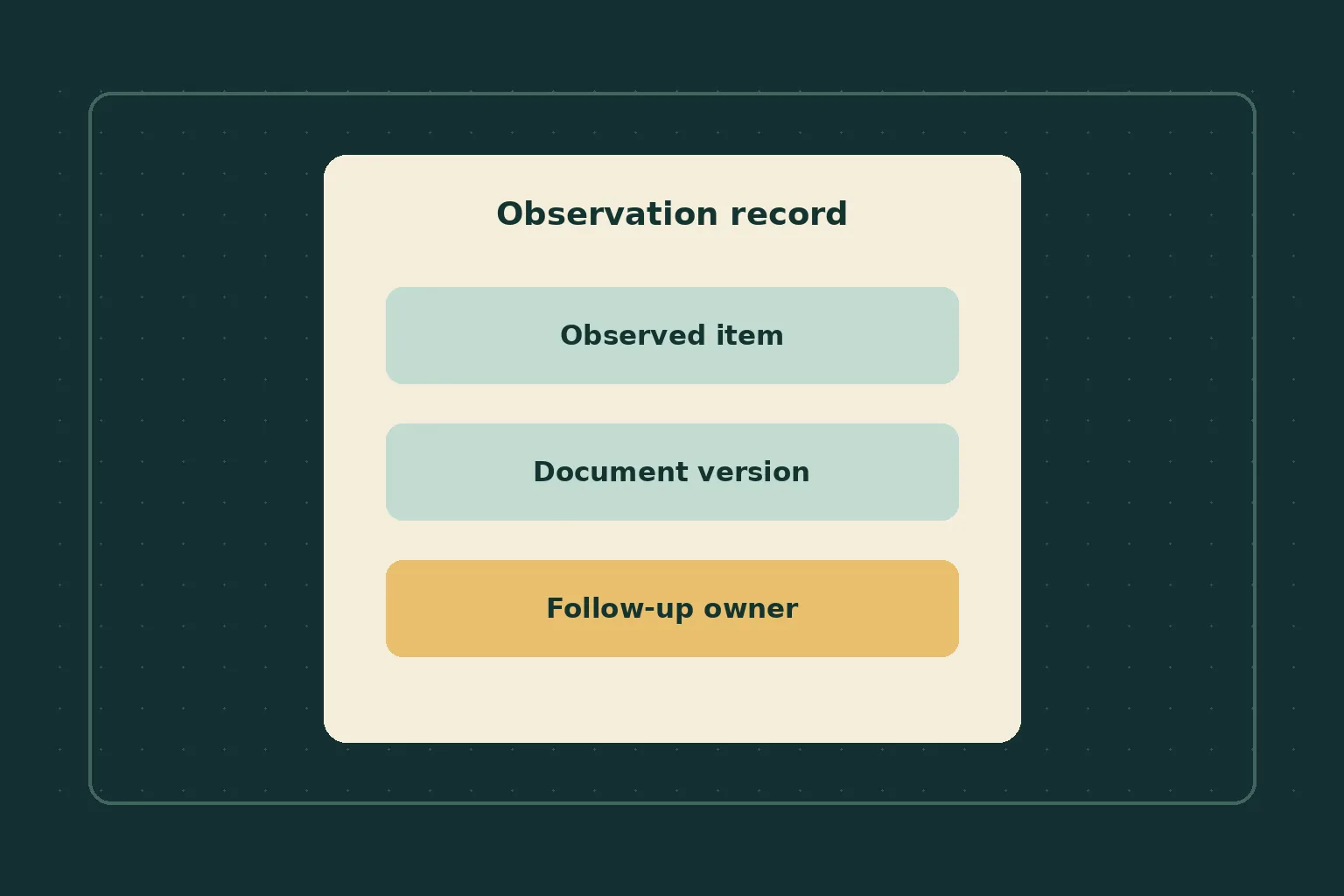
Use one row per reference as encountered. Capture its exact wording or label, date or version if visible, where it was retrieved, and the role responsible for following up. Record the retrieval time if it helps distinguish two views. If the item has no visible identifier, write that plainly. Leave room for the owner to supply a verified version later.
| Reference checked | Direct observation | Version evidence | Current source and next action |
|---|---|---|---|
| Local label outside the meeting room | Label reads “Meeting Room 2” | No date or version shown | Document owner confirms whether the posted wording is current |
| Internal room directory linked from staff index | Directory reads “Consult Room B” for the same internal location identifier | File shows revision 4 and a posted date | Directory owner checks the approved wording and what revision 4 covers |
| Orientation sheet available in approved shared folder | Sheet reads “Room B” | Footer shows an earlier month and no revision identifier | Orientation owner confirms whether the sheet is still distributed |
| Facilities reference index | Index links to the directory and a second PDF with a similar name | Two targets display different dates | Index owner identifies the active reference and assigns follow-up for the second link |
All four rows describe a fictional visit. The observer can verify what each source displayed. They cannot infer that the newest-looking file supersedes the others. Add a separate field for reported explanations. If someone says a label was retained during a document transition, record who supplied that information and whether the owner has confirmed it.
Use direct language when describing a contradiction. “One directory row and one local label use different names for the same internal identifier” is easier to resolve than “the room information is wrong.” If the identifier itself cannot be matched with certainty, make that the first issue. Matching two labels by proximity can create a conflict that turns out to involve two separate records. Alliance’s organizational and operational assessments work is relevant when the same information gap repeatedly affects multiple groups.
Recover the version without deciding it on the spot
Send the owner the smallest useful packet. Include the reference name, where the observer found it, the exact conflicting text, the visible version, and the question the owner must answer. Ask for the current approved reference and the source that establishes it. Avoid asking everyone on a message thread to vote on wording or choose the copy they remember most clearly.
Suppose the owner confirms that revision 4 covers the other rooms on the directory but does not settle the wording for the meeting room. Keep that distinction. The file may be current and the individual row still unresolved. Ask whether there is a dated decision covering that row. If none is available, a document owner can record the open question and identify who can settle it before the observer updates the worksheet.
If a decision applies only to a particular site, building, or staff-facing document, record that scope. An organization may deliberately use one internal abbreviation and a fuller label in an orientation guide. The owner should document whether the difference is intentional and how a reader can tell the terms refer to the same place. A recorded explanation can close the information issue without making every sentence identical.
In some visits, the approved reference exists but is difficult to retrieve. Record the difference between a document version problem and a retrieval problem. One may need a decision on which copy should circulate. The other may need an index owner to correct a route or clarify which staff role can access it. Workflow development and process improvement can help frame that distinction when teams routinely pass document questions back and forth.
Work the finding through the copies staff encounter
After the owner replies, list which references need a change or an explanatory note. Use one line per reference with the person responsible, the approved instruction, and the date for checking the result. Keep both the original wording and the updated observation so a later reviewer can tell what changed.
In the fictional example, the directory owner confirms the term “Meeting Room 2” for staff use. The local label already matches. The internal directory needs an updated row, and the orientation sheet needs either a revision or a clear indication that it is archived. The index owner also needs to resolve the similar PDF links. Four observed references may lead to only three changes. The worksheet identifies each action without instructing staff to edit uncontrolled records.
Treat an inaccessible or locally distributed copy as an open item until its owner confirms how staff encounter it. A revised file in the shared index does not show what appears in a packet already in circulation. Record who owns that copy and whether the appropriate action is to replace it, identify it as superseded, or leave it in an archive with its role explained.
Make the handoff usable by recording where the owner stores the current reference and how a record changes status. A simple local instruction can explain who authorizes a revision, where a reference is listed, and when an old copy is removed from active use. Alliance’s standard operating procedures development is relevant when staff need a repeatable way to update and verify these references.
Make the worksheet usable beyond the person who took the notes
Use a short reference ID in each row and repeat it in any follow-up. If two rows refer to similarly named PDFs, include the directory branch, the title shown inside the file, and the visible date. A filename alone can change when the file is downloaded. A short combination of source details lets an owner recognize the item without asking the observer to send a duplicate.
Add one field labeled “observed at” and one labeled “confirmed by.” A note seen on Monday may be confirmed or superseded on Wednesday. Those dates answer different questions and should remain visible together. If the owner provides confirmation in a separate decision record, link only to the approved place staff can retrieve it. For an open row, include what someone would need to see to close it, such as a verified link that opens the identified version from the ordinary staff index.
Return with the same information question
Ask a second staff member who did not resolve the original issue to repeat the retrieval task. Give them the same starting point and the same two internal locations. Ask them to show the source, the version evidence they found, and any wording they could not reconcile. Record when they reached the answer, where they needed help, and whether they could identify an open exception without being told about it.
Check the surfaces named in the original worksheet. If the orientation copy has been moved to an archive, verify that the active staff index reaches the current sheet and that the archive identifies the copy’s status. If a reference remained deliberately different, ask the tester whether the explanation made the relationship clear. The retest can pass for one row while another remains open.
If the second tester bypassed the index because they recognized a filename, record that context. The file may be correct while the intended retrieval path is still unclear. Repeat that one step from the original starting point before closing it. A good final note names the exact reference, version, route, date, and finding. It is specific enough that a third reviewer can repeat the check later.
Close with the verified rows and a short list of exceptions. An exception needs the unanswered question, the next person responsible, and a date to check again. Keep pictures or record references only where your organization has authorized them, and use the visible label or document title when that is enough. The result should tell staff what they can reliably retrieve today, which copies are still in question, and who can resolve each disagreement.