Blog
Behavioral healthcare insights
Explore program development, marketing, admissions, referral strategy, operations, and leadership through a practical lens for organizational decision-making.

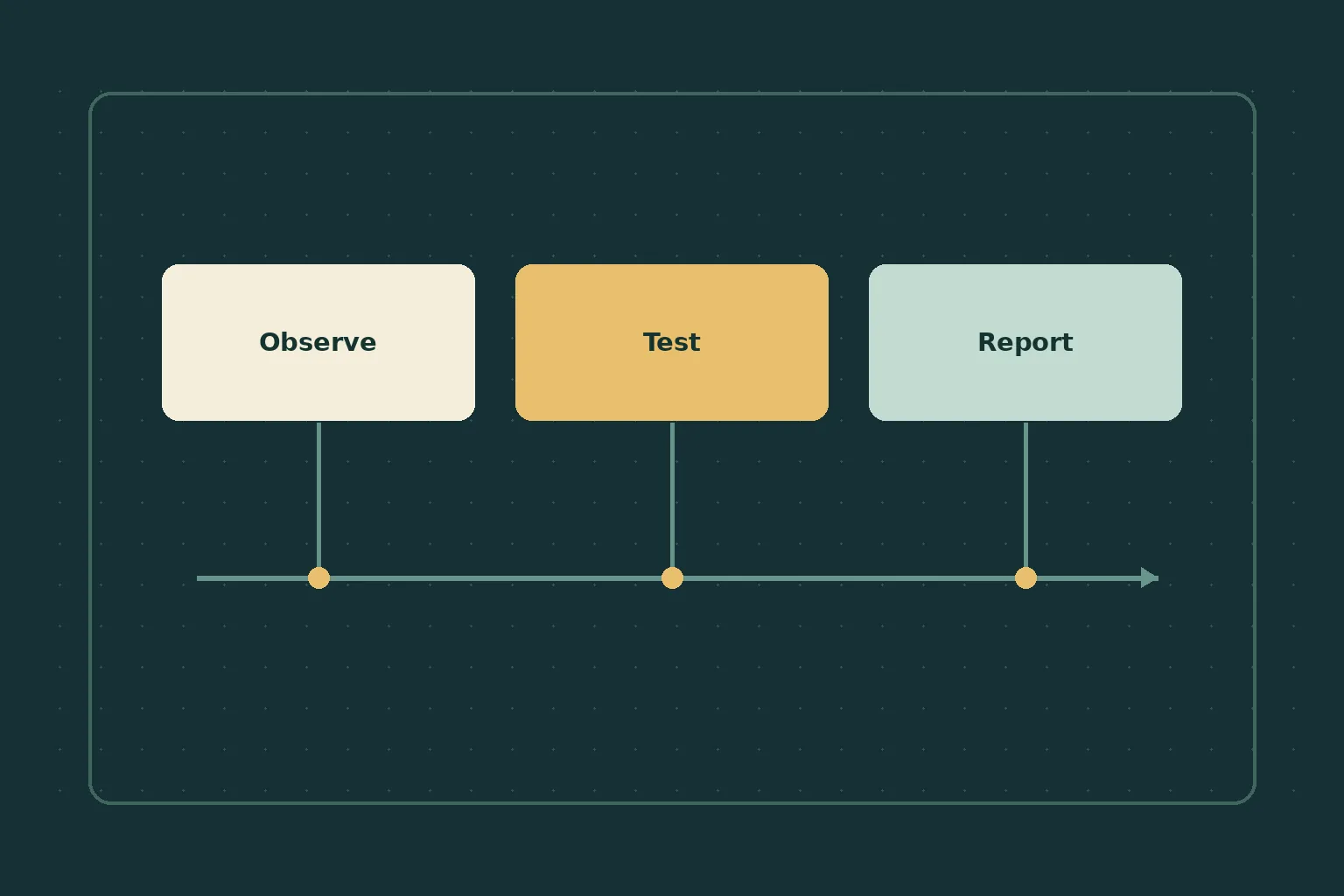
90-Day Priorities Memo for Behavioral Health Operations
Plan a new behavioral health operations lead’s first 90 days with a priorities memo that documents one decision, one authorized trial, and an ownership handoff.
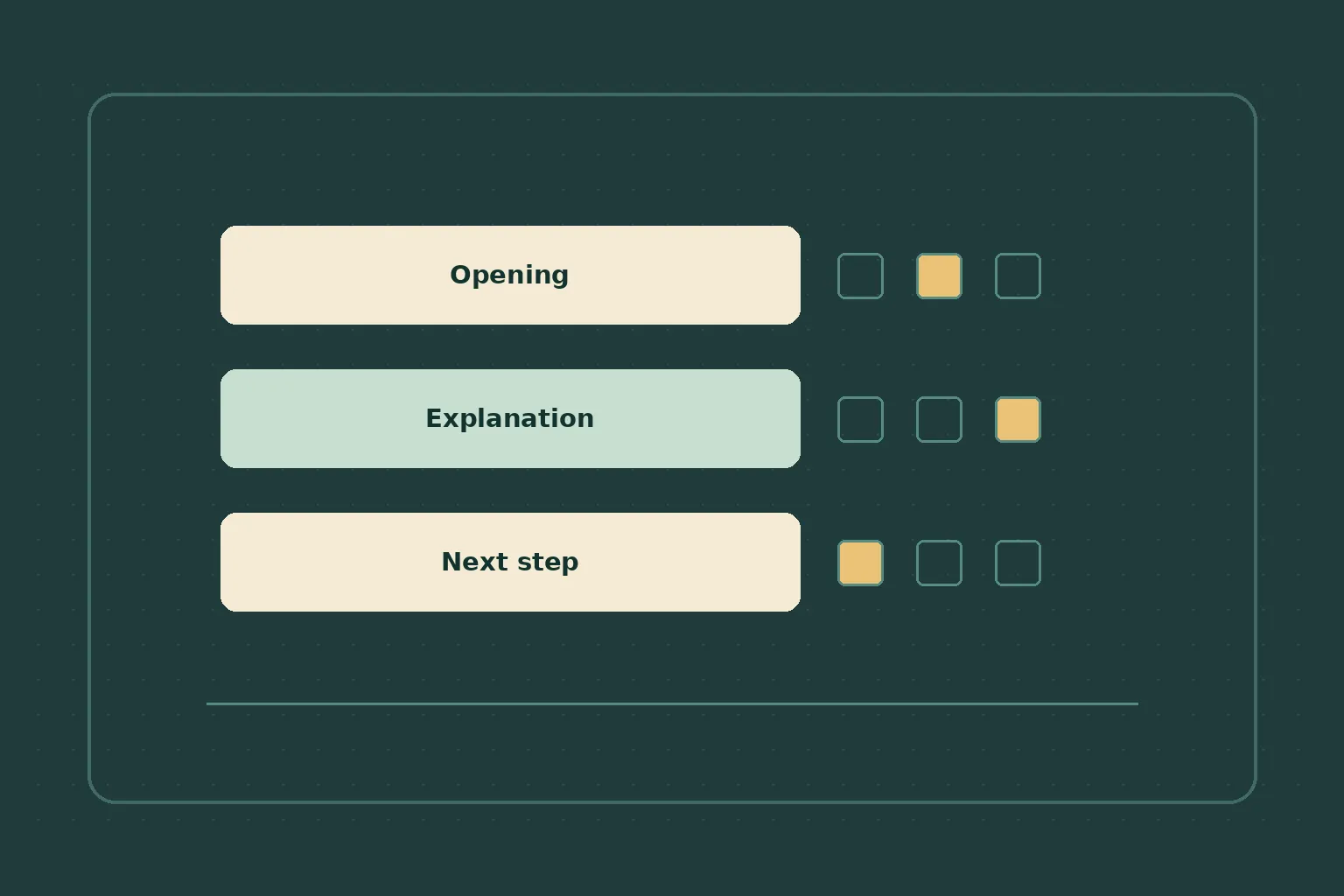
A Call Review Rubric for Coaching an Admissions Team
Use five observable behaviors to coach admissions staff with fictional administrative role-play, a consistent scorecard, and a second practice round.
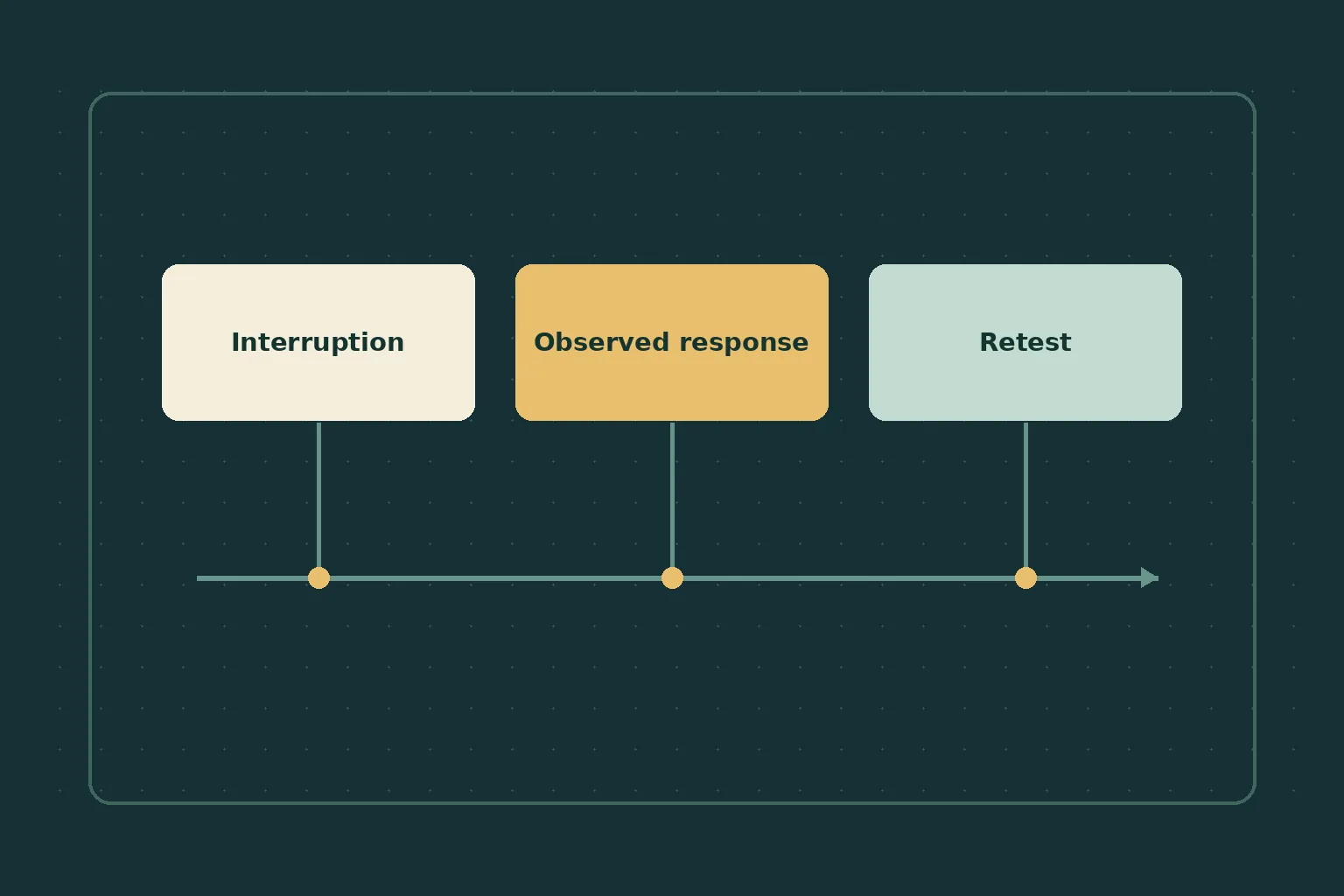
A First-Week Tabletop for Behavioral Health Operations
Run a first-week tabletop for one routine administrative interruption. Use prompts and an observation log to track and reconcile requests.

A Launch Dependency Map for a New Behavioral Health Program
Map facility, staffing, and admissions dependencies before opening a behavioral health program. Includes a decision worksheet and practice scenarios.
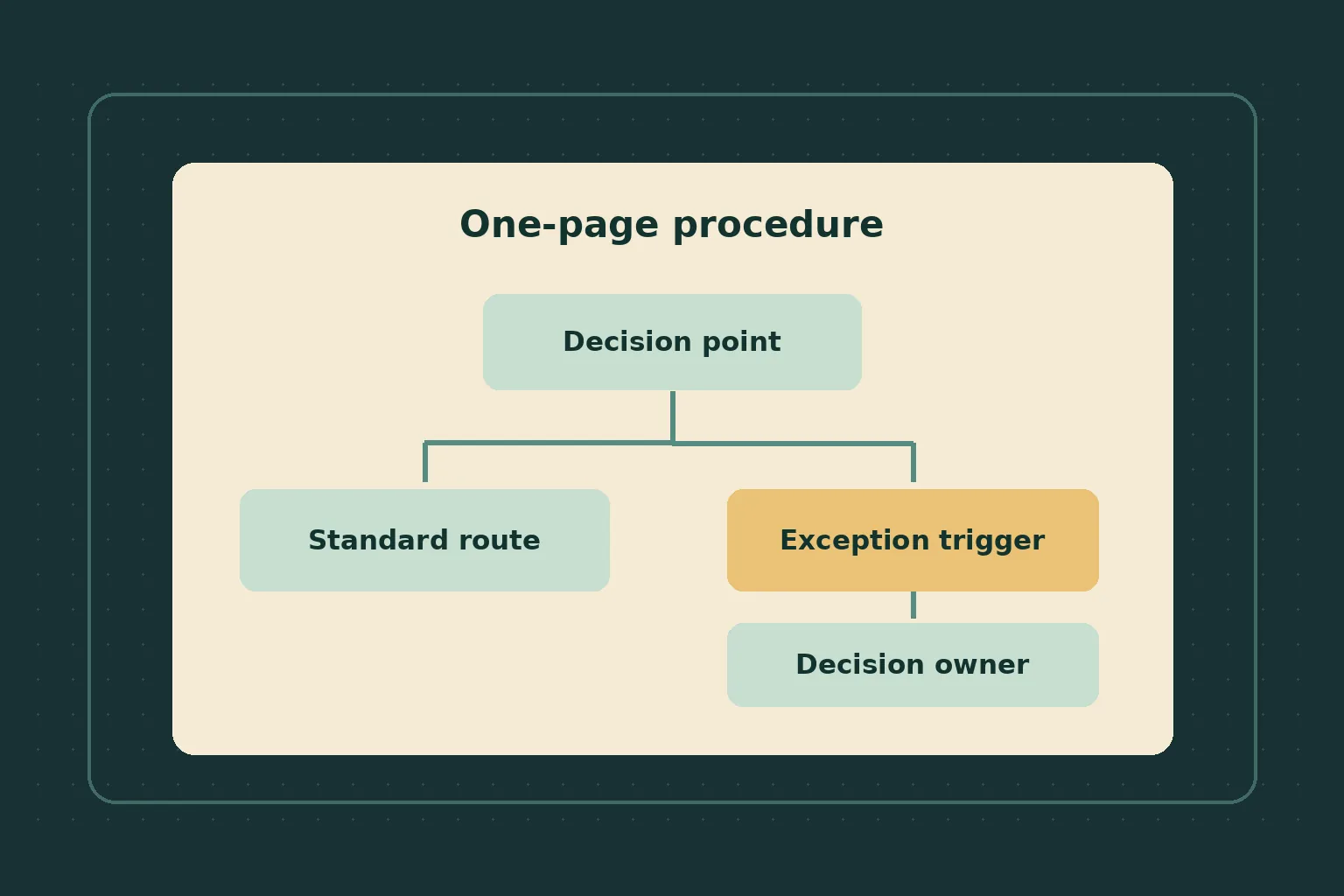
A One-Page SOP With an Escalation Rule People Can Remember
Build a one-page administrative SOP with one clear stop rule, a named decision owner and backup, and the exact evidence staff need to resume the work.
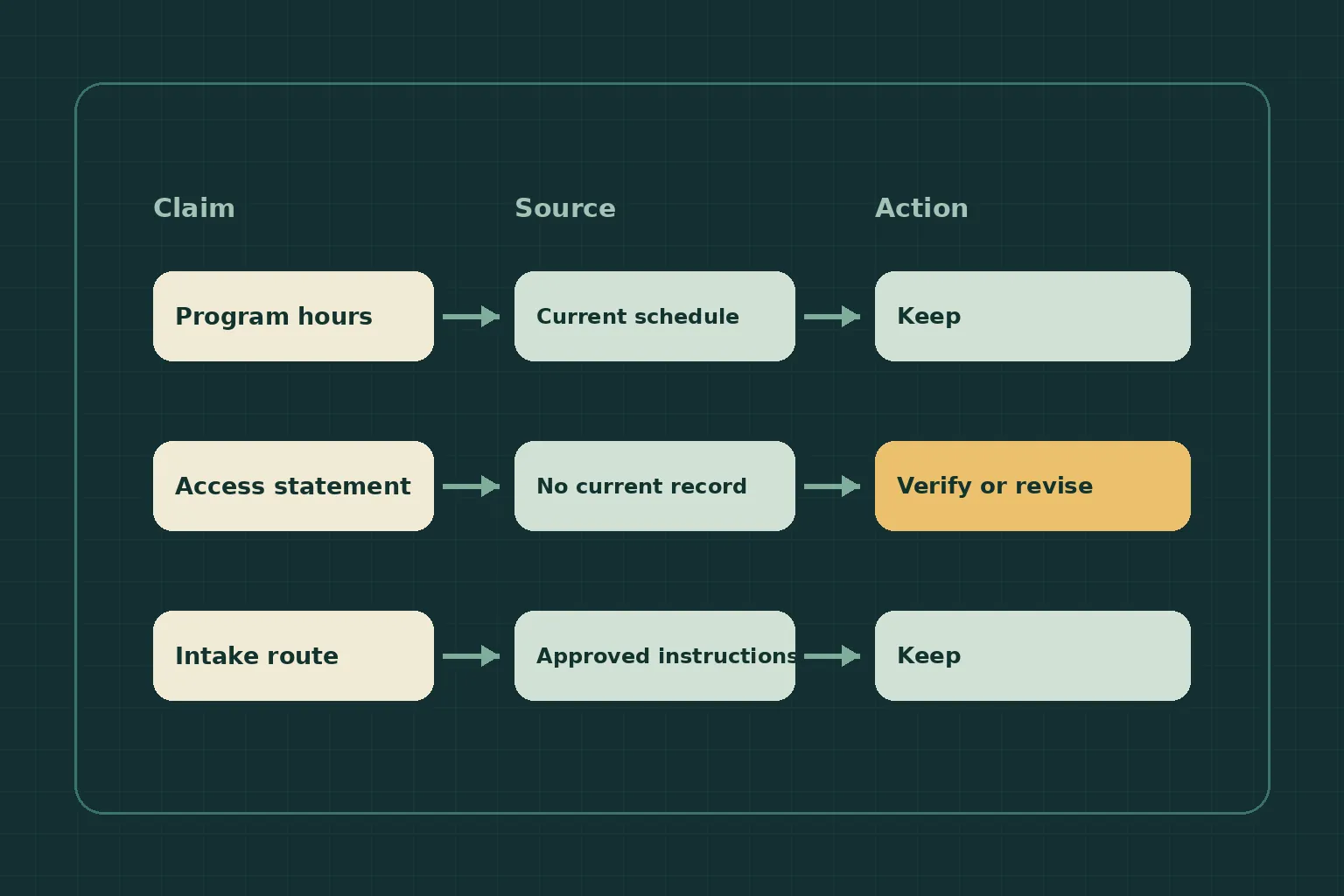
A Service-Claims Audit for a Behavioral Health Website
Use a claims register to verify program details, appointment availability, and admissions wording across a behavioral health website before and after edits.
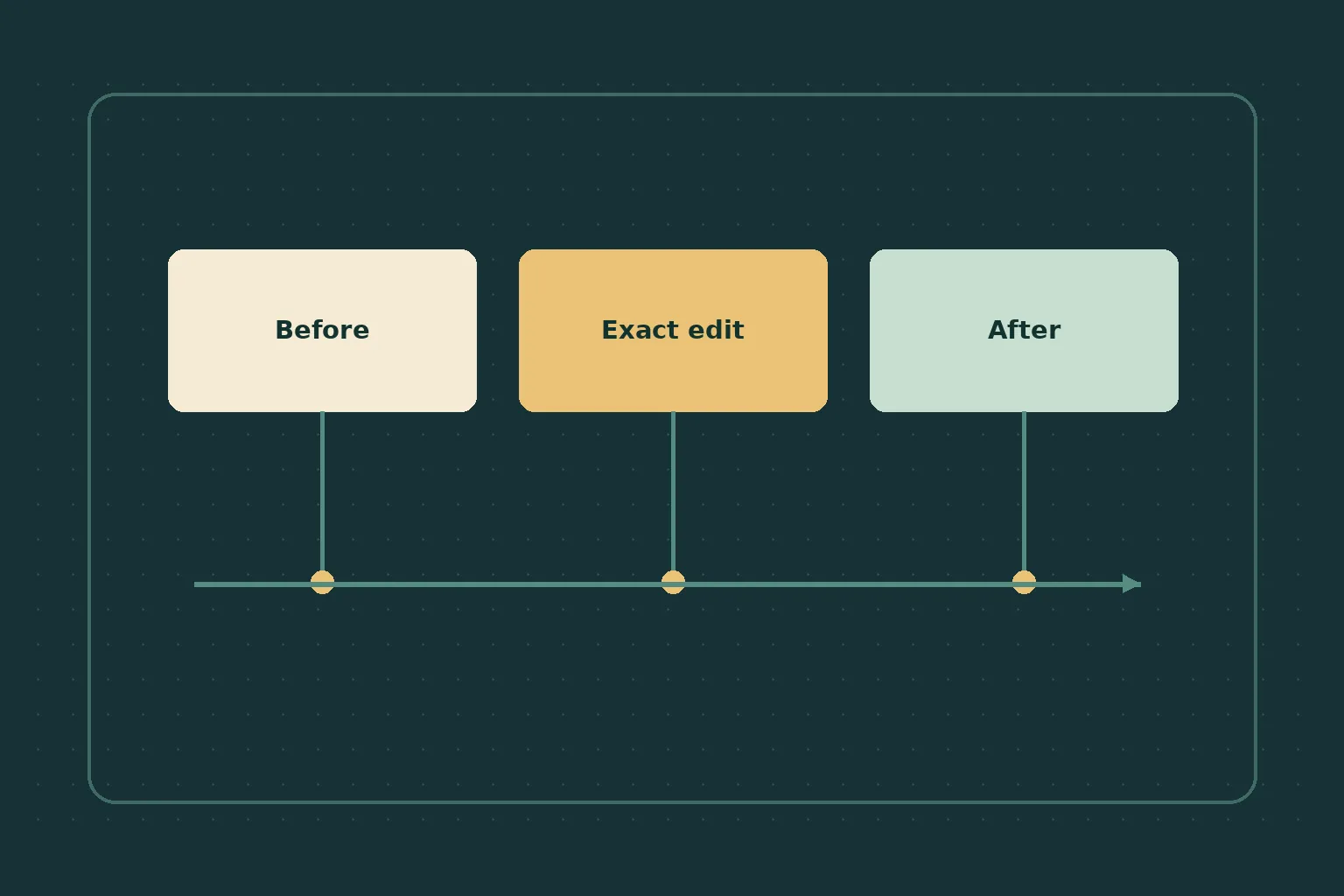
A Website Change Log for Marketing and Admissions
Build a shared website change log so marketing and admissions can verify a release, compare like periods, and interpret results together.
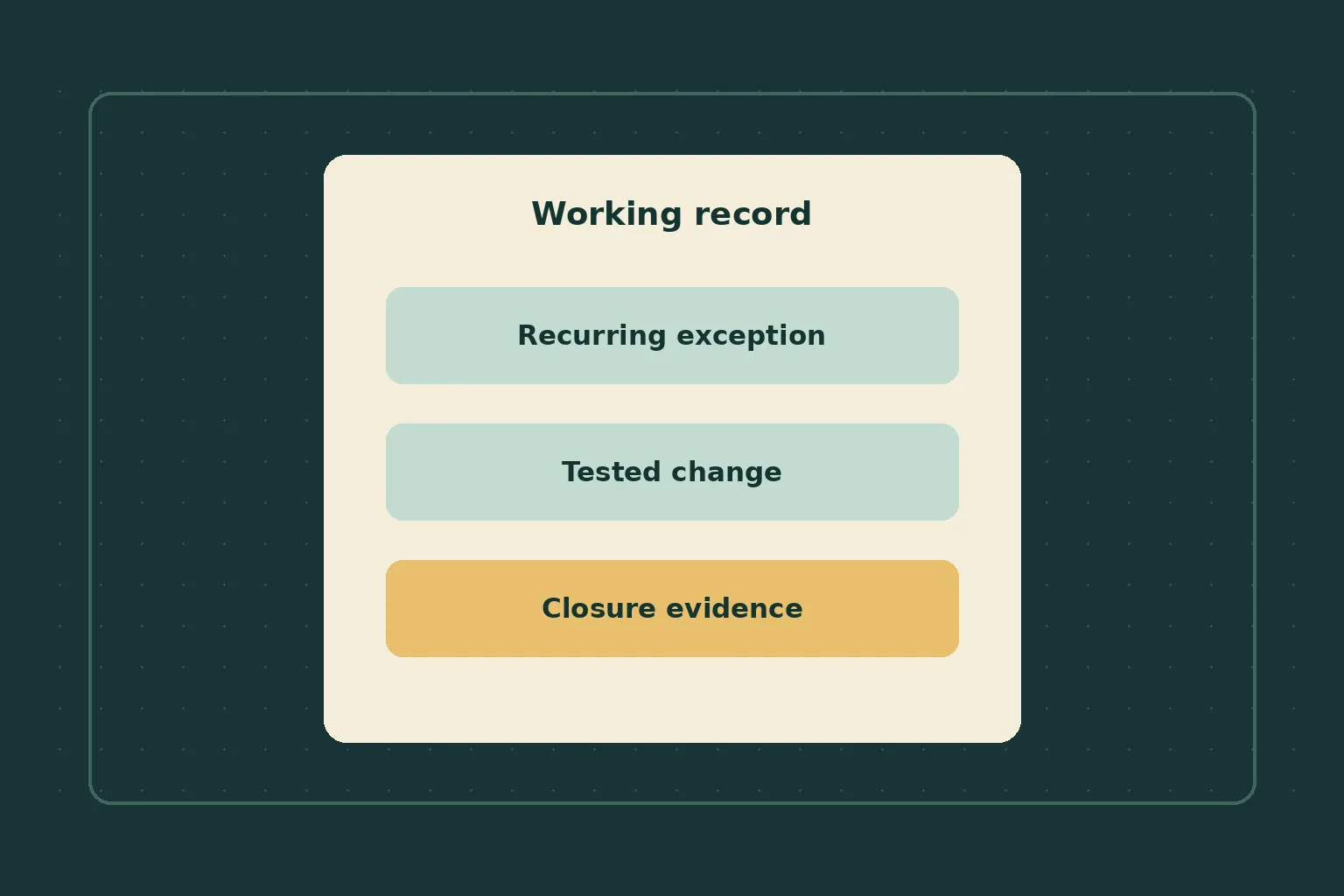
An Exception Log for Recurring Operational Problems
Use an exception log to group recurring administrative failures, test one fix, and record the evidence needed to close or reopen the pattern.
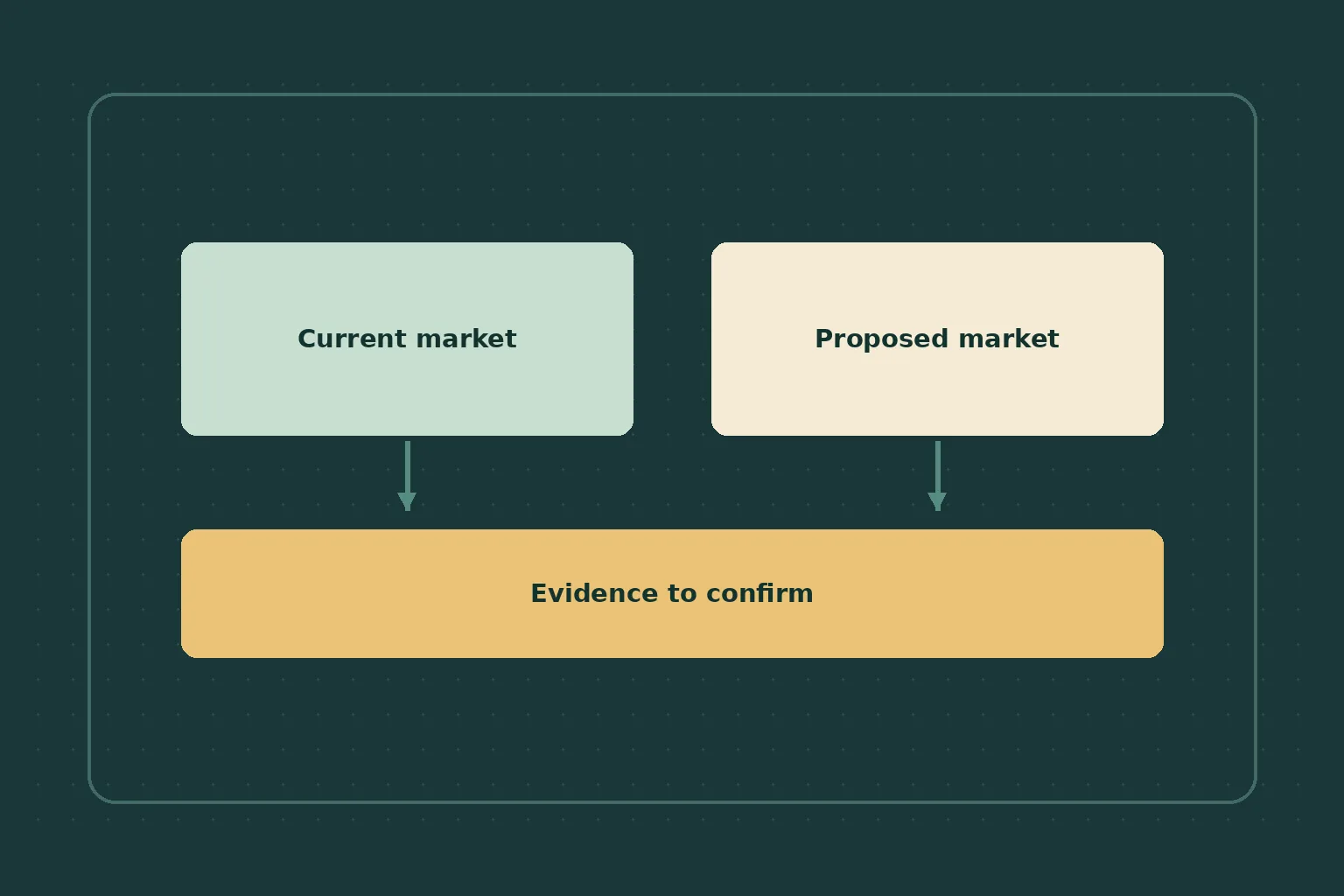
Before Entering a Second Behavioral Health Market
Test a second behavioral health market with dated local evidence, a clear operating boundary, and a research decision the team can revisit.
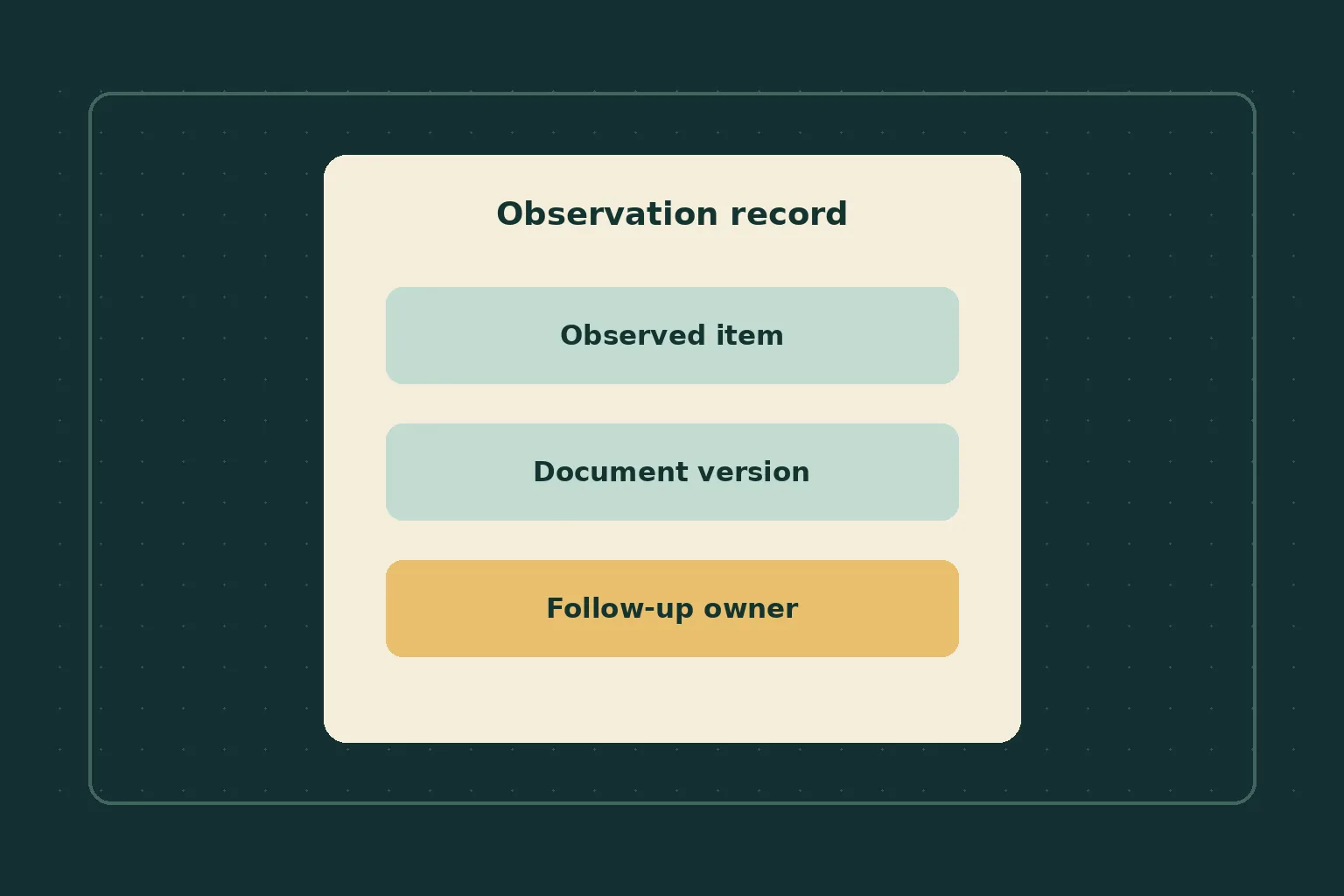
Behavioral Health Facilities Walkthrough Worksheet
Use a bounded walkthrough worksheet to compare onsite room labels and staff documents, confirm the current reference, and verify corrections.
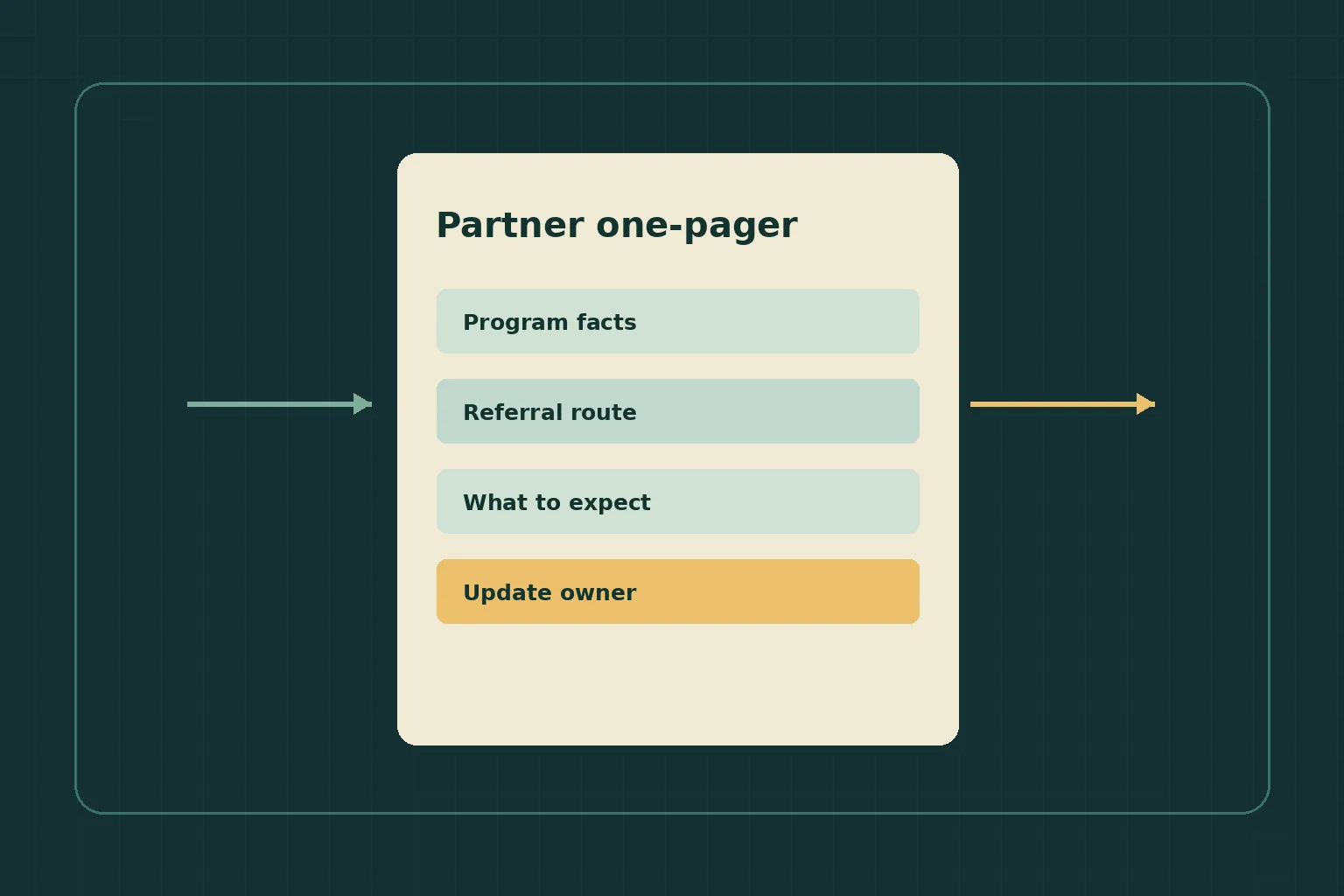
Behavioral Health Referral Partner One-Pager
Build a behavioral health referral partner one-pager with verified program facts, a clear first contact, and an owner who keeps copies current.
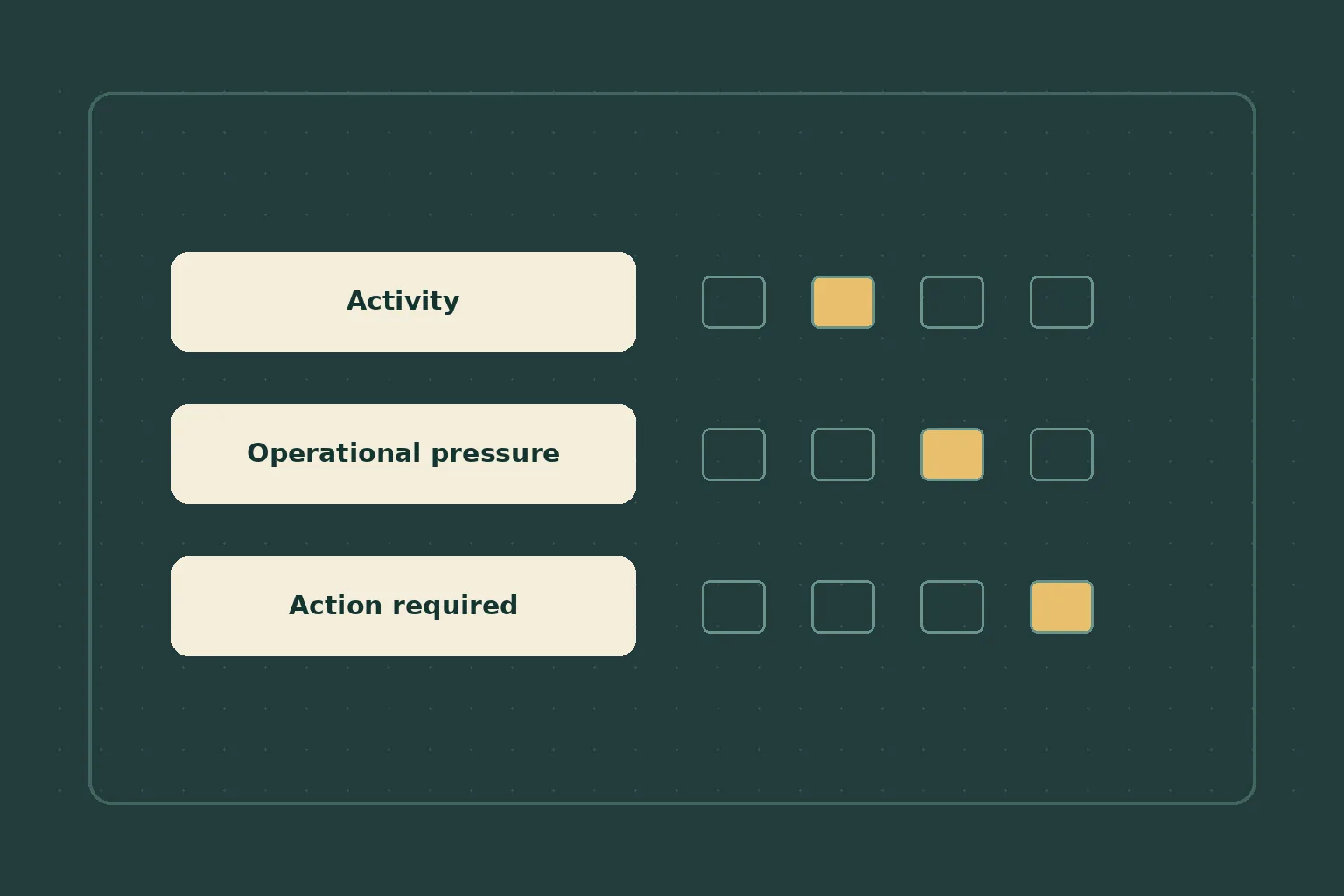
Board Scorecard for Behavioral Health Operations
Pair growth activity with workload and handoff signals in a behavioral health board scorecard. Define each measure and carry decisions into the next packet.
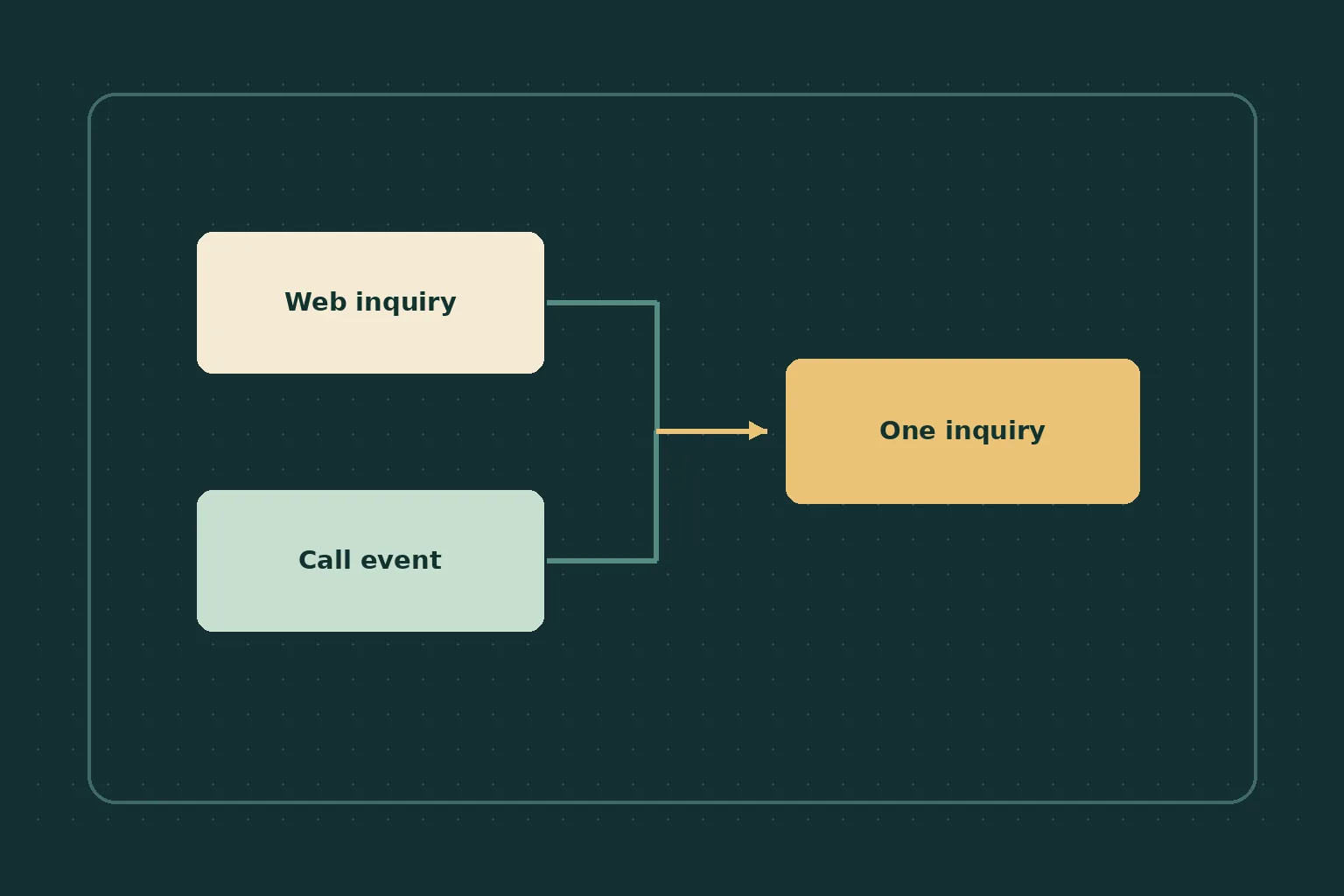
How to Count Behavioral Health Inquiries Once
Count unique behavioral health inquiries without losing track of contact attempts and conversations. Use a fictional worksheet and cohort example.
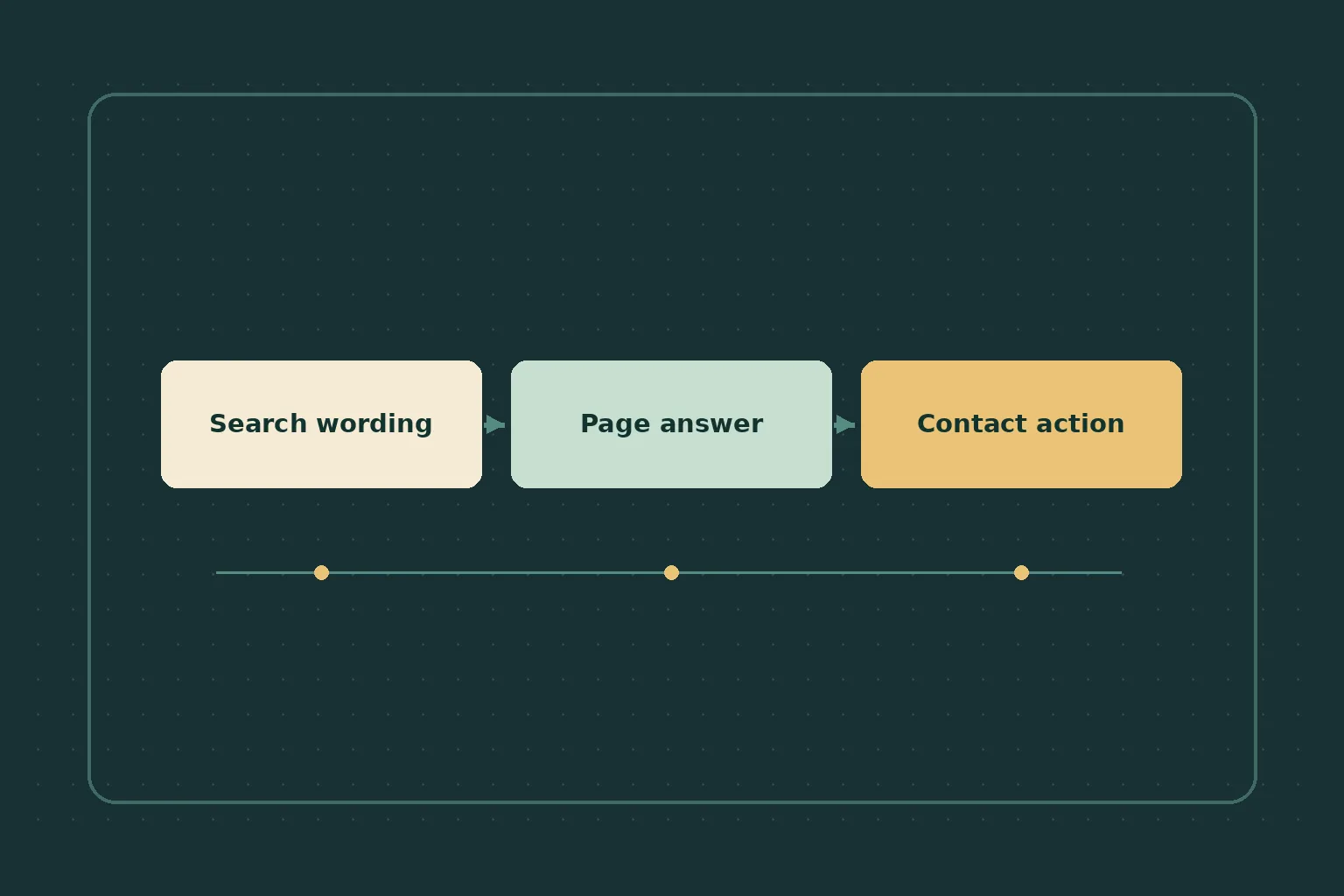
Does Your Admissions Landing Page Match Search Intent?
Test whether a behavioral health admissions landing page answers the search question and gives visitors a verified next step. Includes a two-visit worksheet.
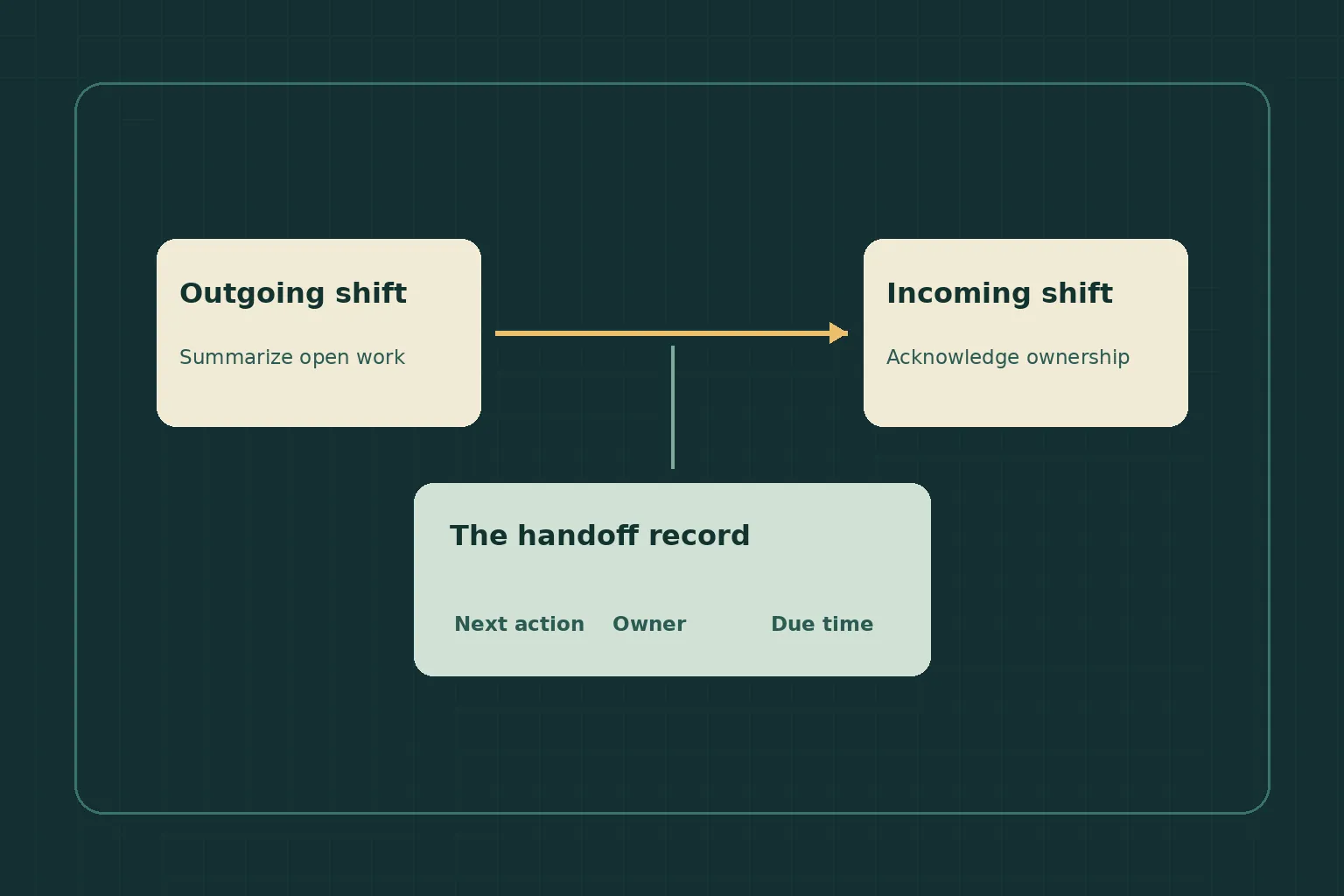
An End-of-Shift Checklist for Behavioral Health Admissions
Give each open admissions task a named owner, due time, and clear next action with an end-of-shift handoff checklist and three fictional practice cases.
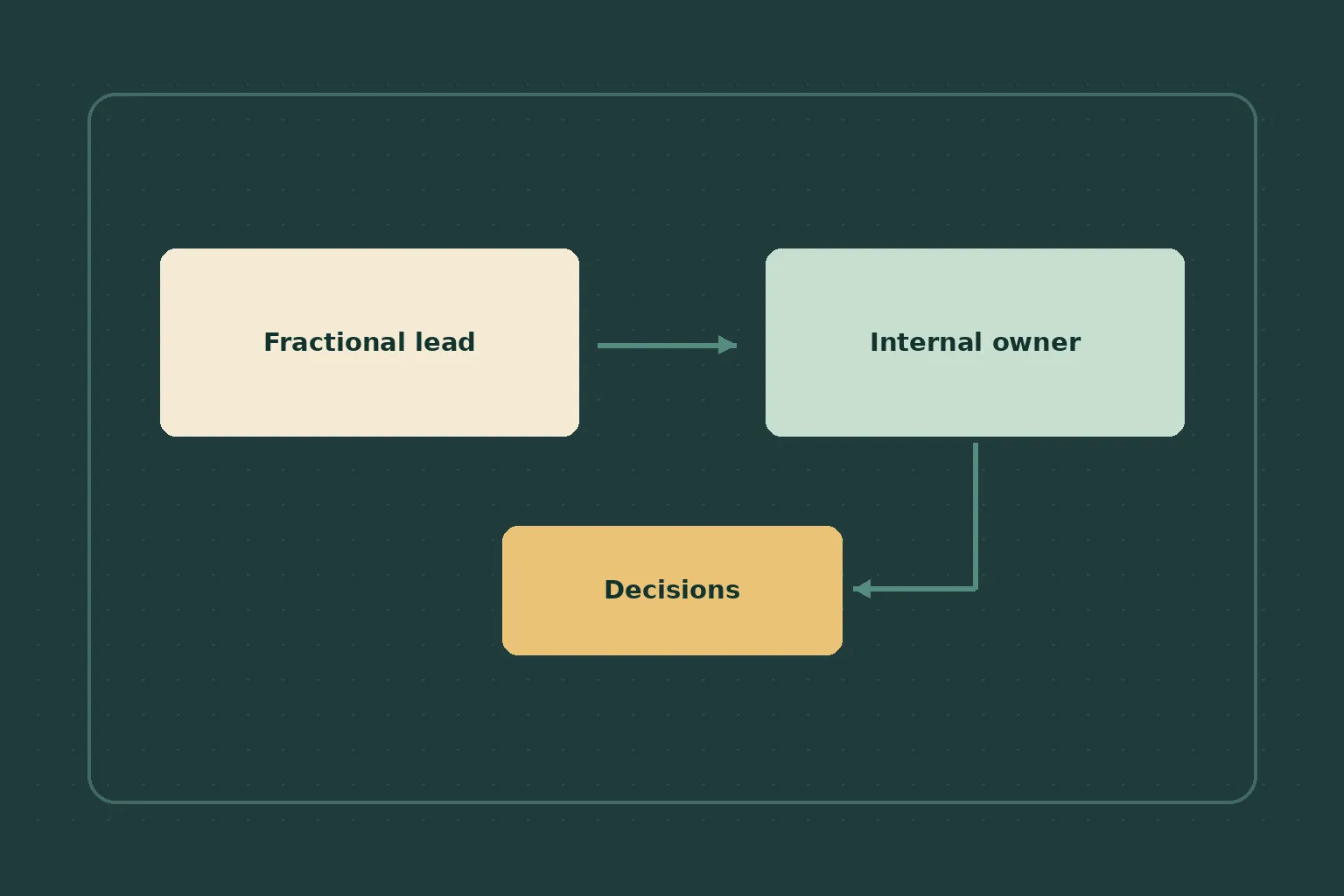
Fractional Growth Lead or Internal Owner?
Distinguish limited growth coordination from internal decision authority. Use an ownership worksheet, a fictional change test, and an exit handoff.
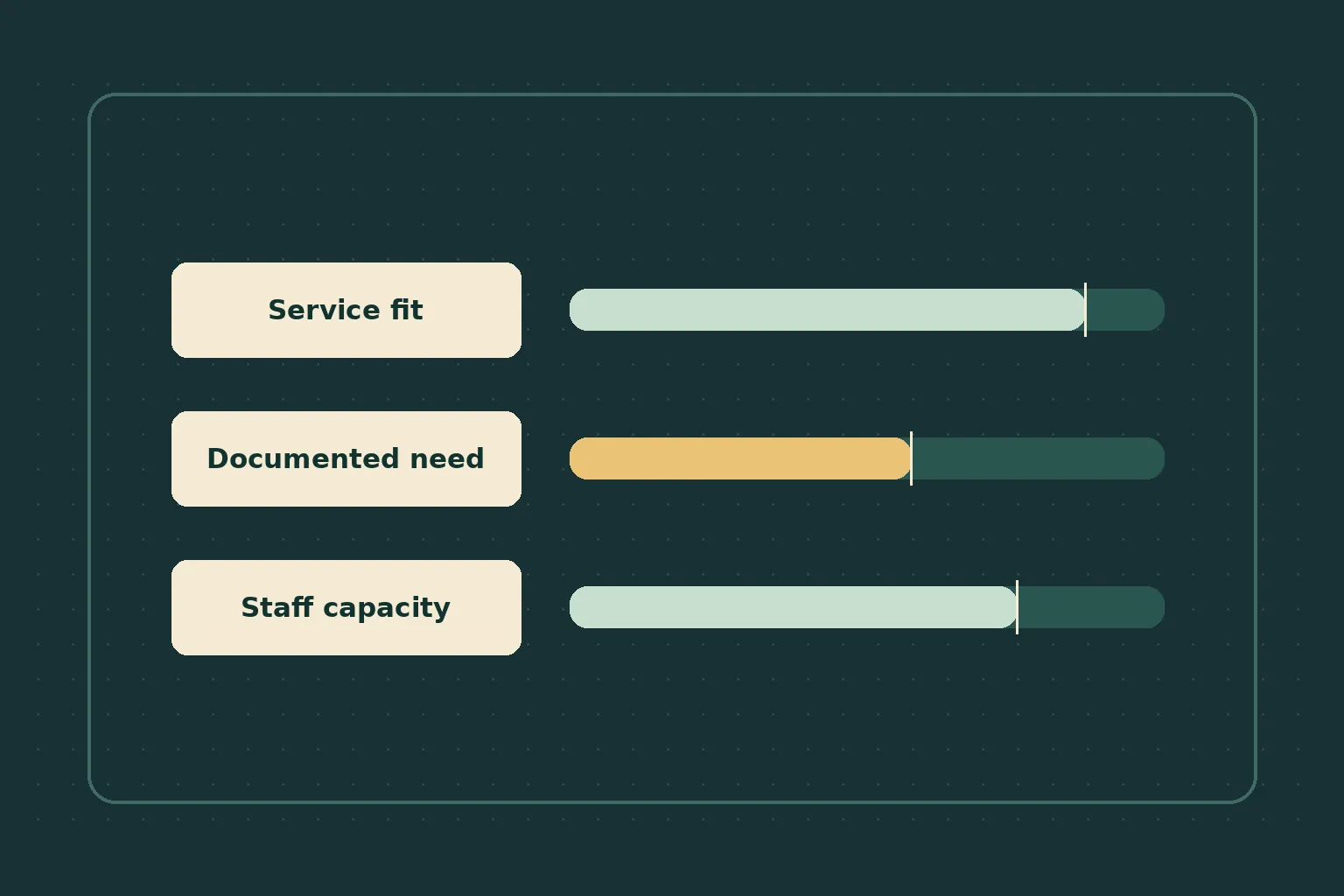
How to Prioritize Referral Outreach by Fit
Use a qualitative grid to prioritize behavioral health referral outreach by verified service fit, documented business need, and staff capacity.
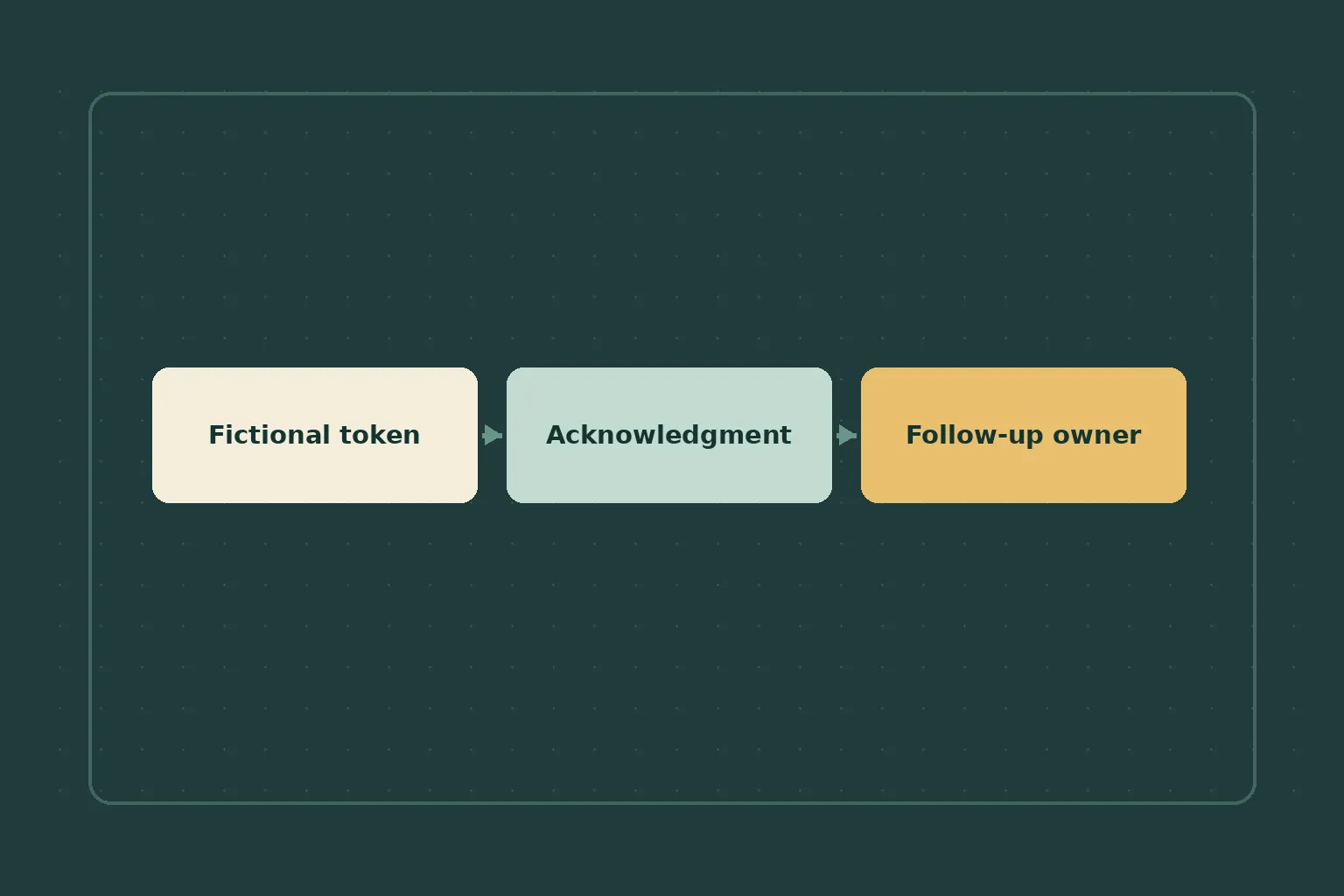
How to Track Referral Receipt With Clear Statuses
Compare referral receipt totals using shared event definitions, agreed cutoffs, fictional status examples, and named review owners.
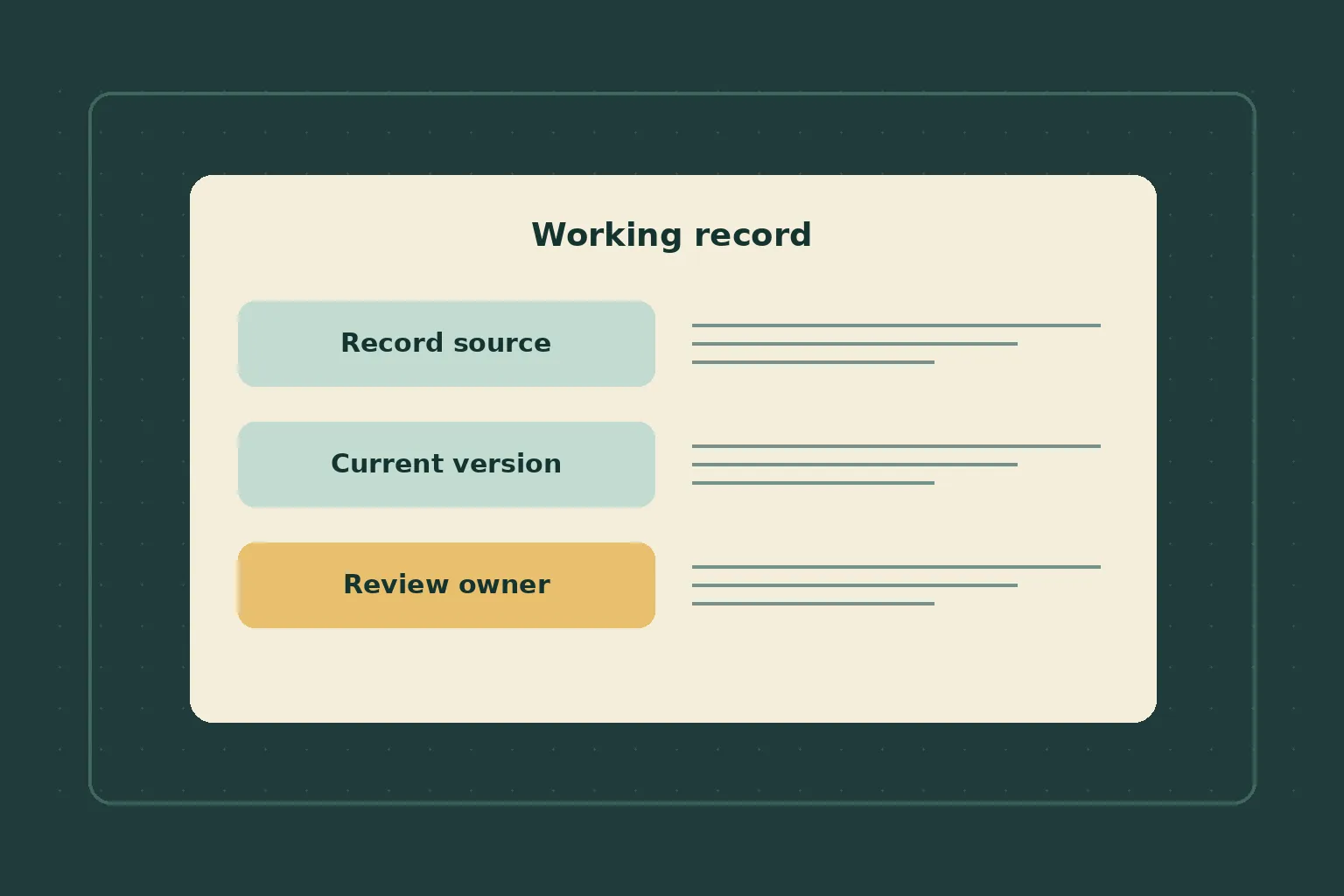
How to Build an Internal Project Evidence Index
Build a maintainable evidence index that links project questions to reviewed source versions, clear owners, and the next action when a source changes.
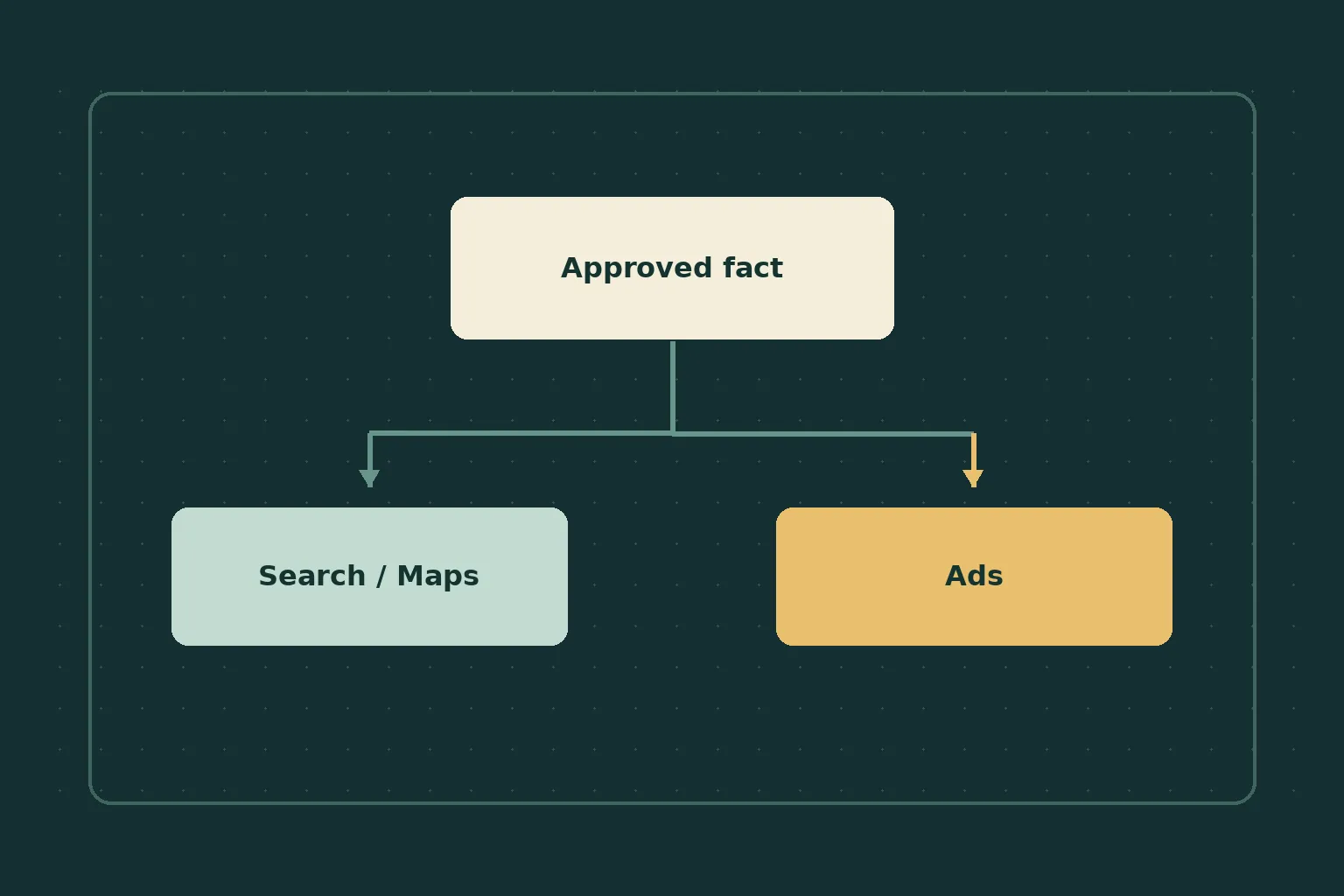
Keep Program Facts Aligned Across Search, Maps and Ads
Build an approved program fact brief, assign channel updates, and verify what actually appears across behavioral health websites, search, maps, and ads.
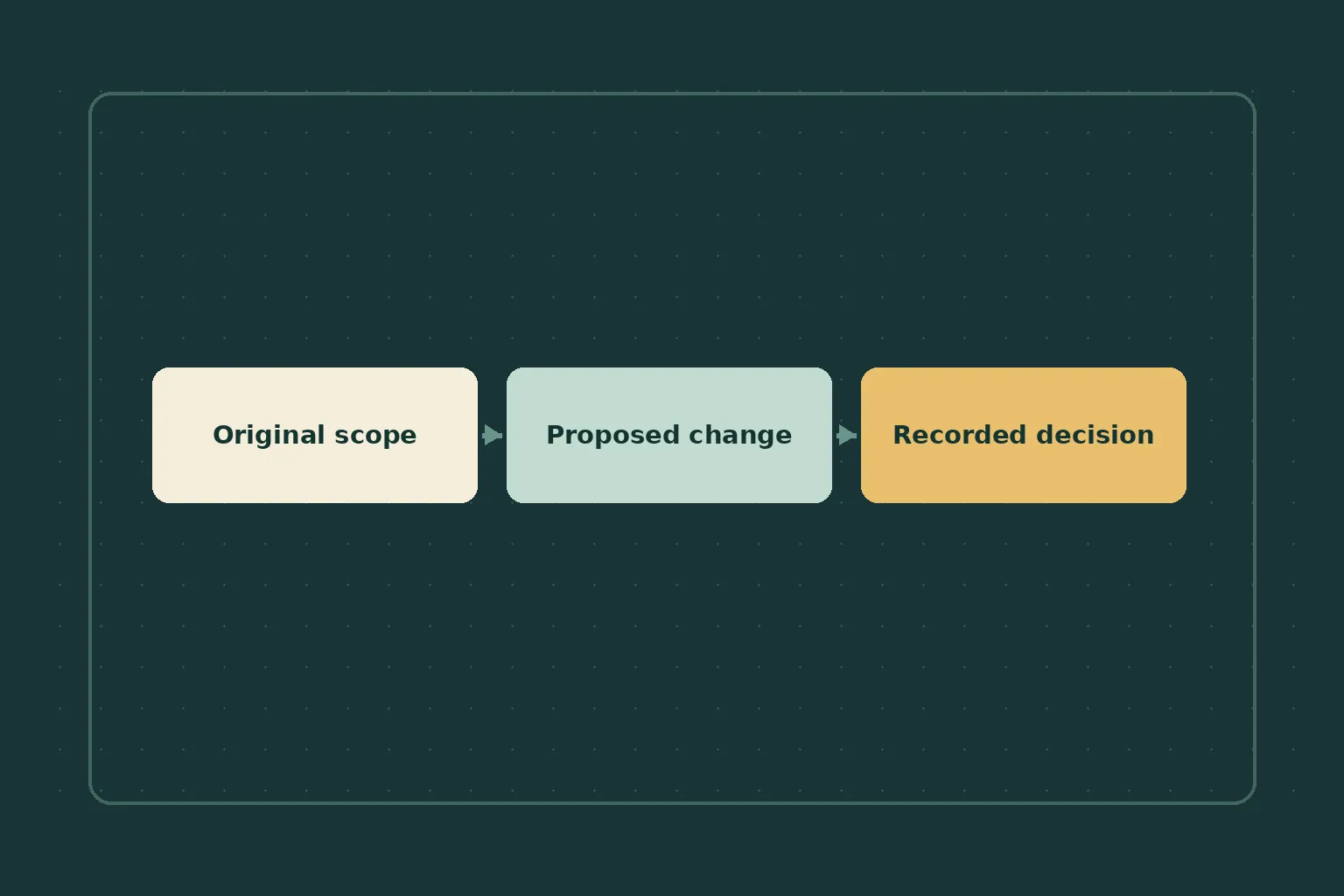
A Prelaunch Decision Log for Program Scope Changes
Document a proposed behavioral health program scope change, preserve the current plan during review, and track which launch materials need updates.
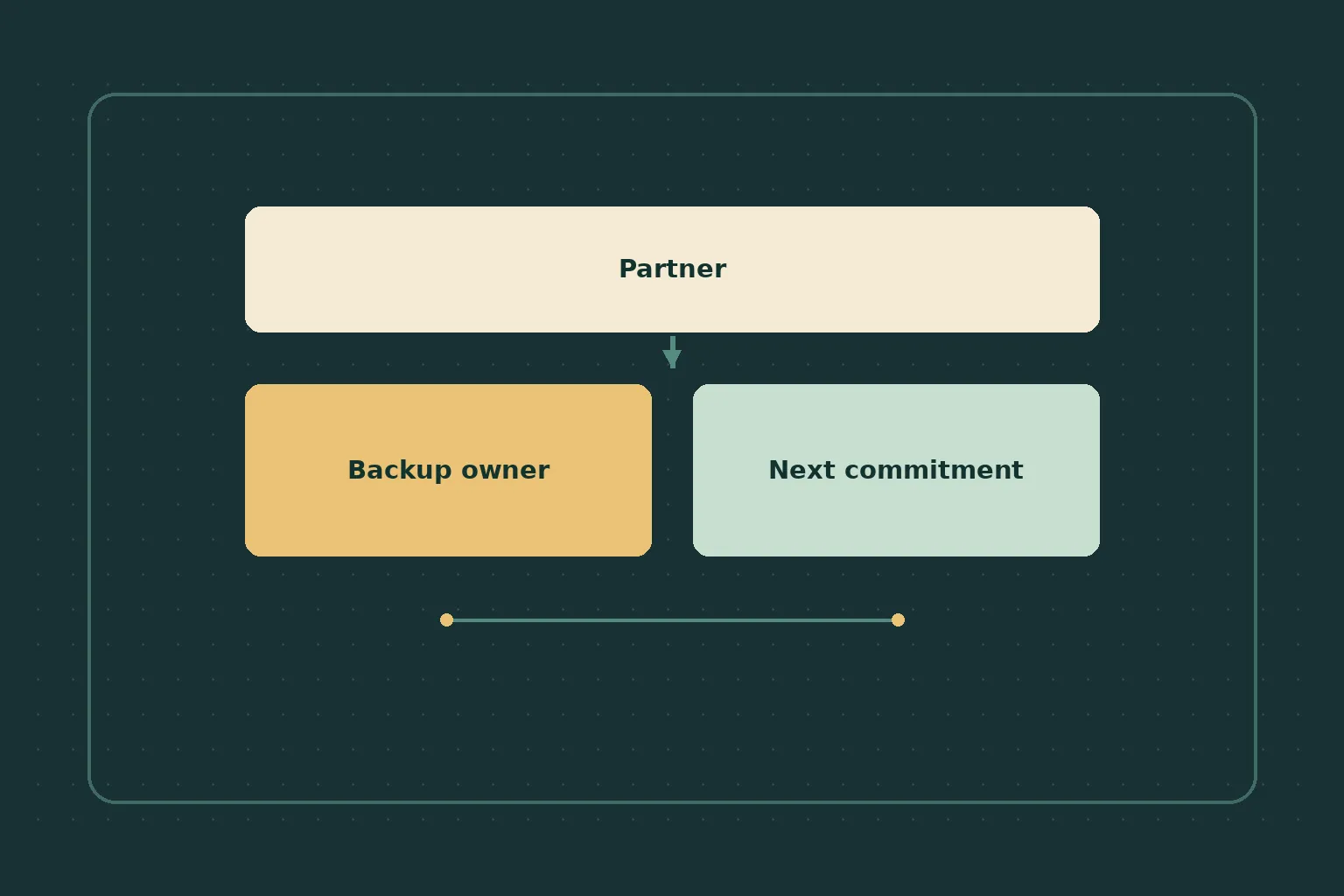
Referral Partner Coverage Map for Outreach Teams
Build a coverage map that assigns backups, escalation routes, and next actions while the outreach lead is away.
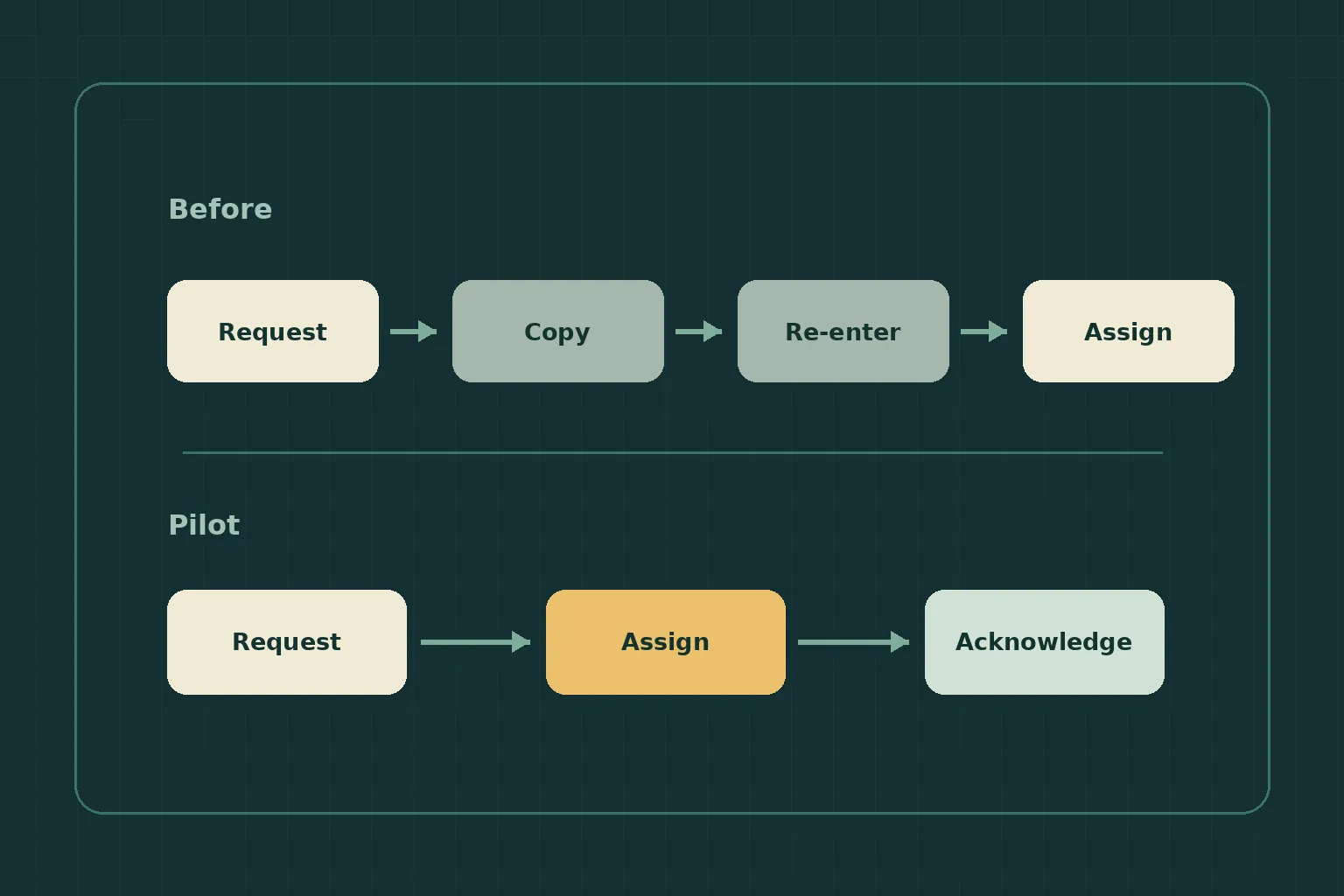
Replace an Unused Workflow Without Adding a Meeting
Test one change to an unused administrative workflow. Observe a workaround, clarify who accepts the task, and decide what to keep at an existing check-in.
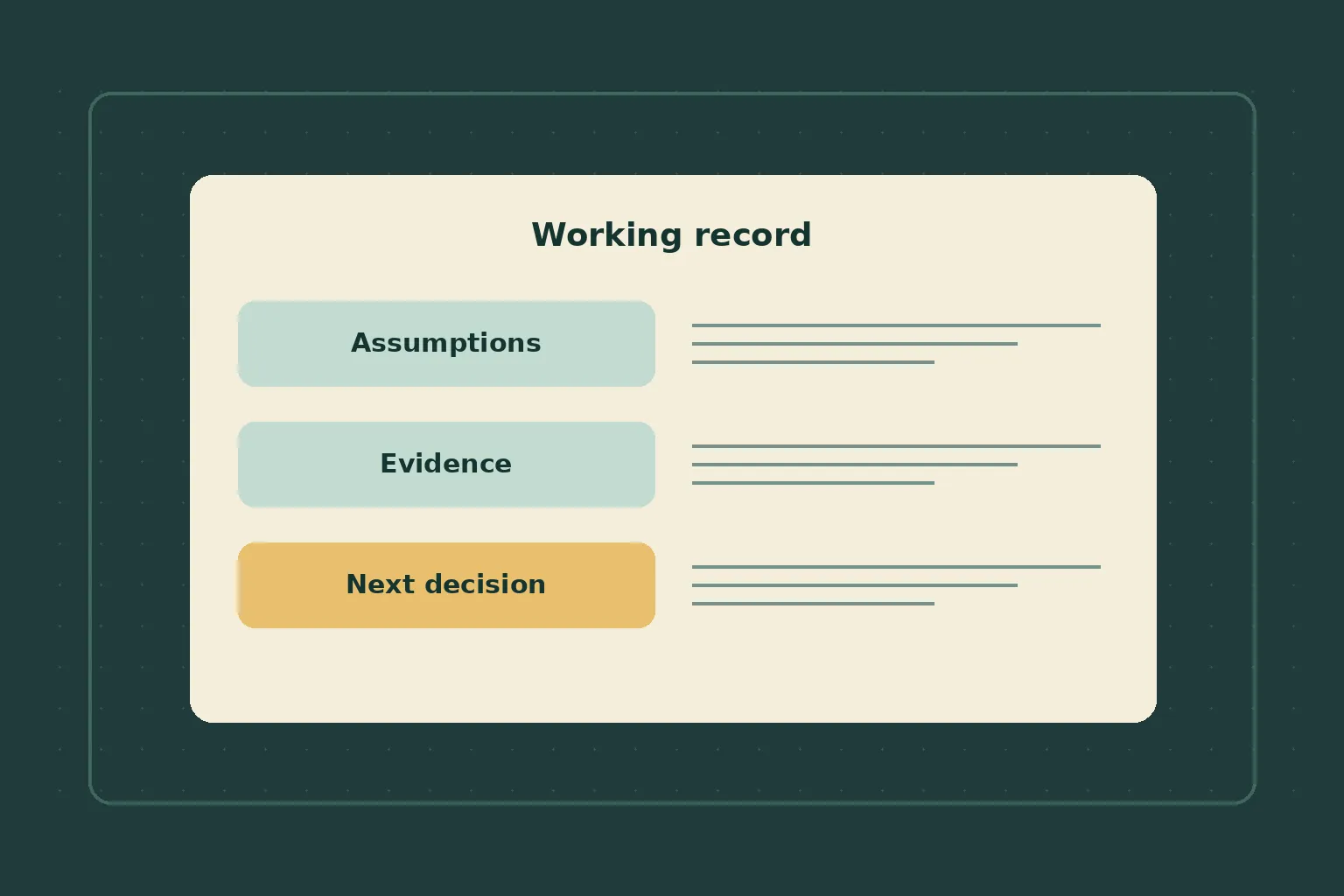
A Go/No-Go Memo for a Behavioral Health Service Line
Write a bounded go/no-go memo for a proposed behavioral health service line, with decision authority, evidence, assumptions, and an explicit stop point.
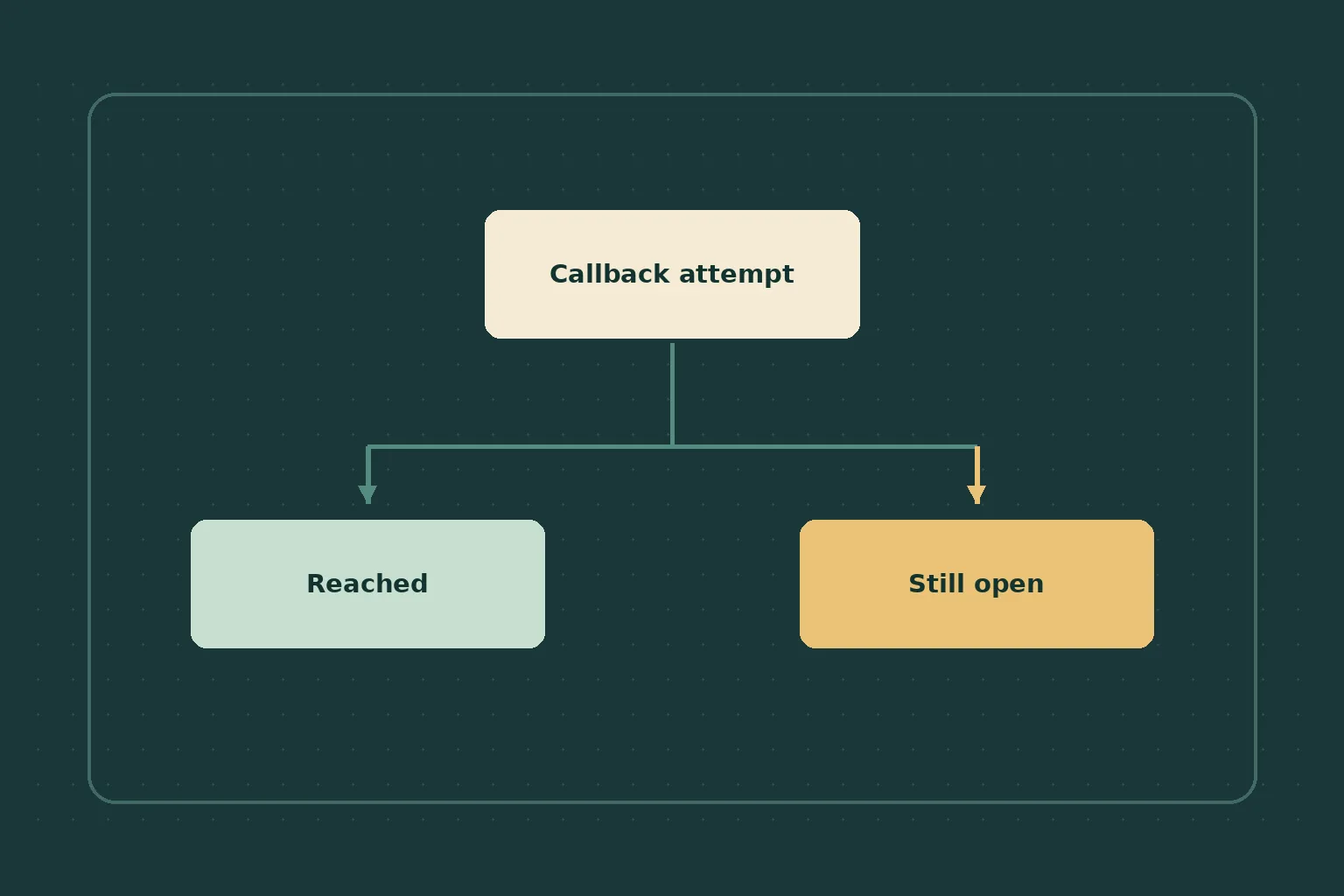
How to Document Unanswered Admissions Callbacks
Record what happened after an unanswered admissions callback, assign unresolved decisions, and document administrative closure with fictional examples.
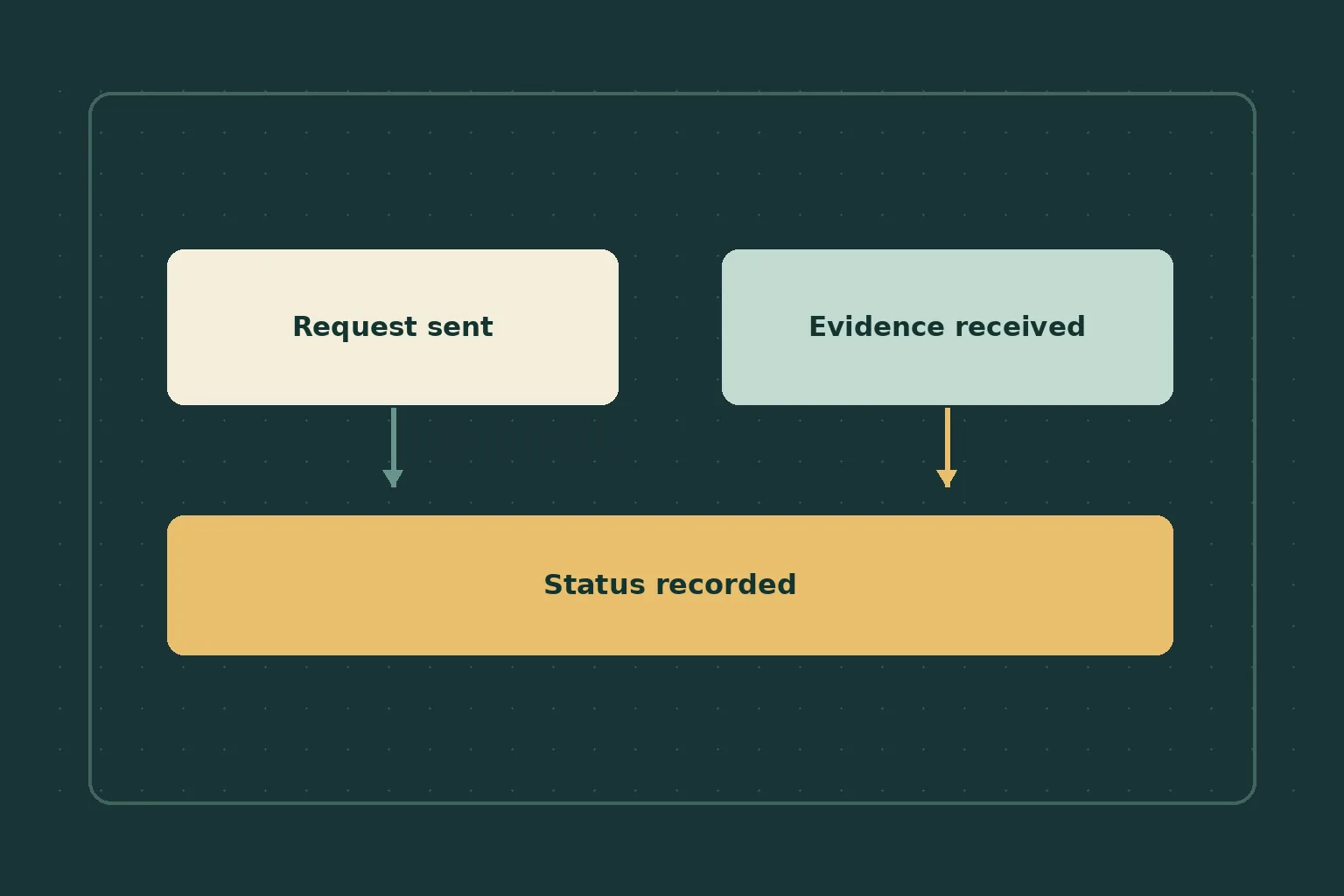
Verification Requested vs. Reviewed in Admissions
Separate requests, responses, reviewed facts, and open exceptions in an admissions administration status map.
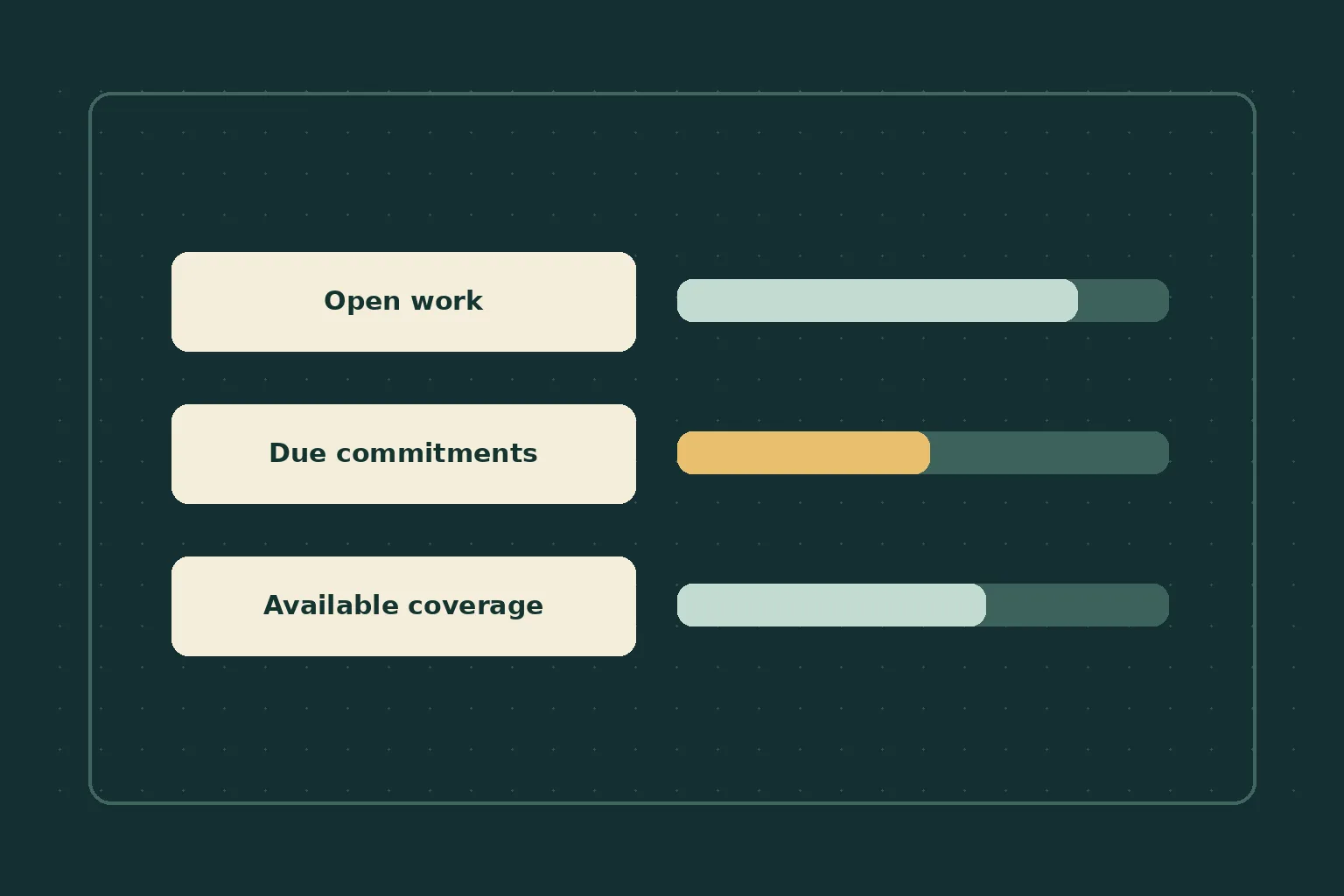
Weekly Admin Capacity Check for Program Managers
Use a weekly worksheet to review due office work, confirmed resources, and carryover, then make one dated adjustment to resolve a scheduling conflict.
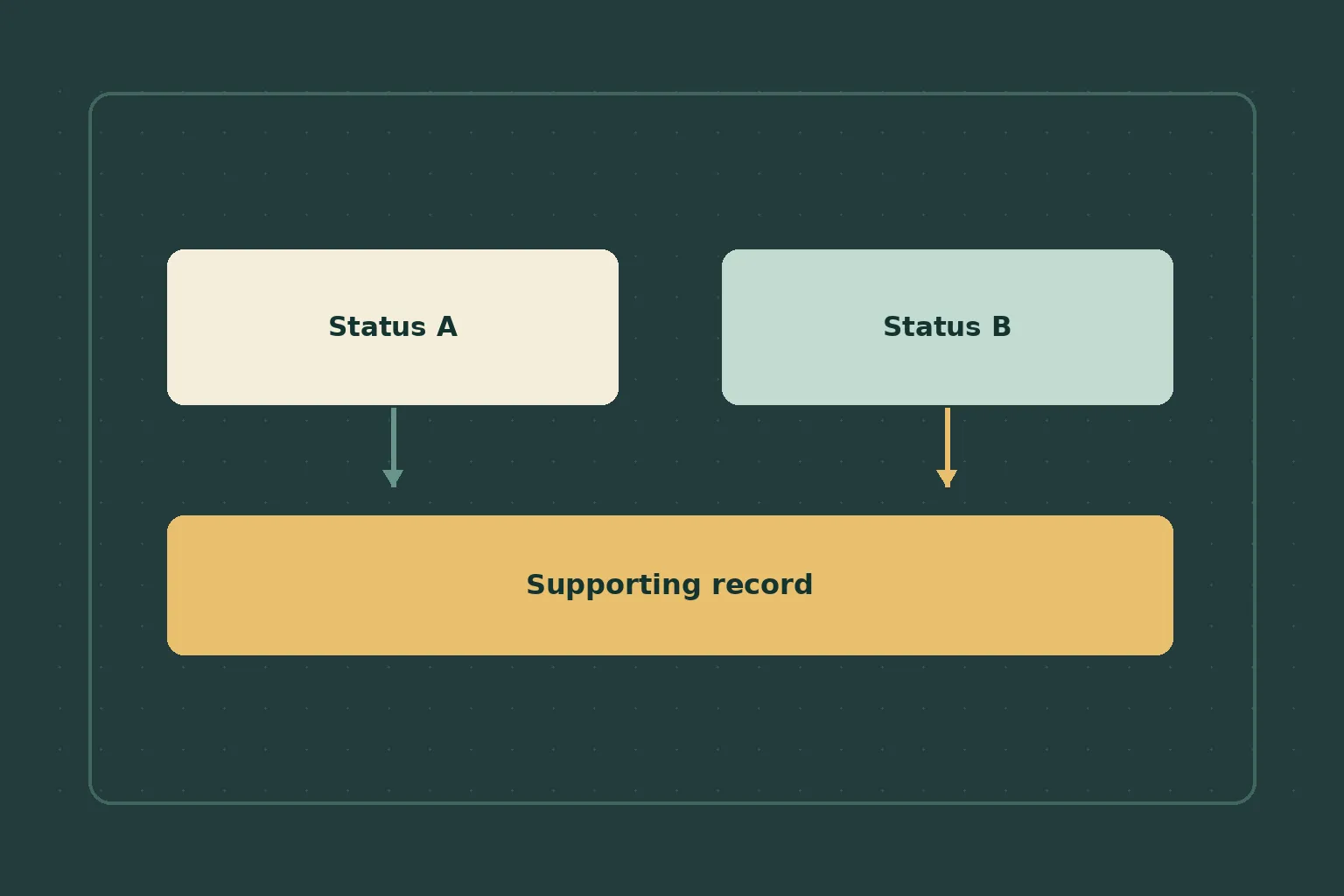
When an EMR and CRM Disagree About an Operations Status
Clarify what conflicting administrative statuses mean, which owner can confirm the relevant event, and what belongs in the next operations report.
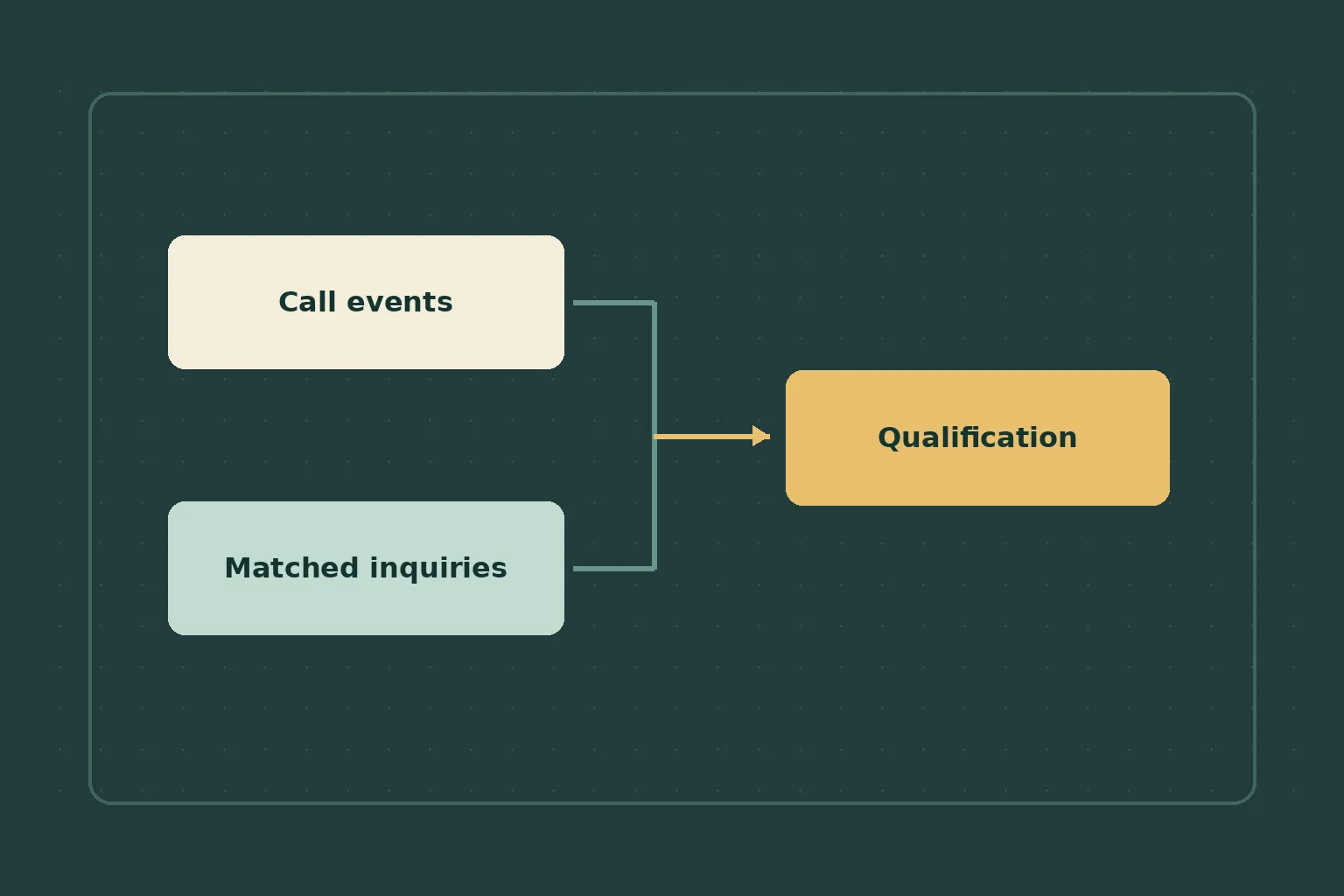
When Paid Calls and Qualified Inquiries Diverge
Compare paid-source call events, distinct inquiries, and recorded qualified conversations using a retrospective worksheet for marketing and admissions.
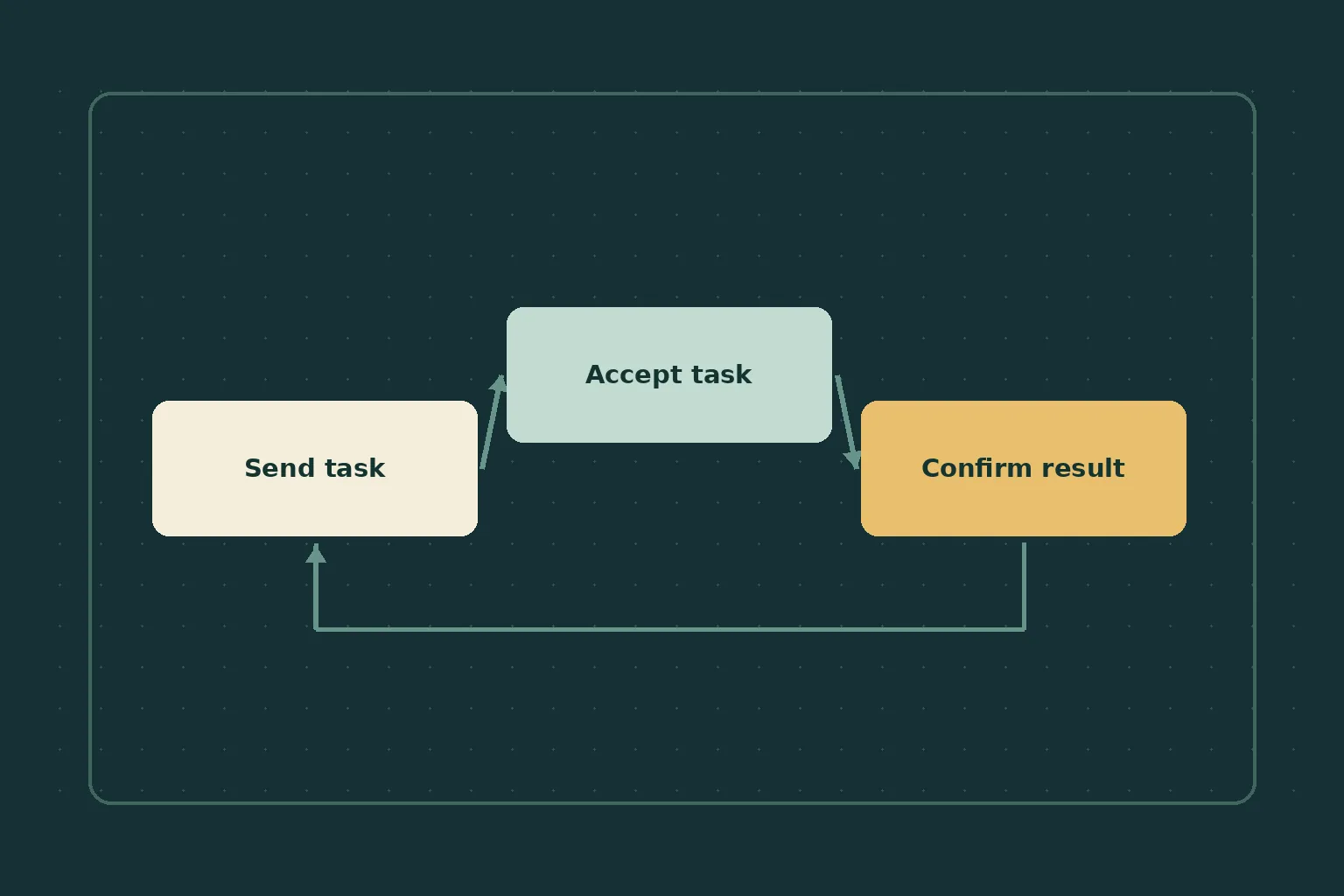
Why Closed-Loop Referrals Break Between Departments
Trace an internal administrative referral task through receipt, acknowledgment, assignment, and escalation to pinpoint where ownership changes.
Behavioral healthcare insights
Connect strategy with day-to-day decisions
Behavioral healthcare growth involves connected decisions about services, people, processes, and market needs. Use these articles to frame your questions, then explore Alliance’s consulting services for the broader scope of support.
Plan development and growth
Consider the business questions behind program planning, licensing preparation, market positioning, and expansion. Topics connect early assumptions with operational requirements so readers can identify what needs closer review.
Strengthen the operating model
Admissions workflows, referral relationships, marketing, and leadership all affect how an organization functions. Look for connections between departments rather than treating each activity as an isolated task.
Our approach connects planning with practical implementation, a useful perspective when weighing priorities and next steps.
FAQs
Who is this blog for?
Healthcare entrepreneurs, treatment-provider leaders, and teams exploring the business side of behavioral healthcare can use it to organize questions and inform internal discussions.
Let's discuss your organization
What comes next for your program?
Connect with Alliance Behavioral Consulting to discuss your launch, operational priorities, or growth plans.