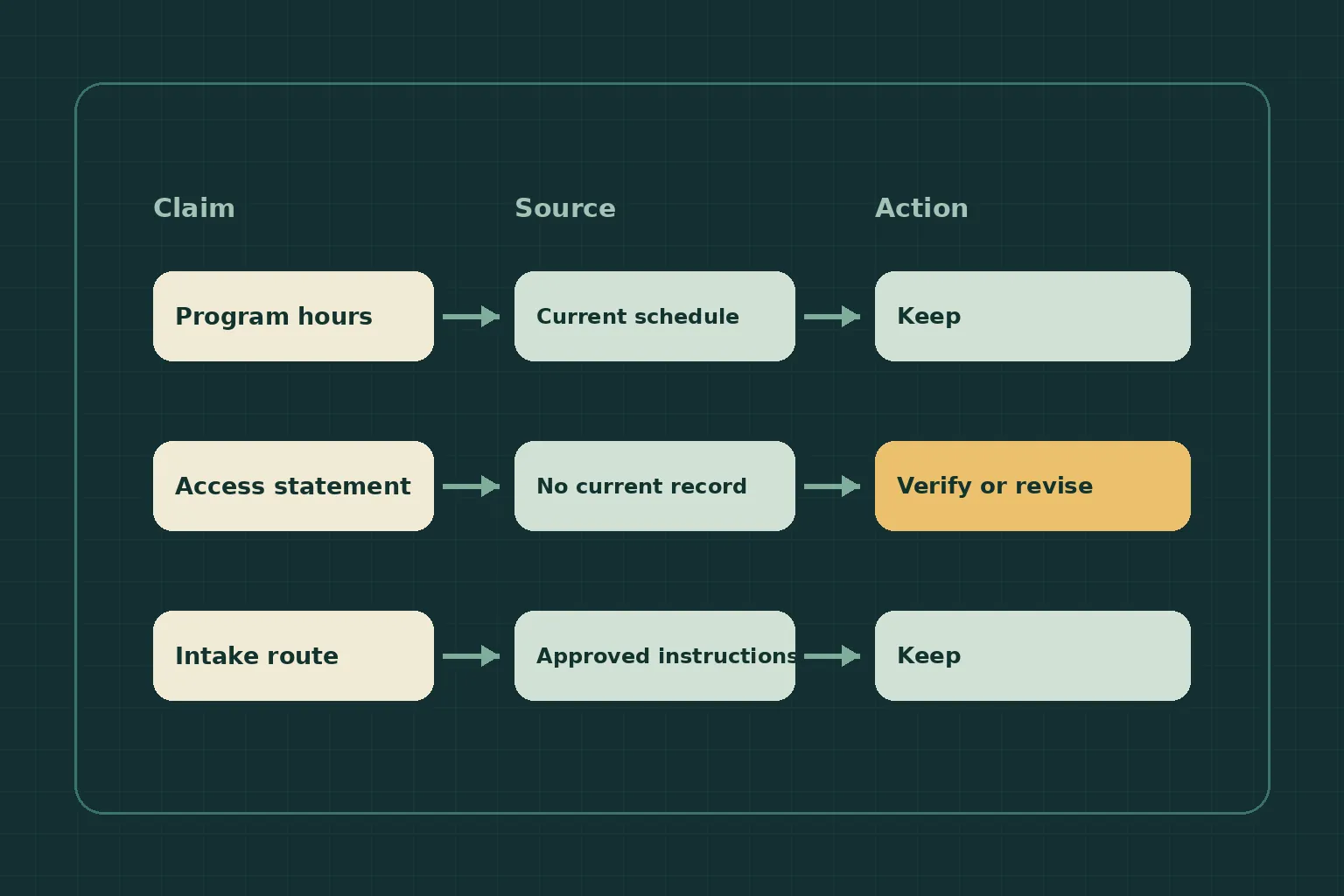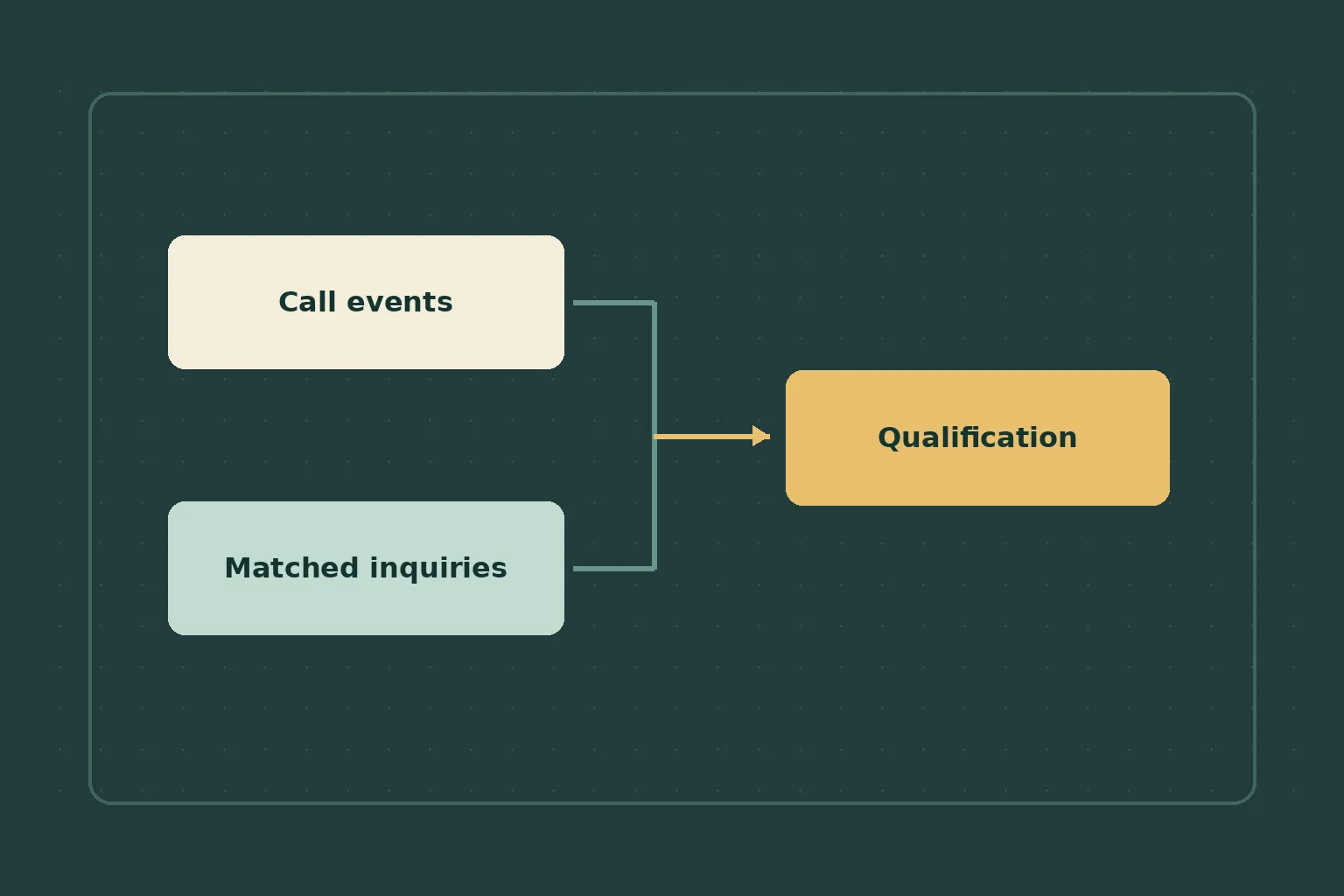
A behavioral health organization can see more calls attributed to paid sources while its admissions team records fewer conversations that match its administrative definition of a qualified inquiry. Those figures can both be accurate. A call record describes an event. A distinct inquiry describes a request. A qualification record describes what the team could confirm about a conversation under a stated rule. A useful review gives each figure its own definition before explaining the difference.
Start with two completed reporting periods. Use information the team is already authorized to review and keep the working comparison at the aggregate level. The goal is a retrospective explanation: which counts moved, which records support that conclusion, and what remains unknown. The result should tell a manager which part of the reporting or receiving process to inspect.
Fix the question before opening the reports
Choose one reporting question, such as “Did the increase in paid-source call events coincide with more recorded inquiries about a verified program?” Include the programs, receiving locations, and dates in the question. Report owners can then identify the same scope in each system rather than comparing a channel-wide export with one team’s queue.
Write down whether the comparison will use activity during each period or later outcomes for requests opened during each period. An activity view counts a conversation when it occurred. An opening cohort view starts with inquiries opened in the period and looks for a documented result through a stated cutoff. A Friday inquiry discussed on Monday can appear in different rows depending on the question. Both views can be useful when the headings clearly describe them.
If the prior review already used a definition, verify whether the team still applies it. A change from “call connected to the phone system” to “person and staff member spoke” can change the count even where the workload is steady. Keep earlier numbers with their original definition if the records cannot be recalculated consistently. Alliance’s marketing performance tracking and analytics service addresses measurement questions when teams need to reconcile definitions across reports.
Give each measure a name that matches its evidence
Use the following starting definitions, then align them with the approved report boundaries.
| Measure | What one count represents | What must be checked |
|---|---|---|
| Paid-source call events | A recorded inbound call event assigned to a paid source under the stated attribution rule | Event identity, source rule, call date, and receiving route |
| Known distinct inquiries | One request that the admissions team can reconcile to the selected scope | The inquiry definition, whether a later call revisits an open request, and which records are still unresolved |
| Recorded qualified conversations | A connected conversation meeting the team’s documented administrative definition | Whether the relevant facts and next route were recorded using the same definition in both periods |
| Calls with unresolved source | Call events where the current record does not support a source assignment | Which field is missing, how the uncertainty is counted, and who owns the review |
An administrative qualification rule could require a recorded exchange about a verified program with an appropriate first contact path. Document the criteria actually used, including what happens when the program or location is uncertain. A team should be able to reproduce a total from the same criteria without guessing what a caller meant or who made an admission decision. The column is a description of recorded administrative activity.
Check if qualified conversations can repeat for the same inquiry. If the report needs the number of distinct inquiries with at least one qualified conversation, write that label in full and count each reconciled inquiry once. A separate conversation activity report can still count two qualifying exchanges about the same request. The admissions performance metrics and reporting page describes related work on making the definitions behind such measures visible.
Line up the periods and keep unresolved calls visible
Use periods whose dates, locations, and receiving hours are clear. Check whether either period includes a system change, a partial reporting day, a missed export, or a change to the available receiving routes. A note that a report only covers part of one day is more useful than an exact-looking total for an incomplete week.
Group the rows by the same report cutoff. A source assignment may arrive after the transfer or after the team enters the conversation. If the report owner can verify a later correction, preserve the date of the revision and its reason. A reader comparing two periods should be able to see how many records were still unresolved when each figure was produced.
Avoid hiding changes to the source definition. For example, one system might report that a call took place after an ad interaction under its assignment rule, while a receiving system records the route the caller used. Those are related observations with different boundaries. When they disagree, identify the field that supports each label and keep the discrepancy visible for authorized review. Do not assign a source from memory to make a table add up.
Work through an example where the direction diverges
Suppose an organization looks at two fictional weeks using the same intake program, local time, and reporting definitions. The figures below are invented and illustrate what can be read from an aggregate worksheet.
| Fictional reporting week | Paid-source call events | Distinct inquiries known from the reconciled view | Recorded qualified conversations | Other calls with unresolved source |
|---|---|---|---|---|
| A | 40 | 28 | 16 | 3 |
| B | 52 | 29 | 15 | 9 |
In the example, the paid-source call total rises by 12 and the known distinct inquiry count rises by one. The recorded qualified conversation count falls by one. The unresolved-source column describes other calls whose source is still pending and does not add them to the paid-source call total. The count of qualified conversations is an activity count, so the worksheet does not divide it by distinct inquiries to claim a conversion share.
Write down the simplest accurate observation first. “We recorded more call events attributed to paid sources, almost the same number of known distinct inquiries, and one fewer recorded qualified conversation. More calls remained without a confirmed source at the cutoff.” That description tells the reviewers where the measured differences are. It leaves open why they occurred and whether the unresolved records would change the result.
If leadership asks how much of the extra call activity involved repeat contacts, give the reporting owner that exact question. Keep the count pending until the owner can establish which repeated events belong to the same request in the authorized system. A measurement worksheet can hold an aggregate result or a reviewed exception count. It does not need individual names, identifiers, message details, or recordings.
Look for the step where the counts start to separate
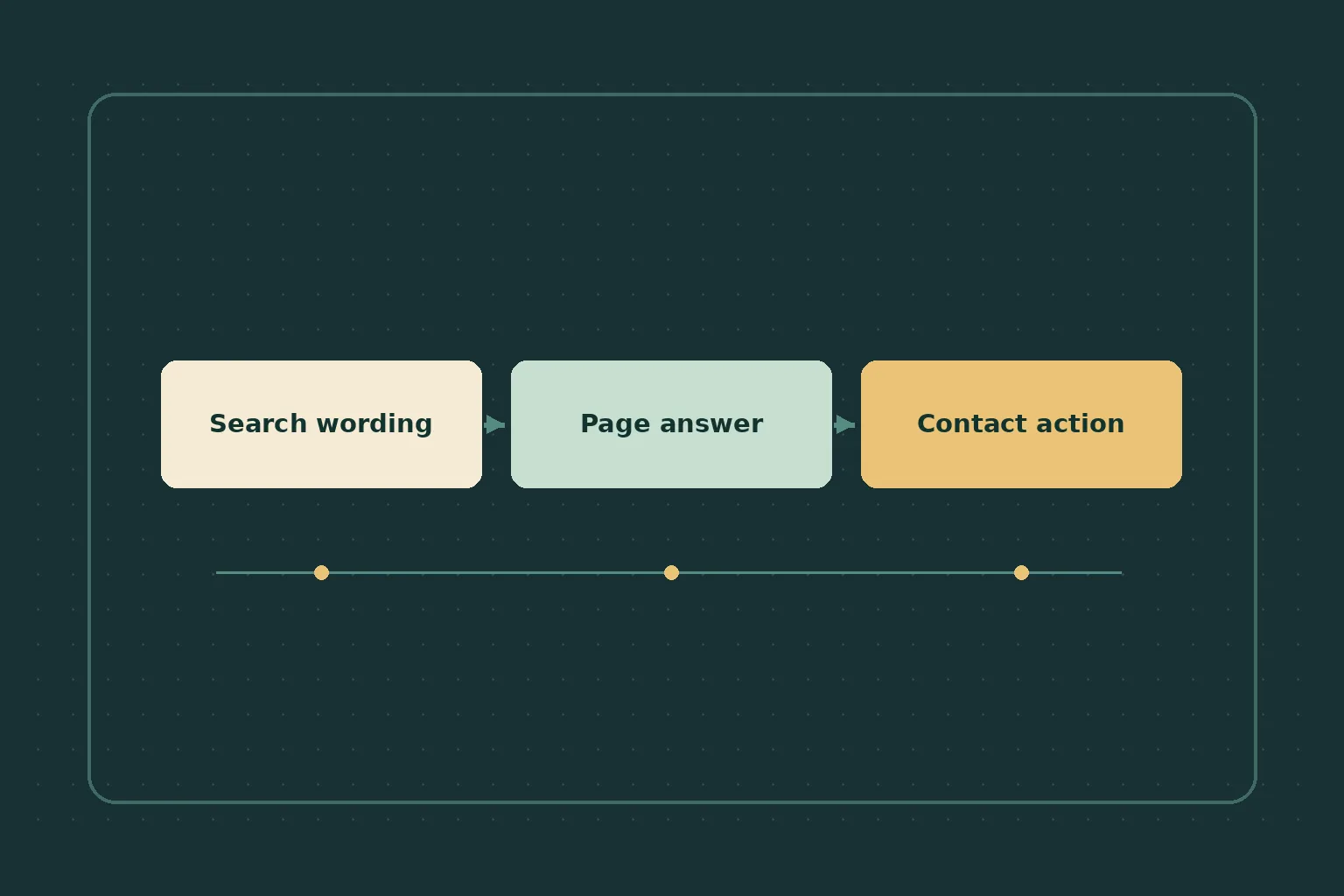
Trace the agreed sequence from an incoming event to its receiving route, a connection where recorded, a related inquiry where known, and a qualification record where applicable. Ask the owners which step accounts for the largest confirmed difference. A comparison by stage can show where more detail would help without assuming that differences at the final column explain the initial count.
If repeat call events account for much of the change, ask whether they concern the same request and whether the reported action was inbound, an outbound attempt, or a duplicated event from another source. Those labels answer different questions. A repeated inbound call may reflect an existing inquiry. An outbound action can describe useful work and still be outside the paid-source inbound event count.
If the share of calls that reach a confirmed conversation changes, check whether both reports treat menus, voicemail, transfers, and abandoned calls consistently. The receiving team can examine the documented route and coverage under its normal process. Agreement on the definition of a connected conversation comes before explaining a change in its count. Alliance’s call monitoring, scoring and quality assurance service is relevant when documented call outcomes need clearer and more consistent review.
If a larger number of connected calls lacks a usable qualification record, check whether the field appeared on both periods’ forms and whether recording expectations were the same. Compare categories the team uses for questions about a different program, an unresolved location, or a request the receiving team could route. A missing disposition requires investigation. It cannot establish that the conversation failed to meet the definition.
Keep disagreements about count definitions separate from differences in the underlying work. For example, a dashboard could group a transferred call under the first line it reached while an admissions report groups it under the team that answered. Write down both rules and compare the relevant route totals before calling either record wrong. The next reviewer can then decide whether a single combined view is supportable.
Record one follow-up that can confirm or close the gap
People reviewing an aggregate table often leave with three explanations and nobody responsible for checking them. Choose one question that the available evidence can resolve. Give the question an owner, a due date, and a result the group will accept as completion. If another person controls the required report, identify that dependency in the same note.
| Review question | First check | Useful output |
|---|---|---|
| Why did more calls lack a source assignment? | Confirm whether both weeks used the same report fields and source rule | Validated reason for the gap, or revised unresolved count and reason it remains open |
| Did additional calls concern existing inquiries? | Have the authorized owner verify a supported aggregate match to current inquiry identities | Confirmed count of repeat inbound events within the reviewed scope |
| Did qualification notes change? | Review the same documented administrative definition and exclude records with no supporting outcome | Comparable totals under the shared definition, with unsupported records identified separately |
When questions span marketing and admissions, have one owner explain the source column and one explain the receiving column. The receiving team can say which actions are visible to it and when the records become available. The marketing owner can explain what the source report assigns and how its cutoff works. Alliance’s admissions process evaluation and optimization page describes the kind of workflow review that can clarify which team owns the next action.
Bring an answer the next report can reuse
End the review by saving the two windows, the definitions, the confirmed counts, and any unresolved rows. Record where each count came from and which source owner verified it. If a rule changes, write down its effective date and whether the earlier period could be reproduced under it. The next reviewer should have enough information to distinguish a new pattern from a new way of counting.
Return to the fictional comparison after the assigned check. An owner might confirm that the call-source report changed one field and that several events still need a documented assignment. The new finding explains why the source discrepancy needs attention. It leaves the conversation result where it was unless someone independently verifies a correction to that measure. A reliable worksheet updates the affected count and preserves the reasoning for the rest.
Before sharing the next period, ask a colleague to read the table without the charts or commentary. Have them say what would count as one paid-source call event, one distinct request, and one recorded qualified conversation. Ask what the unresolved column means and which team owns the check. When those answers are clear, marketing and admissions can compare the same period without attributing meaning to a count it cannot support.