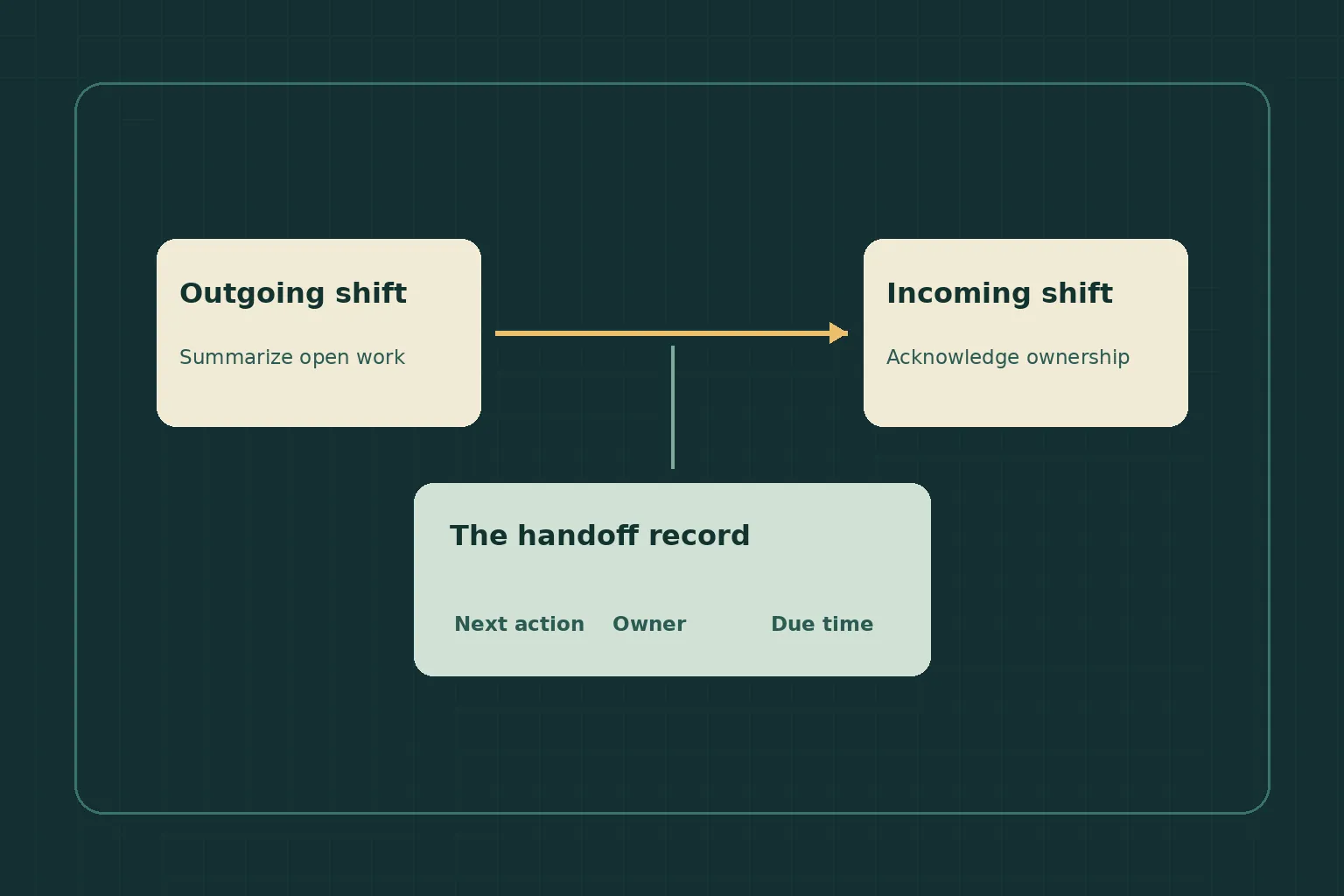
A shift note that says “follow up tomorrow” leaves three questions unanswered. Who will follow up, when is it due, and what still needs to happen? An incoming admissions coordinator should be able to answer all three without opening a chain of messages or calling the previous shift. If the action was handed off but nobody acknowledged it, the outgoing shift still needs a way to tell whether it has coverage.
Use this checklist for administrative admissions work such as promised callbacks, requests to another department, and updates that depend on a scheduling response. Keep the queue in the system your team already uses, and use the existing record for contact instructions and conversation details. The examples here are fictional. They illustrate how to transfer ownership of an action.
Start with one row per open action
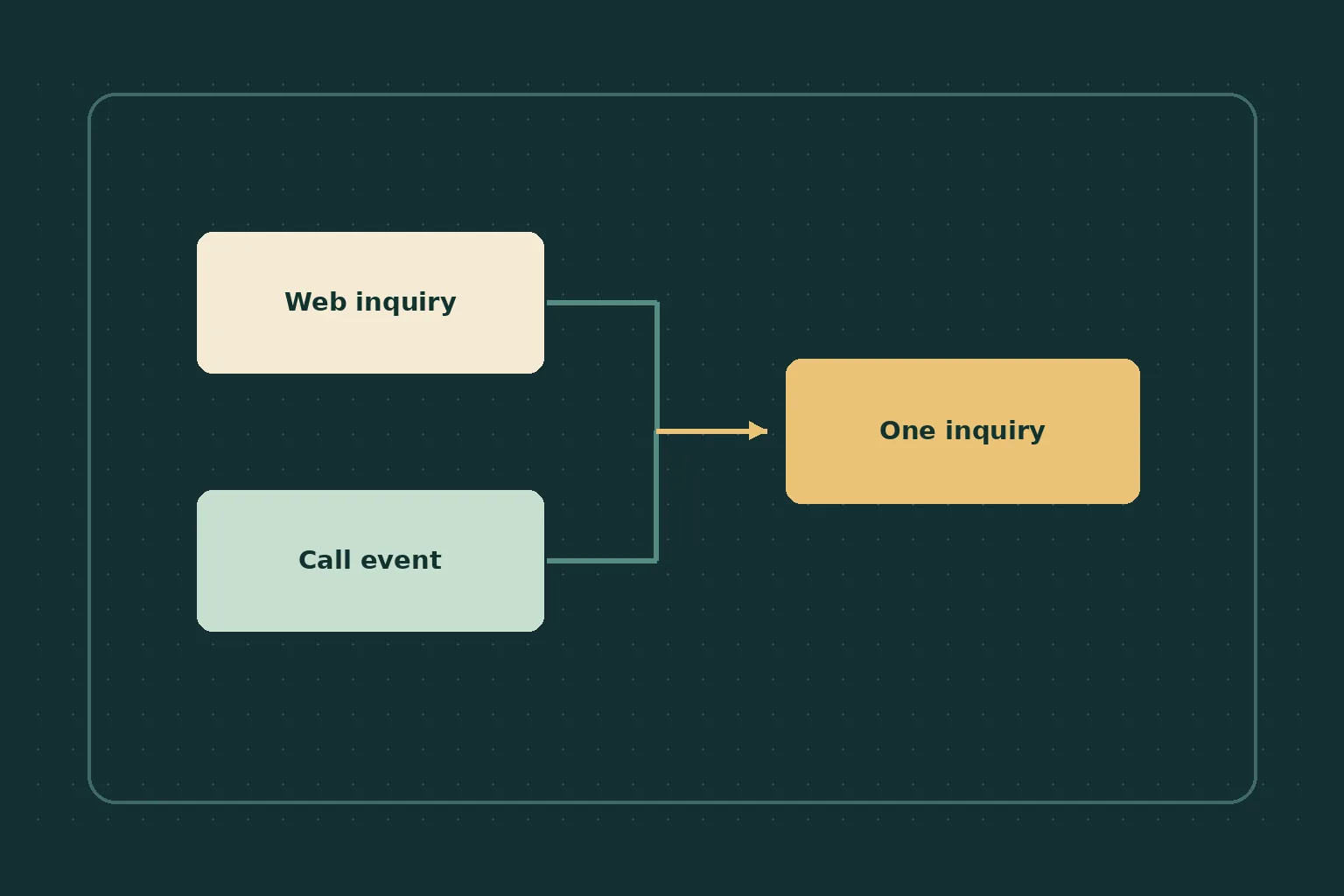
A single inquiry can generate several tasks. Someone may have promised a callback, asked scheduling for availability, and planned to check the response before calling. If those tasks have different owners or deadlines, give them separate rows against the same underlying record. Keep the dependency visible. For example, the callback row can point to the scheduling request and tell the owner what was agreed if the response has yet to arrive.
| Field | What to enter | Fictional example |
|---|---|---|
| Record reference | A pointer to the existing internal record | EX-104 |
| Last completed step | A brief, observable fact | The caller agreed to a Tuesday callback |
| Next action | One action beginning with a verb | Make the agreed callback using the instructions in the record |
| Due time | The specific date and time, with time zone where needed | Tuesday, November 24, 10 a.m. Eastern |
| Receiving owner | A person or a staffed queue with an identified lead | Incoming queue lead, acknowledgment pending |
| Blocker or backup | The condition that can interrupt the action and who handles it | If coverage changes, contact the designated backup before the agreed time |
| Status | Whether this action is queued, accepted, or done | Queued |
Add detail only when it changes what the receiver does. “Called at 4:10 p.m.” might explain why a second attempt is still open. A long retelling of the conversation makes the action harder to find. Link to the original record instead of duplicating conversation notes or contact information in the handoff row.
For agreed callbacks, make sure the owner can distinguish the time agreed with the caller from the internal time to prepare. At 9 a.m. the owner might need to check a reply. At 10 a.m. they may need to make a callback. A row marked “10 a.m.” for both gives the owner no time to find out what happened to the reply. Teams reviewing how callback commitments are recorded can use the same distinction when evaluating their lead management and follow-up systems.
Outgoing shift checklist
- Review the open queue. Look beyond untouched items. A row marked complete may have closed an attempt while leaving a callback promise open. Check tasks you sent to another department and anything whose due time lands early in the incoming shift. Remove an obsolete action through your team’s normal record process so it does not look like a second assignment.
- Write the last completed step and the next action separately. “Requested a scheduling response” describes something that happened. “Check for the response by 9 a.m.” is something the incoming shift must do. A line that says “scheduling pending” leaves the receiver guessing whether anyone actually sent the request.
- Put a name and a time on the next action. Replace “someone should look into this” with a designated owner who can see the record. If the role rotates, identify the lead staffing that role for the relevant period. If an incoming person has yet to confirm coverage, leave the row queued and identify who is monitoring it until someone accepts.
- Call out dependencies. Say which prior request the action relies on, who owns that request, and when the receiver should review the dependency. If the next step changes when a reply is late, point to the existing instructions. The receiver should not have to infer what someone else promised.
- Surface work that cannot wait for acknowledgment. If an agreed callback falls before the next shift starts, route it to the existing staffed backup. Record who accepted it and when. If a backup has yet to accept, bring the coverage gap to the designated lead while the outgoing shift can still act.
Before signing off, read the nearest due row as if you were new to the shift. If it takes several clicks to figure out who owes the next action, rewrite the row. If both shifts believe the other has accepted it, check the acknowledgment. These are two different problems. Improving row wording helps the first, while an ownership rule helps the second. An admissions process evaluation can use this distinction to trace where an item actually stalls.
Incoming shift checklist
Start with the earliest due commitments and look for rows without a named or reachable owner. Open the linked record and confirm that the handoff matches the last action recorded there. If someone has already completed the action, reconcile the row against that record before anyone repeats the work. If instructions conflict, ask the designated queue lead to clarify the assignment.
Acknowledge the work you can cover. A brief acknowledgment can confirm the owner, the due time, and any dependency that changes the action. For example, “Maya accepts the 10 a.m. callback. She will check the scheduling reply at 9:15 and follow the instructions in EX-104 if it has not arrived.” Someone reading that acknowledgment can tell what Maya agreed to own. They also know when to look for a status update if the dependency is still open.
If the team accepted a batch at once, make sure the acceptance can be traced to the individual rows. A general “got it” in a chat thread may only mean someone saw the message. If a row is missing a deadline, owner, or essential next step, flag the missing field and send it to the queue lead for clarification. An incomplete row can remain visible while someone resolves it.
Once you finish the action, record what happened and close that action. If you agreed to a further callback, create a new action with its own owner and deadline. This keeps “attempt completed” separate from “follow-up still owed.” If an owner has to transfer the open action during the new shift, record who took it and confirm that the new owner accepted. The original due time stays visible unless there is a confirmed change.
Give each status a practical meaning
Queued means the action is available for handoff and awaiting acknowledgment. Keep the intended owner and the time by which someone should review the assignment visible. A row can be queued for tomorrow morning even though another person monitors it until the morning shift begins.
Accepted means a named person has taken responsibility for the action and confirmed coverage for its due time. A dependency can still be open. For instance, an owner can accept a 9 a.m. review of a scheduling request while the scheduling team still owes its answer. Write the two responsibilities separately so a request to another department never looks like a transfer of admissions ownership.
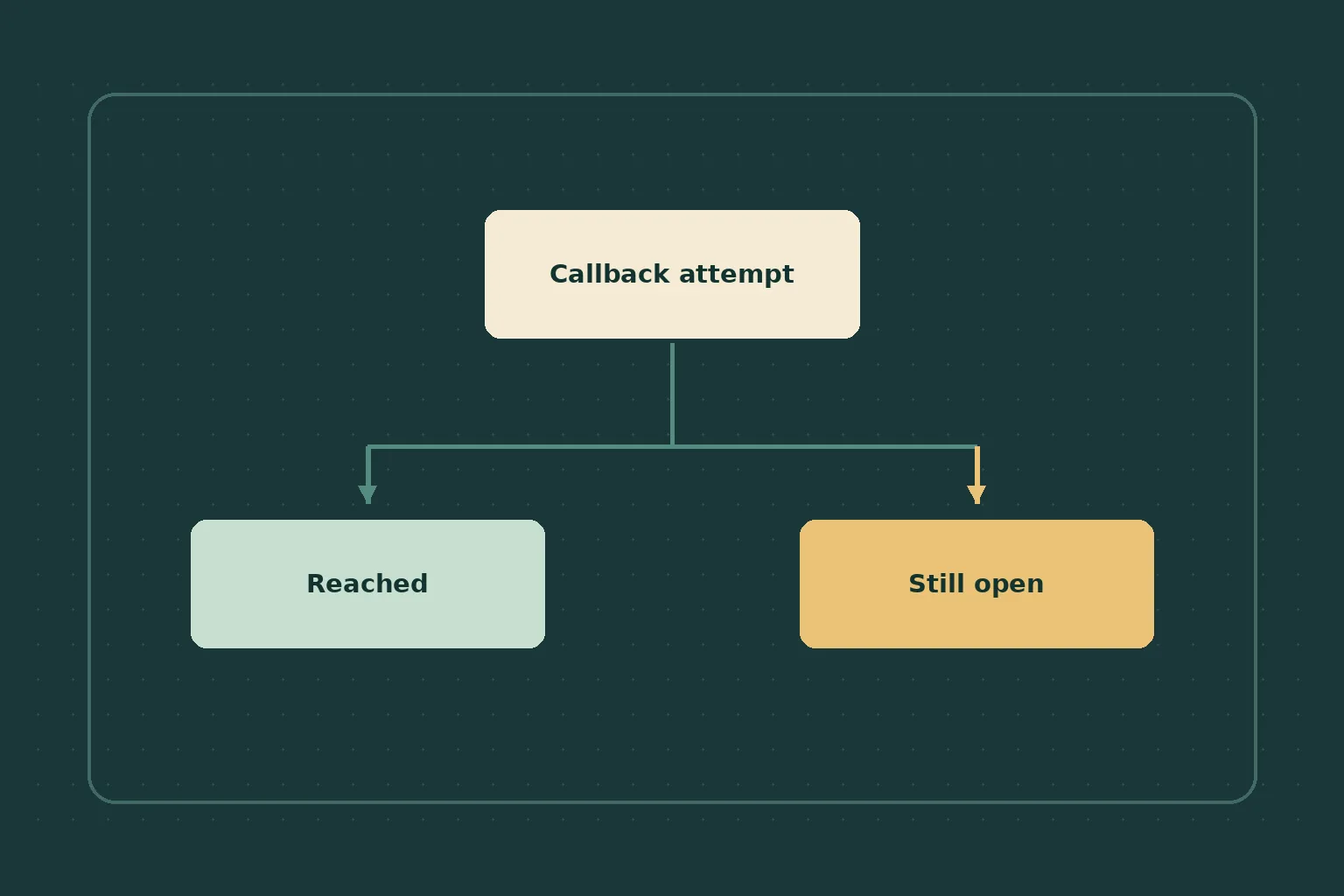
Done means the action described on that row took place and the outcome is recorded. A completed callback attempt may create another open task. When reviewing old rows, ask whether the word “done” applies to a particular action or to an entire inquiry. The checklist uses it for the action.
One way to spot a weak status rule is to ask two team members to explain who would act next when they see “pending.” If they give different answers, retire that word from the handoff view or pair it with a named owner and a concrete follow-up. This matters most when a request crosses teams. When reviewing cross-department communication and coordination, walk through who provides the information, who checks for it, and who owns the next external commitment.
Rehearse three fictional handoffs
Set aside a short team huddle and create three test records. Give them to someone who did not write the examples. Ask the receiver to read the queue, state when each action is due, and either accept it or identify the backup. The observer can record what the receiver had to look up or ask. Use simple examples so the test measures the handoff itself.
EX-104 is an agreed callback. The outgoing shift confirmed a 10 a.m. callback for the next business day. The record holds the contact instructions. The row names a proposed morning owner and the deadline. Ask the receiver to acknowledge the row and show where the result would be recorded. Then ask how a second attempt would appear if the underlying record calls for one. The receiver should be able to show a closed attempt and a separate open action without changing the original history.
EX-207 is a pending reply from scheduling. The outgoing coordinator sent the request at the end of the shift. The queue assigns the incoming coordinator a 9 a.m. check for the reply, and an existing record describes the next step if it is still outstanding. Ask the receiver to explain who owes the reply and who will check for it. If both get named as owners of the same row, separate the request from the admissions follow-up.
EX-319 is a callback the incoming shift cannot cover. The time agreed with the caller overlaps with a known coverage gap. The incoming coordinator should surface that gap to the designated backup and leave the row visible until it is accepted. In the exercise, make the backup unavailable on the first try. Ask the receiver who can resolve the assignment, what the queue would show in the meantime, and how the outgoing or monitoring lead would know someone accepted.
Pick one field or rule to improve after the rehearsal and run the same three examples again. Changing one thing at a time makes it easier to see whether the problem was a missing field, an unclear status, or a gap in the staffing plan. Build the exercise into admissions team training and coaching to give new coordinators practice with both accepting a handoff and returning an assignment they cannot cover.
Review the handoff during the first week
An admissions lead can sample a few shift changes and ask three questions. Which due actions still had no accepted owner when the outgoing shift ended? Which deadlines passed before someone noticed a dependency or coverage gap? Which actions were repeated because a result had been recorded in one place but had yet to reach the working queue? Check the underlying records so you can distinguish an unclear note from an assignment nobody took.
Use each pattern to decide what to change. Several rows with missing owners may point to a disagreement about who staffs the queue between shifts. Repeated work may indicate that staff are completing tasks in the main record but leaving their queue rows open. Missed commitments at the same time of day may justify reviewing the backup plan for that period. Ask the people working those shifts what they actually see when a handoff arrives and when they first know it is theirs.
A practical handoff gives the receiver enough information to accept a real assignment. Before the outgoing shift steps away, the record should show the next action, its due time, who accepted it, and what happens if coverage changes. Why the action exists can stay in the linked record. The queue should make clear who will do it.