When a behavioral health outreach team has several possible relationships to work on, start with the opportunity it can describe and support. Ask whether the organization has a verified service that matches the question, whether the other organization has expressed a specific business need, and whether a staff member can take the next action. A short conversation to clarify an established program’s contact route can be more useful than a long list of calls made around a service the organization has yet to confirm.
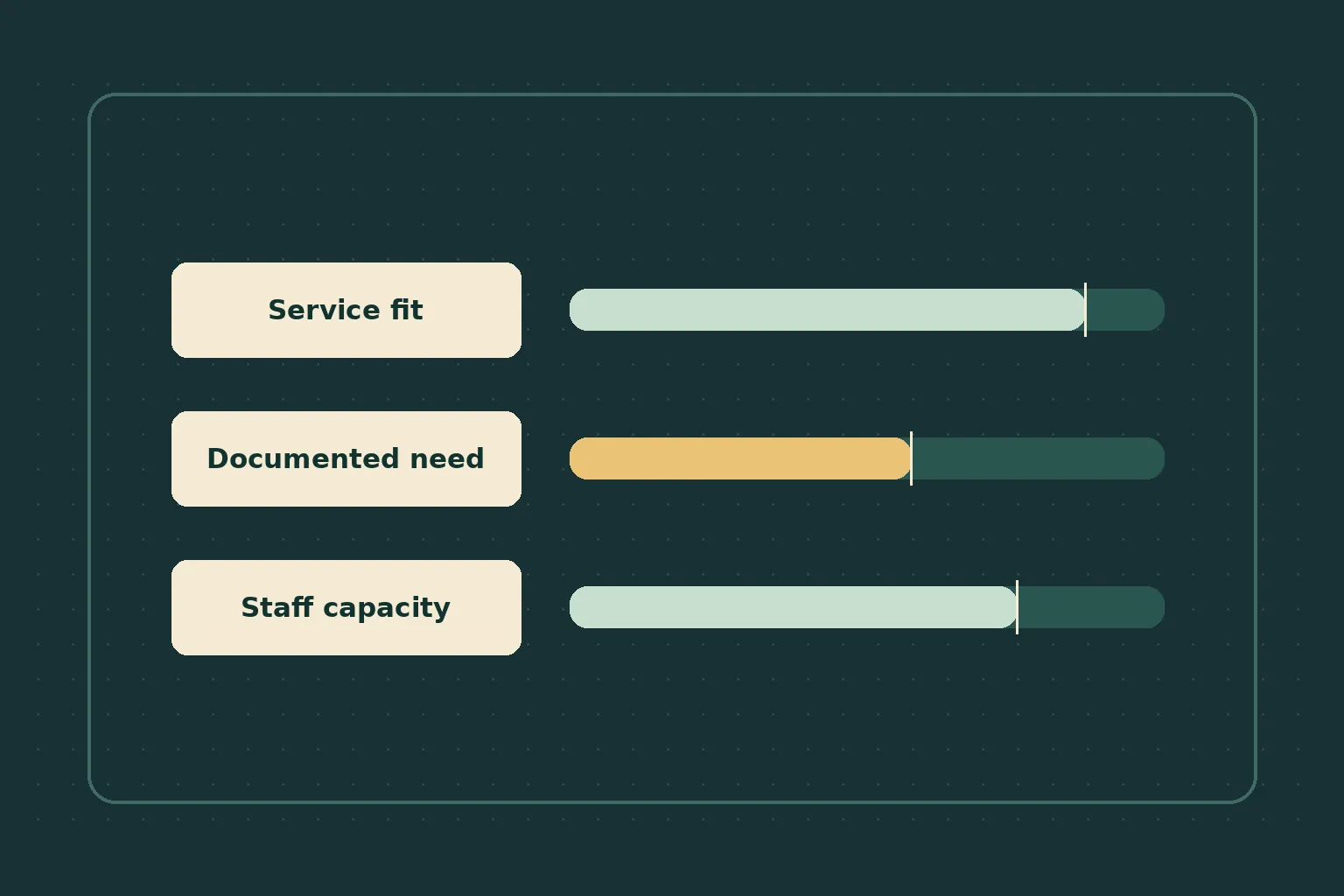
Keep a simple grid for the decision. Rate service fit, documented need, and staff capacity as strong, unclear, or poor for the proposed next action. A forecast of many calls can prompt you to investigate further. It cannot tell you which service the other organization needs or who will do the work if an inquiry arrives. Those questions deserve direct answers before the team sets an outreach priority.
Start with an opportunity you can describe in one line
Define the opportunity as a specific next step. “Discuss our program” is a broad instruction. “Confirm which department should receive general program questions from the liaison team” gives staff an action they can plan. A single organization may have more than one opportunity. One department may have already asked for an explanation of a business process, while another has yet to identify a reason for a conversation. Give those opportunities separate rows.
Write the request or working assumption in plain language. Include the date and the source of the information in your authorized working system. Evidence might be an agreed item from an earlier meeting, a business question recorded during a routine call, or an approved description of the program and locations. A general impression about the organization is a starting point for verification. It leaves the proposed next step open.
Review scope at the level of the specific program. An organization can have a relevant relationship in one region while a proposed conversation concerns a service or location your staff cannot confirm. Clarify what has already been approved and who can verify anything unresolved. Alliance’s referral network development describes how program readiness and outreach ownership can inform relationship priorities.
Compare service fit, documented need, and capacity
Score the proposed next action using the table below. Ask each person who brings a candidate to explain the three judgments with current business evidence. The purpose is to expose what will help the team make a decision this week. No numeric score is required.
| Factor | Strong | Unclear | Poor |
|---|---|---|---|
| Service fit | An approved program and verified location or area match the organizational question | A service name, site distinction, or location detail is awaiting confirmation | The request centers on a service your organization does not provide |
| Documented need | The organization has raised a specific business question or agreed to a next step | Earlier discussion showed general interest with no concrete need or next step | The proposed activity serves no identified business purpose for this relationship |
| Staff capacity | A named team member has time for the action and knows who supports the next handoff | Staff time, handoff ownership, or the date for a required decision remains unresolved | Nobody is available to take responsibility for the action or expected follow-through |
A strong score in one column leaves the other columns to be checked separately. If a specific need is clear and the fit is uncertain, assign someone to verify the scope. When the service fits and the business question is clear but the receiving team is unavailable, set a review date with the manager who owns capacity. If the request is outside the organization’s actual offering, close or defer that particular opportunity and keep any other relevant work in its own row.
Use the grid to sort organization-level business work. Keep the evidence focused on program facts, organizational requests, owners, and decision dates. Any decision about a person or access to a service belongs in your organization’s existing process. Outreach staff can make their planning decision without adding individual case examples to the grid.
Choose a next action the team can actually finish
For a ready row, identify the smallest action that answers the recorded question or advances the work already agreed. A working step could be an internal review of the approved contact language before a scheduled business conversation. If a colleague has to approve what the team can say, make that approval the immediate action and record who owns it. Once that is complete, update the row to show the next real step.
For an unclear row, state exactly what would change the decision. “Verify which location offers the program named in the partner’s question” gives the program owner a check they can resolve. “Need more information” can remain on a list for weeks without telling anyone where to start. Where several facts are uncertain, start with the one that could make the opportunity irrelevant. Confirm that first before using staff time on meeting dates or materials.
For a deferred row, write down the reason and the trigger to revisit it. A lack of capacity may change after a staffing decision. An unresolved location point may change when the program owner issues approved wording. If a documented service mismatch has no expected change, close that row and keep its rationale. That makes it possible to recognize the same request later without assuming someone else is already reviewing it.
If two ready actions compete for one person’s time, give weight to an agreed date, the consequence of delay, and how much work each action requires. A routine clarification due tomorrow may need attention before an exploratory project with no deadline. If both involve commitments, ask the manager to resolve timing openly instead of double-booking the same follow-up. A narrow queue is easier to maintain when every row has a next owner.
Compare three opportunities using the same questions
Imagine an outreach manager reviewing three fictional opportunities. The first organization is well known and is often mentioned in activity reports. A colleague estimates it could generate many inquiries. The recorded question, however, concerns a program the provider does not operate. The manager confirms the scope with the program owner and closes that opportunity. The team can keep the general relationship in its records without assigning outreach for a request it cannot support.
The second organization has generated little recorded activity. It recently asked which team handles general questions about a verified service in a specific city. The program owner confirms the scope and location. A named workflow owner can review the approved answer before the next scheduled business meeting. The manager assigns that review with a date. The opportunity moves forward because the need, scope, and receiving role are clear.
The third organization brought up a possible introduction for a branch location. The current records describe a service at the main site, and nobody has confirmed whether the branch is relevant to the proposed conversation. The manager records a local scope check and assigns it to the operations owner. The outreach opportunity stays in review until the team has an answer. Alliance’s territory planning and market development is relevant when the distinction between sites or service areas shapes broader priorities.
Someone who sees only the call totals might start with the first organization. The planning grid shows why the second opportunity can progress with the resources available and why the third needs an internal check. When conditions change, the team can revisit each opportunity on its own evidence. No organization has to carry a permanent priority label.
Use activity measures to ask better questions
Call volume shows how much activity was recorded over a period. Before drawing conclusions, check which activity it represents. A call count might include repeat attempts, calls covering several questions, or inbound and outbound conversations grouped together. Where teams use different labels, agree on how each category is defined before using it as a comparison.
Bring a small sample of recent business notes into a planning review. Ask whether the recorded activity led to a clear organizational question, an agreed next action, or a decision to close the opportunity. A high-volume record with no next action may require review of the notes or the purpose of the activity. A low-volume record with one specific request may be ready for a short, useful response through the approved process.
Use measures you can explain and act on. You might keep an internal count of active opportunities with a named next owner, verification tasks still pending, and business questions your team has clarified. Treat those counts as a view of the current work. If the list of pending checks grows over several reviews, ask where decisions are waiting and which team owns that queue. Alliance’s business development performance analysis describes how activity and relationship information can guide a review of priorities and follow-through.
Give each planning review a decision to make
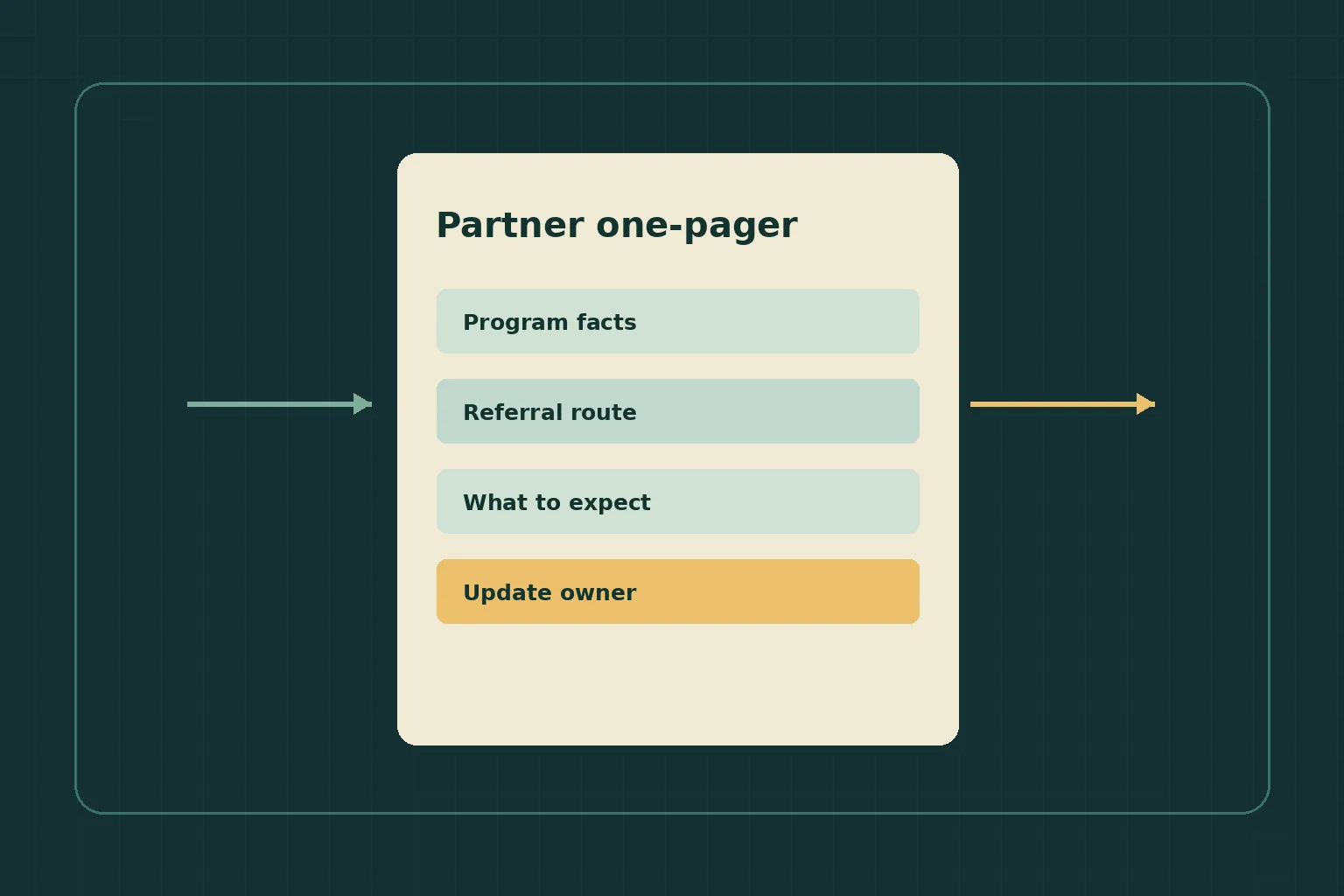
Keep an evidence date, the person responsible for verifying it, a brief explanation, the current status, and the next decision alongside each row. If your team uses a relationship system, keep the row or its reference close to the existing organizational record. When someone reopens an older opportunity, they should be able to see which facts were current when the original decision was made.
A short review can begin with ready work that has a due date, then move to unclear rows with verification due, and finish with deferred rows whose circumstances changed. Ask whether a row belongs in its current group based on today’s evidence. If nobody has time to cover the next action, defer the item with a review date. If a verified change creates a better opportunity, agree on the one step the team can take now.
Set firm boundaries around how many opportunities a team can actively own at once. Start with the work scheduled staff can finish and revisit the list when they complete it. Counting empty calendar slots is only part of checking capacity. Include the time needed to review materials, consult the receiving department, and record the outcome. A planned conversation that creates an internal decision still needs an owner for that decision.
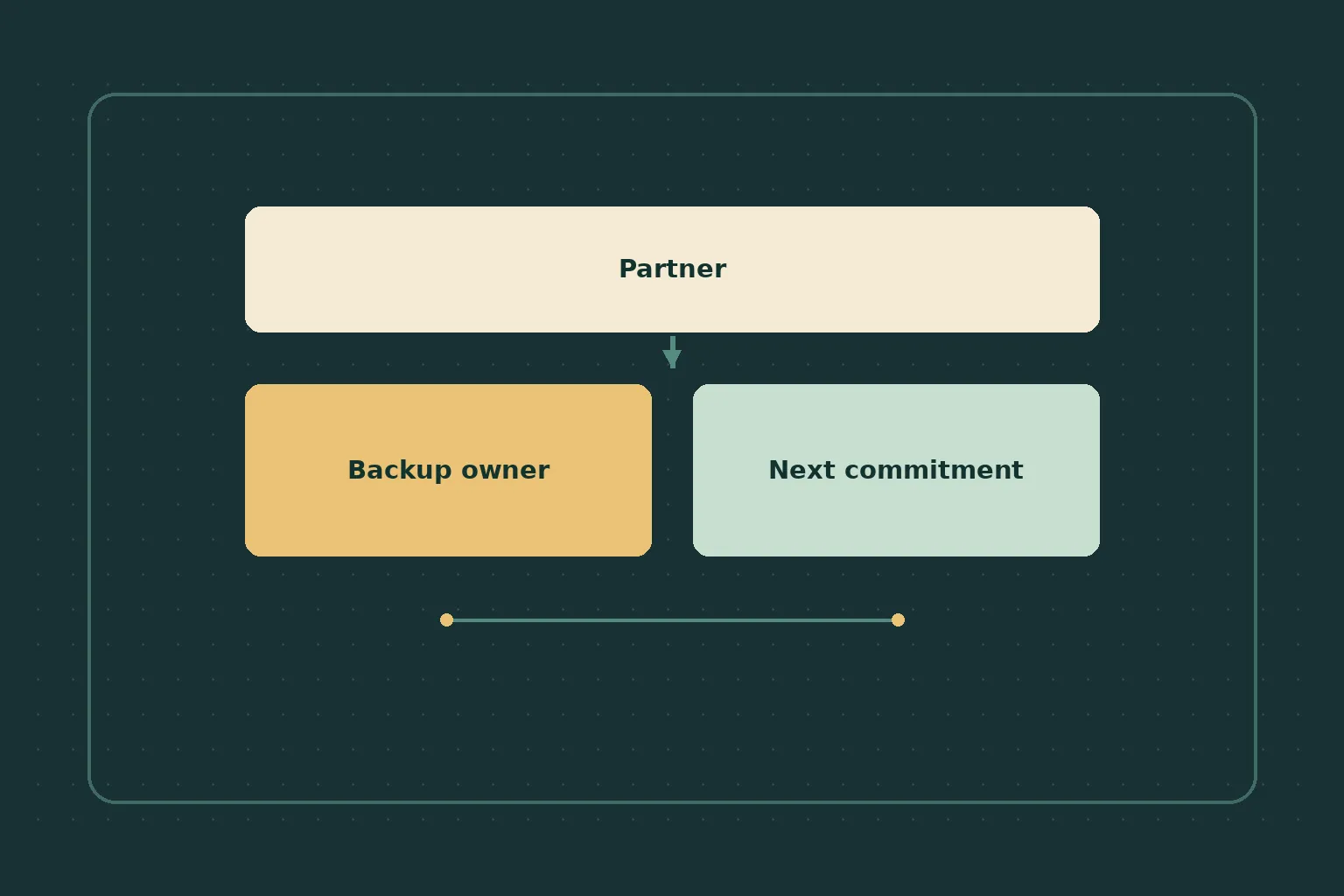
Before a row becomes active, ask the receiving manager to describe the handoff in a sentence. They might say that the outreach owner will verify the wording and the operations owner will answer any general questions about the route after the review. If both people think the other owns the next step, settle it in the planning meeting. Add the assignment to the system where both can see it. For teams with several programs, this check is especially useful when a single outreach employee works with receiving teams that run different schedules.
Review your strongest opportunities for missing voices as well. A colleague who deals directly with business inquiries may notice that a question in the grid has already been answered, or that it concerns a different department from the one named. Ask for confirmation when the action overlaps another team’s work. That check can free up time for an opportunity the group would otherwise defer.
Close each review by reading back the selected next actions, identifying their owners, and confirming the dates. One good decision might be to check an ambiguous program fact before doing anything else. Another might be to complete the promised clarification for an existing contact. As relationships develop, Alliance’s professional referral partnership strategy offers a way to examine which responsibilities and communications need to be agreed between organizations. The weekly grid can stay simple enough to answer today’s question. With the verified scope, documented need, and staff time in view, which action can your team complete next?