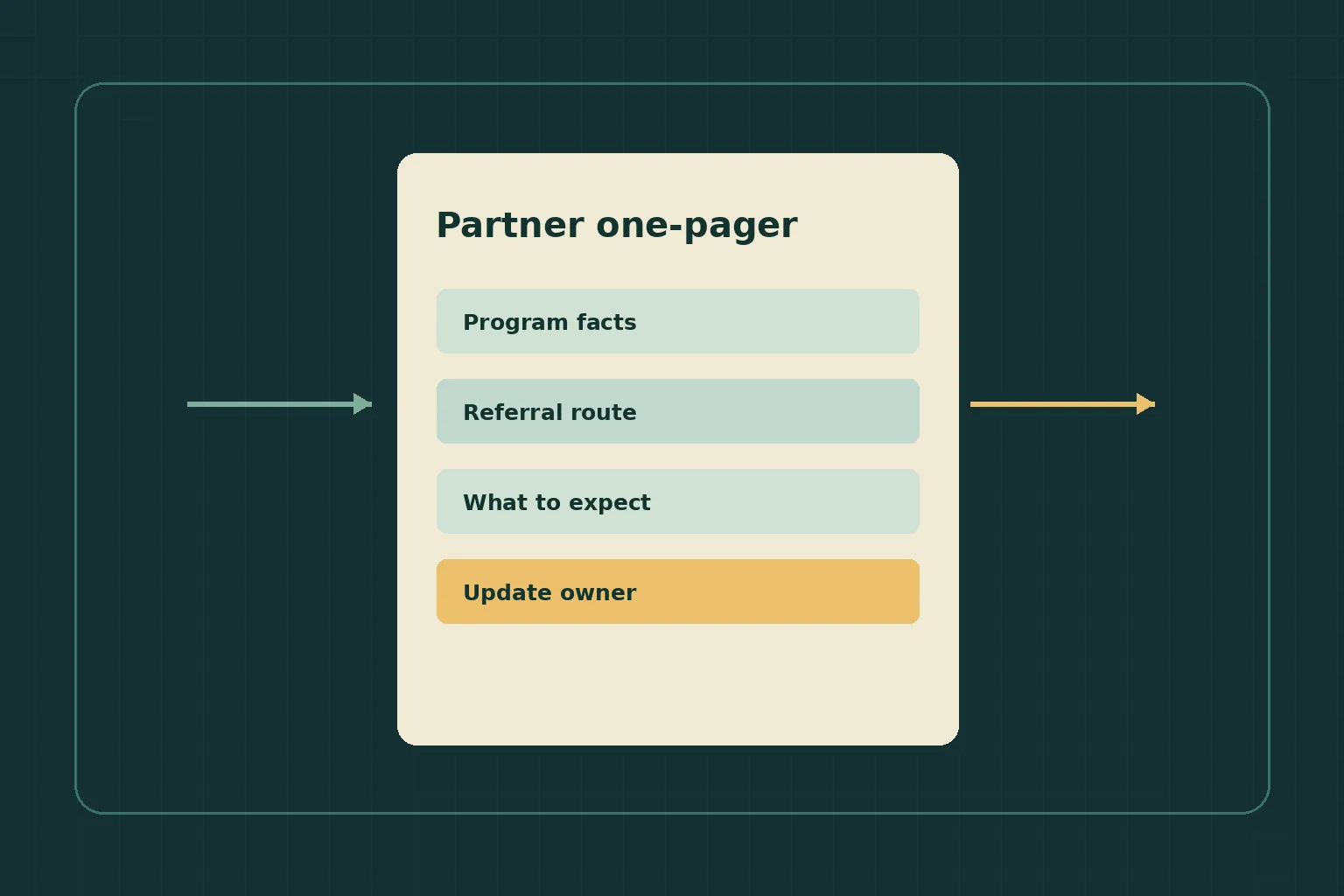
A referral partner coverage map tells staff which outreach commitments need attention while the usual lead is away, who owns each next action, and where to take a question outside that person’s authority. Start with the work that can stall during the absence. A partner check-in already on the calendar, an approved update someone is waiting for, and a general business question that has sat unanswered deserve a closer look than the rest of the contact list.
The map can be a view in your existing relationship system or a short internal handoff attached to it. Make it small enough for the backup to review before the absence, with enough information for a manager to reassign something if plans change midweek. The people using it should be able to find the next action without reconstructing the outreach lead’s week from a calendar and several inboxes.
Build the map from commitments already in motion
Start with the dates the lead is away and look one working day beyond the planned return. Review upcoming appointments, open tasks, and unresolved organizational questions in the authorized system. Ask the lead which activities have a partner expecting something, which depend on an internal decision, and which can wait until they return. Keep the existing owner on deferred work unless a manager explicitly changes it.
A recurring appointment can still need a fresh decision. A backup can attend a routine check-in if they know the purpose and can handle the planned agenda. A meeting about a decision only the lead or a manager can make may need a new date. The handoff should say whether to keep, reassign, or reschedule the meeting, and who records that choice. This keeps a calendar invitation from deciding the work by default.
Partners sometimes ask general questions that reach more than one department. Identify the next internal owner before assigning a reply. For instance, the outreach backup can carry a question about a changed business contact to the team that owns the contact instructions. The receiving operations role confirms the facts. The backup can then follow the established communication process using that approved information. Alliance’s referral network development service describes how organizations can connect relationship ownership with recurring admissions and outreach handoffs.
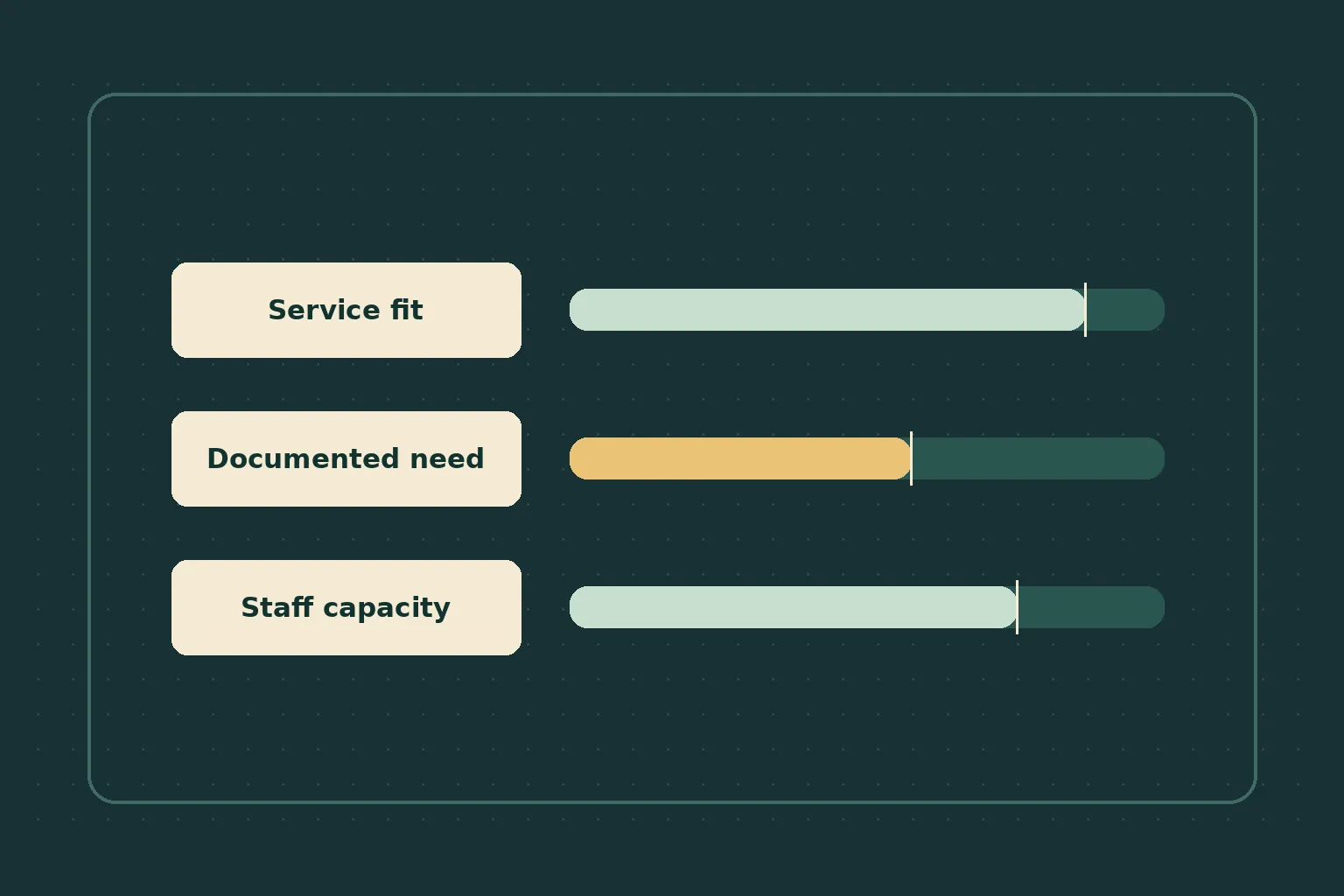
Give priority to commitments whose delay has a concrete consequence. An unresolved question about where a partner should direct general inquiries may affect the partner’s next action. An introductory call with no agreed date can often wait. If an item moves up the list, write the reason in one sentence. That makes the plan easier to revisit if coverage changes while the primary lead is away.
Record the next action and its limits
Use one row per action. A relationship may need two rows if two different roles need to act. A partner meeting and an internal approval about that same relationship have separate owners and deadlines. Giving them separate rows makes it easier to see whether the backup can make progress before a decision is due.
| Example commitment | Backup and next action | When to review | Decision boundary |
|---|---|---|---|
| Scheduled check-in with an established partner | Outreach backup confirms the meeting purpose and whether they can cover the existing agenda | Before the meeting | Route a request for a new commitment to the manager |
| Partner asked which team handles general inquiries for a program | Workflow owner confirms the current approved route and records the answer for the relationship owner | On the agreed internal review date | Use only confirmed routing information |
| Operations owes outreach an approved organizational update | Operations reviewer checks the pending wording and tells the backup whether it is ready for use | Before the update is expected | Hold unapproved wording and escalate a missed decision |
| New opportunity with no commitment | Usual owner reviews it after returning unless a manager assigns a specific next step | At the return review | Keep new activity out of the temporary assignment |
In the working version, add the normal owner, the backup role, the due date or next review time, an approved reference, and the escalation role. Where your system supports it, point directly to the existing task and enter the temporary assignment there. Keep enough detail on the map to explain the task. Use the relationship system for the underlying record and its history.
Describe next actions with verbs. “Confirm the approved contact route” gives a backup something to finish. “Referral follow-up” leaves the person to guess what happened or what comes next. Avoid vague status labels when there is also a decision waiting. “Operations reviewing the contact wording, with a decision due Thursday” gives the backup a way to tell whether work can move forward.
When continuity depends on information stored in several places, choose one place for the current task and use references to reach the work behind it. Don’t assume that an older export is current simply because it has the right partner name. Teams looking to improve how organizational relationships and activity are recorded can explore Alliance’s referral source tracking and CRM management.
Make backup ownership explicit
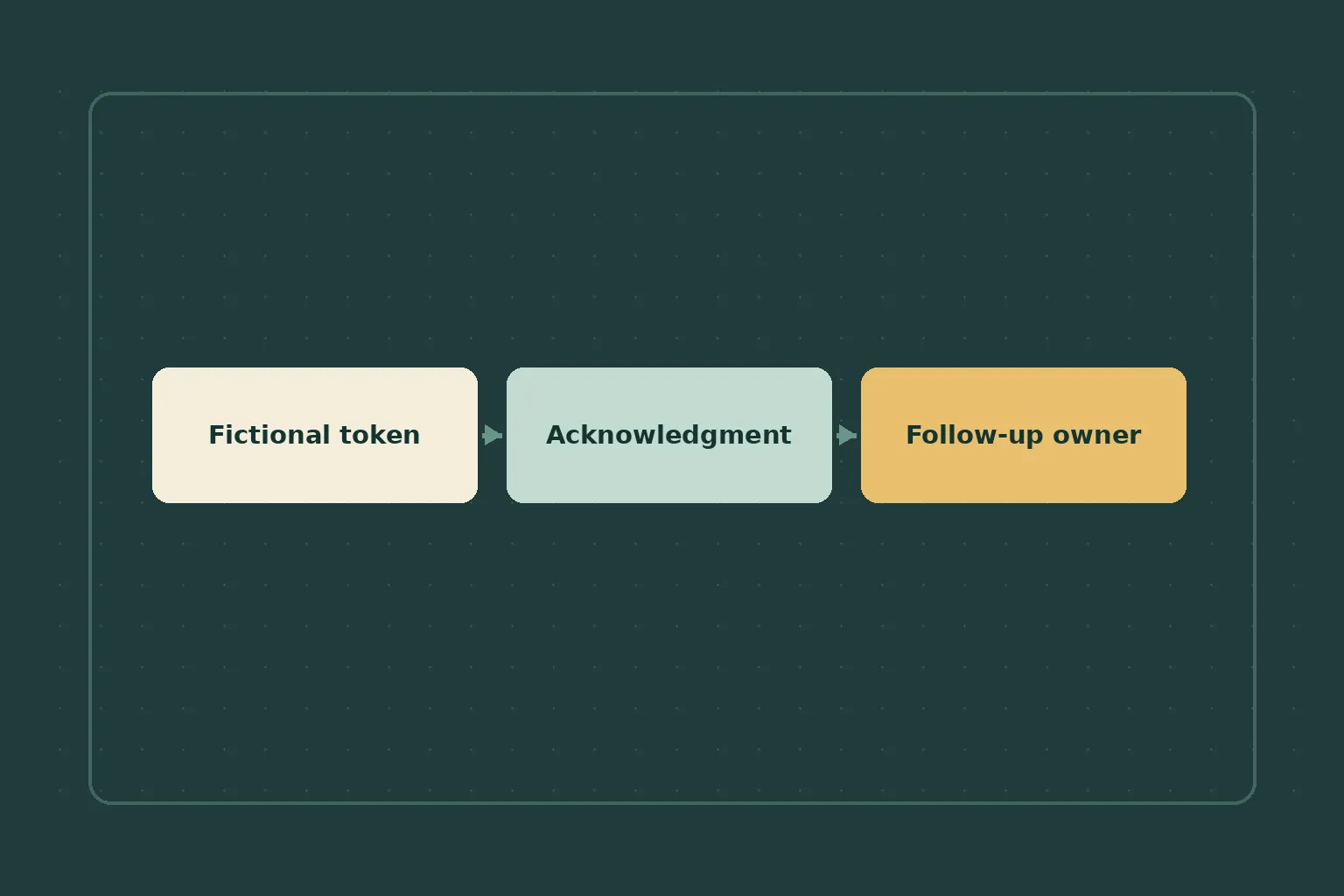
Send the internal handoff to the people named on the map and ask them to acknowledge the specific items they can cover. Before the leave starts, have each backup check their calendar, find the assigned record, and name the action they’ll take next. A general acknowledgment of the handoff gives no assurance that someone can attend the meeting or read the materials they need.
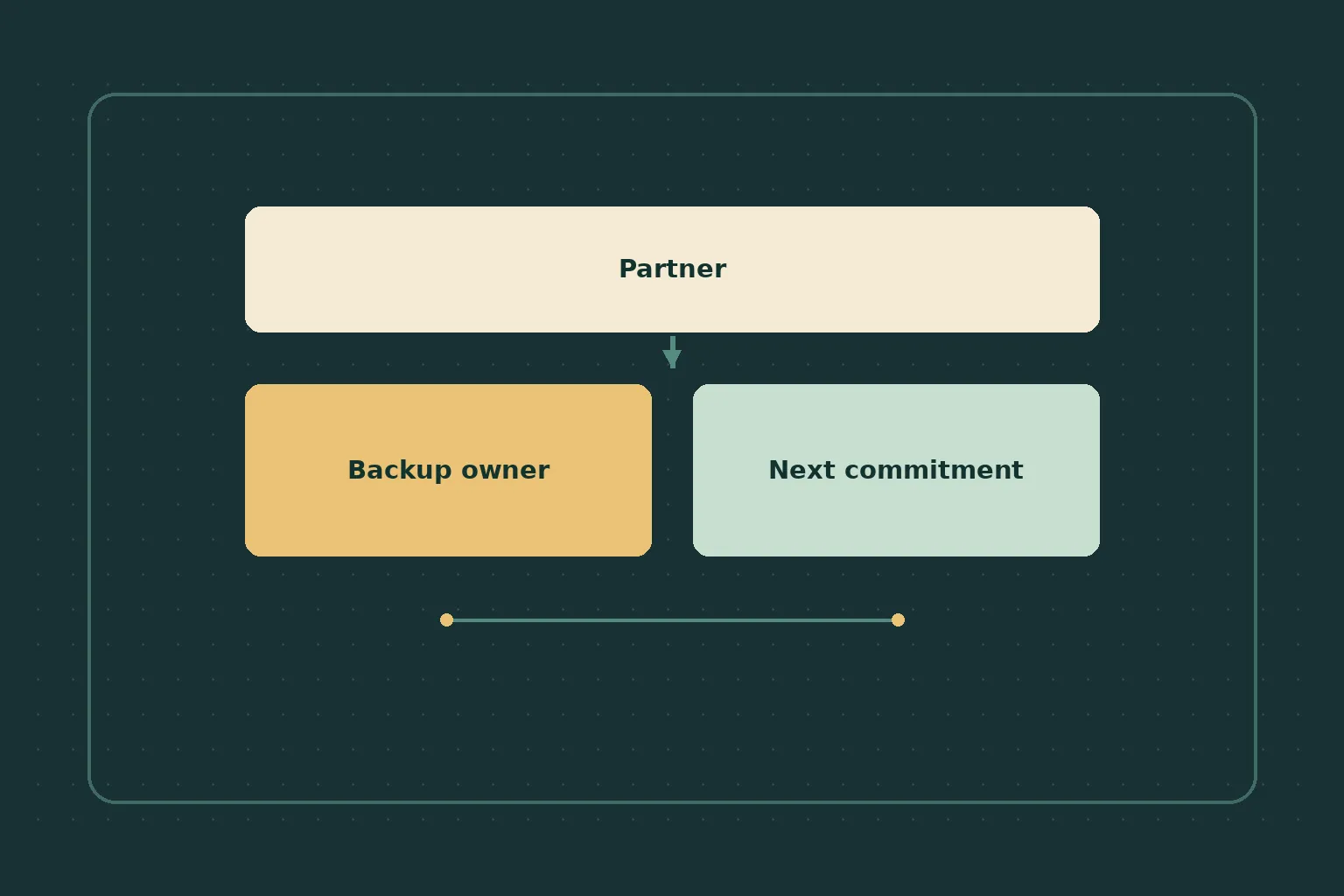
If the backup cannot open a record they are expected to use, ask the system owner to resolve the gap through the normal access process. If the gap remains, the manager can choose another qualified owner, reschedule the item, or hold it until the lead returns. An external commitment should have an owner who can use the approved tools and information when they need them. Keep unresolved coverage visible on the map so staff can act before the due date.
Check competing responsibilities. One backup may be able to cover a Thursday partner meeting or a Thursday deadline for an internal update, but scheduling both can leave neither with the attention it needs. Split assignments by the action each role is prepared to handle. A teammate may attend a routine call while a manager retains approval over proposed changes. The person taking the call should know how to route an issue to that manager.
Rehearse a fictional request in a brief handoff meeting. Suppose an established partner uses a scheduled check-in to ask whether the organization changed the contact process for a verified program. The backup should be able to state which approved reference they would consult and which role owns unclear wording. Ask what happens if the reference and the current instructions appear to disagree. The expected action is to take the conflict to the responsible team before making a statement. Alliance’s outreach team training and management can be relevant when staff need practice applying the same ownership and escalation rules.
Define what happens when something unexpected comes up
Pick an escalation role for each type of business question that could interrupt the plan. A proposed change to the schedule may belong with the backup’s manager. A disagreement about the current program description belongs with the program owner. A question about who receives a general inquiry belongs with the receiving workflow owner. Designate a second route if the usual escalation owner will be unavailable during the same dates.
Write down the point at which an item should be escalated. For a routine internal task, the trigger might be a due date approaching without an owner decision. For a scheduled discussion, the trigger could be an agenda change that requires approval before the meeting can proceed. A short decision window lets the manager choose whether to cover, move, or pause the work before a colleague has to improvise.
Give the backup a way to record an issue in the system that will hold the final decision. For a business matter, the internal note can state the question, the current approved information, the decision needed, and the owner. If an answer is still pending when staff review the map, keep the item open with its next review date. A temporary reassignment does not extend the backup’s authority to change facts or commit the organization to new work.
If teams repeatedly disagree about ownership, use a short internal review to map the jump between roles. Ask who receives the question, who supplies or confirms the facts, and who signs off on an external response under the existing workflow. That is a useful scope for cross-department communication and coordination when an outreach issue crosses into admissions, operations, or leadership.
Review the map during the absence
Choose a review cadence based on the number and timing of open commitments. A short absence with one meeting may need one check the day before that meeting. A longer absence with several deadlines may need a standing review where the backup flags items due before the next check. Put the review on the same schedule staff already use to manage work.
At each review, look first for items due soon with no owner, an unacknowledged reassignment, or a decision that has missed its internal review time. Ask what the backup needs in order to take the next action. If the answer is “someone else has to decide,” bring the decision to the assigned role and update the task. If the original next action is no longer relevant, close or revise it in the existing record.
A manager can also use the map to handle a second absence. Consider a fictional week when both the lead and the original backup become unavailable on the day before a routine meeting. The manager can find the current agenda, identify any fixed commitment, and see whether another authorized teammate can take the action. If coverage is uncertain, the manager can choose to reschedule through the established process and record who will take care of that step. The usefulness of the map is measured by whether someone can make that choice quickly with the facts they already have.
Return the work deliberately
Schedule a short return review while everyone still remembers what happened. Compare the original handoff with the state in the authorized relationship system. Ask the backup which commitments they completed, which await an answer, and which now have someone else as the ongoing owner. For each unfinished task, agree on the next action, its date, and the person responsible.
The return discussion should leave one clear owner even when the backup needs to finish related work. For example, the outreach lead may resume the relationship while an operations reviewer remains responsible for confirming an updated contact instruction. Assign those as two actions in the same record or workflow. Keep the follow-up close to the decision that prompted it so the returning lead can find it later.
When a coverage practice worked well, keep the practice in the team’s regular operating instructions. Reuse a good row format or rehearsal question for future leave. Close the temporary view after its tasks and decisions are reflected in the established record. Before closing the map, check one scheduled touchpoint, one open business question, and any item whose owner changed. If each has an accurate status and next owner, the handoff has done its job.