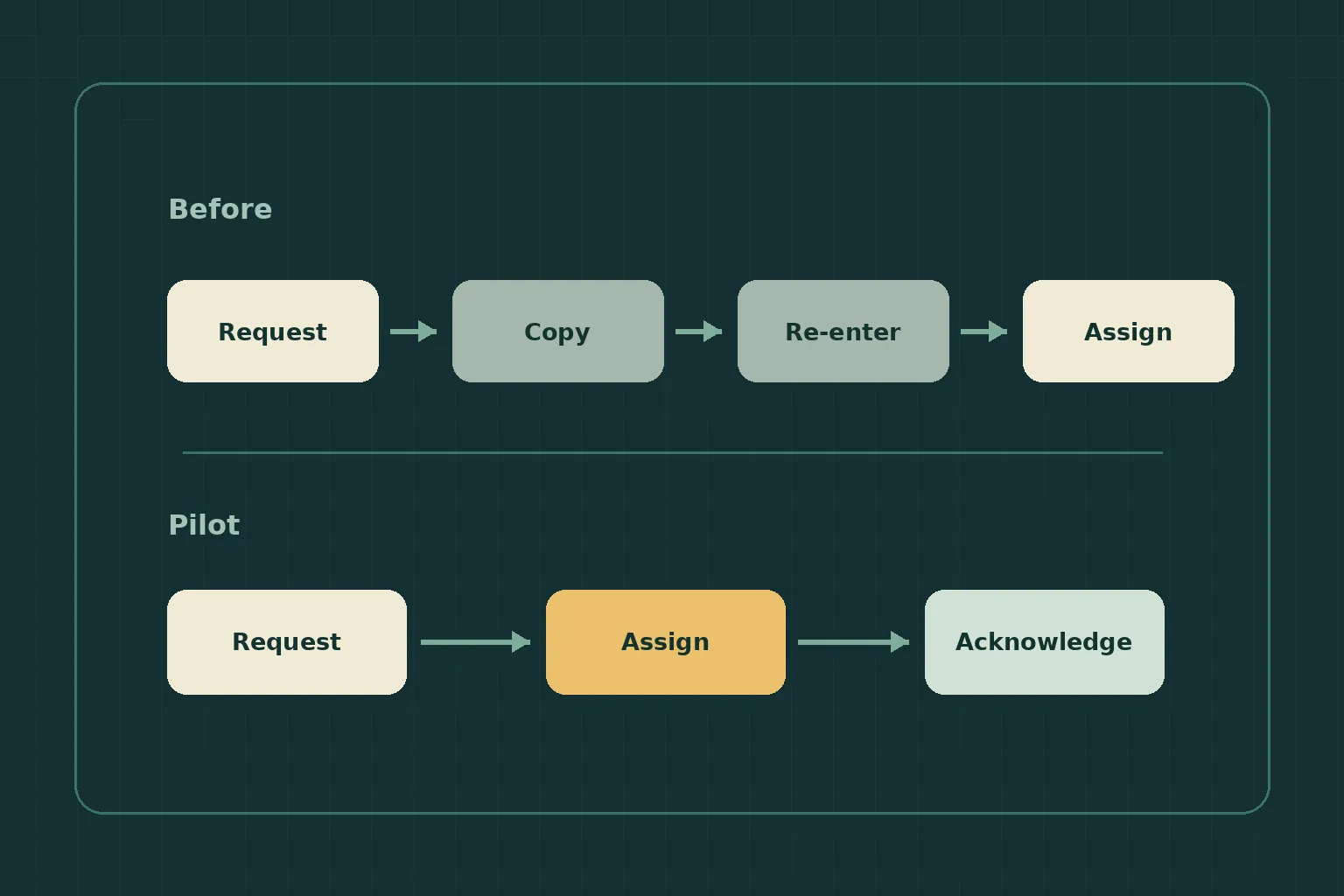
A recurring operational problem can be easy to work around and hard to understand. In a behavioral health program office, the person setting up an internal workshop may repeatedly find that a shared projector adapter is missing from its storage drawer. Someone borrows a spare, the workshop goes ahead, and the next team encounters the same situation. Each workaround handles one occurrence. It gives the manager little evidence about which part of the normal return process needs attention.
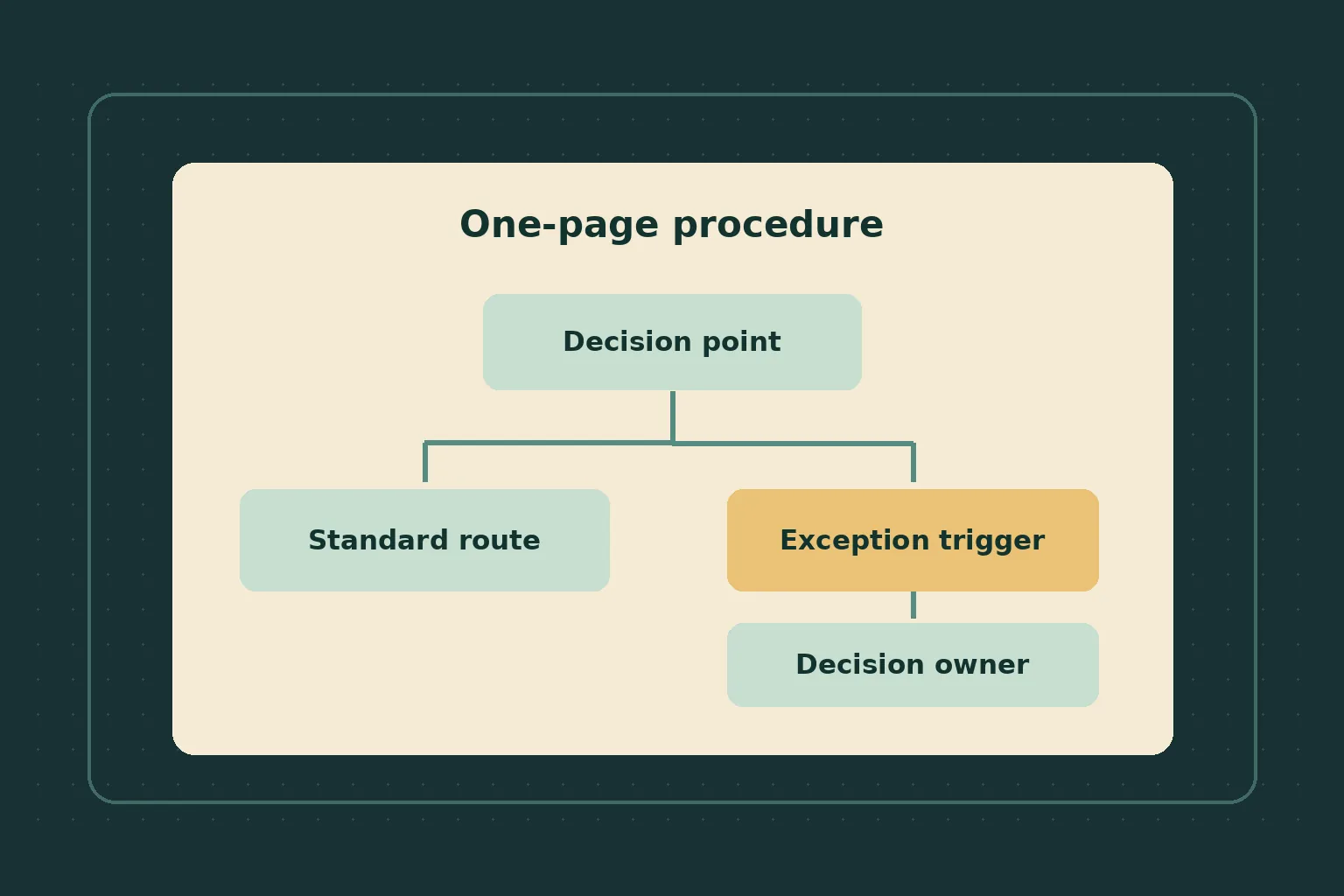
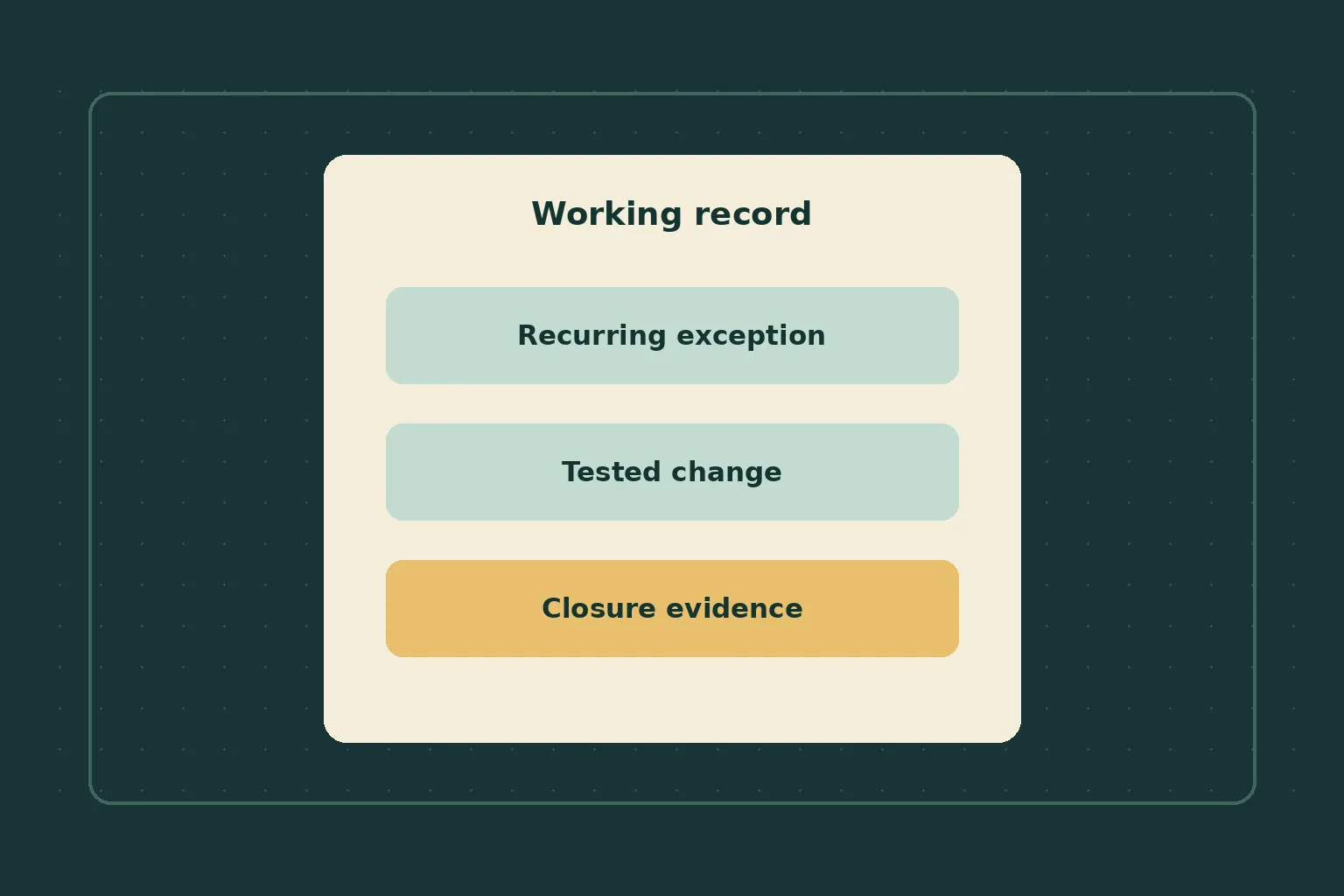
An exception log can connect those events. Define the expected step, record one row per distinct occurrence, and give the immediate issue to the owner who can handle it. When a pattern appears, assign one proposed fix and decide what would count as evidence that it worked. This guide uses fictional office equipment and internal workshops.
Decide which departure deserves a row
First state the expected process in terms someone can observe. For the shared adapter, the office checks it out with the workshop kit and expects it back in the designated drawer by the usual end-of-day equipment check. The exception is a required adapter missing at that check after a scheduled return. An early inquiry about its location, while the workshop is still using it, falls outside this definition.
Agree on what begins another occurrence. If the adapter is missing on Monday and staff ask three times where it is, that is one unresolved incident. A new incident can begin after the first is resolved and a later scheduled checkout ends with another missed return. Define that boundary before comparing counts so the record can distinguish an ongoing issue from repeated departures.
Categorize the break in the expected step. “Adapter unavailable at scheduled return check” describes something the office can look for. “Workshop setup problem” is too broad if it also includes a conflict over the room, a missing extension cord, and a delayed materials delivery. Keep similar records together until you understand whether they point to a common condition.
Alliance’s workflow development and process improvement overview describes how a defined operational problem and practical observations can inform workflow review. The log helps preserve that starting point while staff continue their usual work.
Give the current issue its ordinary response
The exception log supports learning about the pattern. Use the established office process to handle the immediate issue. A coordinator might arrange a spare for a planned workshop, tell the person responsible for shared equipment about the missing item, and follow the existing return route. A row in the log can describe what staff did once the current issue has an owner.
Keep the first response separate from a possible cause. The note “spare assigned by the office coordinator” describes what happened. The note “borrowers overlooked the return location” describes an explanation you might still need to test. If the coordinator found the adapter in the workshop kit later, that observation belongs with the occurrence. It adds evidence without claiming why the adapter stayed there.
The immediate issue can close independently of the recurring problem. The spare may be returned and the missing adapter located on Tuesday. The underlying return process still needs review if the manager has evidence of multiple missed returns. Keeping those levels distinct gives the process owner permission to finish current work while continuing to investigate the pattern.
Keep each entry short enough to compare
Write the record for someone who did not see the occurrence. Identify the expected step, what staff observed, the existing first response, and what might explain it. If the issue has a cause already verified by the relevant owner, say what supports that finding. If the cause is open, record the question a reviewer can pursue.
| Field | Illustrative entry |
|---|---|
| Reference and time | EQ-07, Monday’s scheduled end-of-day return check |
| Expected step | Shared projector adapter returned to the designated drawer after a workshop |
| Observed departure | Adapter missing at the check. Confirmed later inside the returned kit. |
| First response | Office coordinator supplied the spare and notified the equipment contact under the normal process. |
| Condition to investigate | The kit return instructions describe the bag and projector together. The adapter’s separate drawer may be unclear. |
| Immediate owner and disposition | Equipment contact verified the adapter was returned to the drawer Tuesday. |
| Pattern review | Office manager to compare the next scheduled kit returns and confirm where staff expect to leave the adapter. |
Avoid putting a theory in the observation field. A note that somebody “forgot” tells a reviewer little unless that person identified the missed step and the circumstances are documented. Record what the reviewer could see: where the adapter was found, when it was checked, and whether the instructions identified a separate destination. A useful log gives the process owner clues they can confirm.
Mark missing evidence as unknown. If the return check did not happen on Tuesday, the office cannot call it a confirmed missed return or a confirmed success. Give the row a clear disposition when the equipment contact verifies the immediate issue. That makes it possible to compare open and resolved occurrences without adding a second explanation to the same entry.
Alliance’s operational consulting and performance improvement page describes examining recurring administrative delays, workarounds, and responsibilities. In this example, a handful of precise records provides a better starting point than a broad complaint about unreliable workshop equipment.
Group by the step that failed and choose a plausible fix
At an ordinary operations review, group occurrences by their expected step and actual departure. Compare the support for each group. Several rows may show the adapter still inside a returned kit. Another may show that the kit itself never came back that day. Those facts suggest different questions. A kit returned as expected with the adapter in the wrong place points toward how staff understand a separate storage step. A missing kit invites a check of the overall return arrangement.
Choose one pattern you can test with the authority and resources you already have. Look at the number of clearly supported occurrences, the inconvenience they created, and whether the process owner can change the relevant condition. A workshop moving to another room because of equipment could be more important than multiple brief checks that were resolved at once. Affected setup time and repeated use of a spare are examples of observable administrative impact.
If the evidence is thin, select the next observation before choosing a change. Ask a colleague who uses the kit to demonstrate how they normally return it. See whether the instructions direct the adapter to the drawer or leave it with the equipment. A demonstration can establish what a person sees at the point of work. Verify the broader pattern with the existing records rather than assuming everybody follows the same route.
Alliance’s quality improvement initiatives page discusses connecting operational improvements to a defined problem and a review process. Here the proposed change should be small enough that the owner can describe exactly which recurring failure it is intended to prevent.
A review can find that several occurrences match the category but have no shared condition yet. If one happened after an ordinary weekday workshop and another happened while the office was moving equipment, record the distinction. Give the pattern owner a specific request for evidence, such as checking what the current checklist says and observing the next return. Leave the proposed fix open until that review clarifies which part of the process can reasonably be tested.
Test one fix and state the closure evidence in advance
Suppose the equipment contact confirms that the instructions on the returned kit list the main pieces but omit the adapter’s separate storage step. The office manager can ask the equipment contact to place one return cue next to the existing checklist. The new line might read, “After use, return the adapter to the labeled drawer beside the kit shelf.” Keep the checkout process, return deadline, and storage location steady during the test.
Write down how to verify the change. First, give a colleague a fictional return and ask them to use the existing checklist with the added cue. Observe where they place the adapter. Then follow the next comparable scheduled returns through the ordinary check. Count completed return checks as the denominator and record how many showed the adapter in the expected place. Note changes in workshop volume or equipment use that could affect the comparison.
Use a small illustrative readout when defining the test. If four comparable returns occurred after the change and all four were checked, the reviewer can say on how many occasions the adapter was in the drawer at the expected time. If four workshops took place but only two return checks were completed, give the count among those two and report the two checks that are missing. A decrease in log entries can reflect less frequent use, fewer checks, or fewer departures from the expected process. The check count helps distinguish those possibilities.
Alliance’s performance metrics and KPI development page explains why reporting needs stable definitions. Keep the expected return, check time, and incident definition consistent across the periods you compare.
Choose how long to keep watching before you start. For an office that uses the kit only occasionally, a fixed week might end with too few returns to observe. In that case, define a short review window and a minimum number of comparable opportunities. If use drops below that number, the process owner can extend the review and state the limit in the record. Keep any result that helps explain the difference, such as a different return location used during a building maintenance day.
Close the pattern only when the agreed check is complete
Set a review date and name the person who can verify the result. The equipment contact may confirm that the cue is present and that comparable returns were checked. The office manager can decide whether the observed result supports keeping the change, extending the review, or investigating another break. A closure note should say what was changed, which evidence was checked, and who made the decision.
For example: “Return cue placed on the existing checklist. A colleague demonstrated the correct drawer in a practice return. Three comparable scheduled returns had completed checks. The adapter was in the drawer each time. Equipment contact verified the observations and office manager kept the cue. The office will review another occurrence under the same definition.” These are fictional observations. The example shows how a reader can understand the closure decision and its limits.
If a later check finds the adapter missing again, record the new occurrence and connect it to the existing pattern review. Look for what changed. The cue may have been removed, a different kit might now be in use, or the first change may have addressed only one condition. Reopen the pattern when the new evidence raises a question the earlier check cannot answer. Keep the date and reason with the prior decision so the next reviewer knows the condition under which the change was kept.
A working exception log gives each occurrence a clear record, each recurring pattern an owner, and each proposed fix a check. When the team can point to the agreed evidence for closure, staff have a shared reason for keeping the change or returning to the problem.