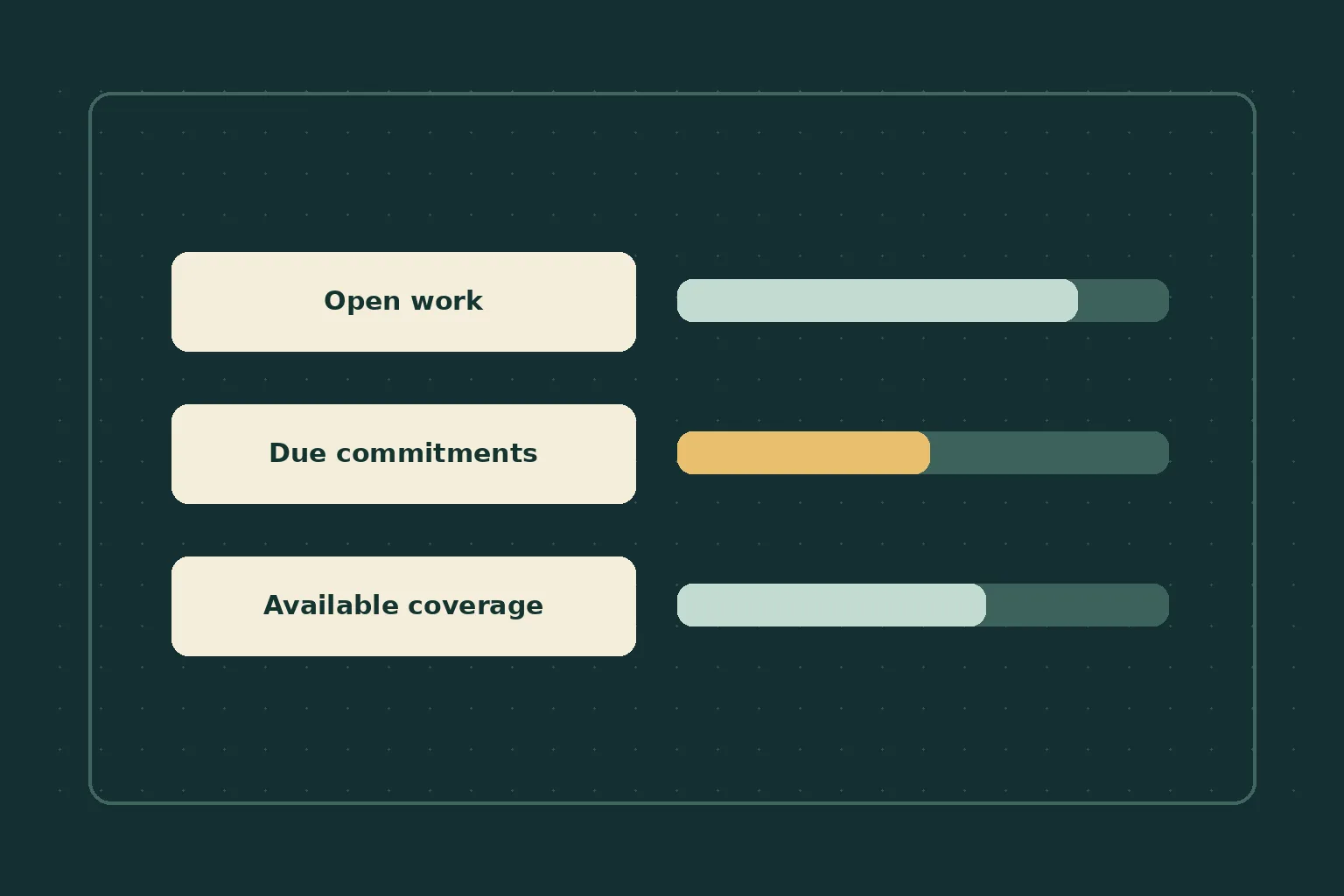
A weekly administrative capacity check asks whether a team can finish the office work it has already committed to. Look at work due, the support available at the point it is needed, and the commitments you can adjust. A weekly total is useful context. The decision often sits inside a single day or a shared resource booking.
For example, a behavioral health program office may need to prepare orientation materials, complete a recurring internal report, and update an employee resource guide. Two tasks may require the same reviewer before Thursday. The team can have enough total office time while the reviewer is already committed when both approvals are due.
Use the worksheet below for routine administrative work. Keep the review within the team’s existing authority over internal schedules, document work, and shared office resources.
List the work that can create a scheduling decision
Start with commitments that have a clear internal due date or a dependency on another person. Examples include proofreading a staff orientation packet, approving a scheduled internal update, assembling an administrative summary, and checking a room booking for an employee training session. Include carryover with a known next action. Group small items that need the same reviewer in one line so the worksheet stays readable.
For each item, write what “ready” means, when it is needed, and the person or resource it depends on. “Finish the staff guide” leaves room for interpretation. “Proofread the guide, get the office manager’s sign-off, and prepare the approved file for Thursday’s internal distribution” exposes the sequence. If a task can move within the week, record how far it can move before another commitment is affected.
Separate due work from wishes. An internal idea such as refreshing an old template can sit in a discretionary list. A promised update that another department needs Thursday stays in the main view. A line for “date or scope to confirm” helps surface items that a manager needs to clarify before treating them as fixed commitments.
Alliance’s organizational and operational assessments page describes reviewing operational responsibilities and recurring friction. The weekly check takes a narrower view: identify which office commitment needs a decision before the next regular review.
Bring three inputs and one question
Use the team’s existing work list and confirmed office schedule. The worksheet can fit into an ordinary management review as long as each input has a source and an owner.
| Input | What to bring | Fictional example |
|---|---|---|
| Committed office work | Due work, next action, dependencies, and room to move | The orientation packet requires review before Thursday’s internal training. |
| Confirmed administrative availability | Only the portion of the schedule and shared resources available for the office work under review | The office manager has one review window Wednesday and another Friday. |
| Aggregate demand and carryover | A count or range with its cutoff and a short note on incomplete inputs | Two administrative reviews are already due this week. One prior-week item still needs an owner’s response. |
| Question for the review | One action to protect, move, defer, or raise with an authorized owner | Which item should use Wednesday’s confirmed review window? |
An available hour only helps if the person, room, or other resource can be used for the task at that time. Start with already confirmed schedules and expected existing commitments. If someone has been invited to help but has yet to accept, label their time as unconfirmed. An assumption can appear in the worksheet with a clear condition, such as “Friday help becomes available if the office manager confirms it by Wednesday.”
For aggregate demand, distinguish a snapshot of open work from items that arrived during a period. A Monday snapshot of five open tasks includes work the team carried forward. An estimate of three new tasks for the rest of the week is a separate forecast. Keep the two rows visible so the review can explain what changed at the end of the week.
Alliance’s performance metrics and KPI development overview discusses the importance of shared definitions when managers compare numbers. For this worksheet, write the count, the time it was pulled, and which tasks it covers.
Collect the row updates ahead of the usual check when the team already uses a shared work list. Ask each owner to check the next due date, the needed support, and whether an assumption changed. Bring two or three unresolved conflicts into the discussion and leave stable commitments visible for context. This makes the review a place to decide what needs attention instead of reading every row aloud.
Find the constraint inside the week
Read across the calendar from the first fixed deadline. Ask which actions must happen before that deadline and when the required support is available. Check people, ordinary office tools, room reservations, and any shared document contact the team relies on. A manager can often learn more from the order of three tasks than from a total count of all open requests.
Consider this hypothetical schedule. The orientation packet must be proofread and approved by Thursday morning. A program office summary is due Thursday afternoon and needs the same reviewer. The reviewer has a Wednesday morning window, followed by a Friday review slot. A task also depends on input from an internal coordinator that is expected Wednesday afternoon.
If the office summary cannot be separated from that later input, giving it Wednesday’s review slot will not make it ready. Protect the Wednesday slot for the packet if its proofread version is confirmed by Tuesday. Ask the summary owner which pieces can be completed by Thursday and whether the approver can arrange a different internal review. If the agreed scope or due date needs to move, the assigned owner can ask the relevant manager to make that decision.
A resource can be double-counted even when the planned tasks are small. For example, a reviewer may already be scheduled to prepare employee training materials during the only time you marked for proofreading. Look at the confirmed plan with the person who owns the resource. A ten-minute review squeezed into another commitment may turn into two unfinished pieces of work.
Use ranges when the demand is uncertain
Some tasks take a short time when the inputs are complete and longer if someone must gather missing information. Review the characteristics that move the work between those cases. For the internal summary, the difference might be whether department leads submit their figures by the cutoff. An estimate can be framed as “one review slot if all inputs arrive Tuesday, a second pass if one is still missing Wednesday.”
Write down which condition you expect and the signal that would make you revise the estimate. Someone can then check the estimate against the actual week. If the inputs arrive late, the manager can decide whether to shorten the administrative deliverable, move it under existing authority, or ask another appropriate owner to resolve the constraint. Keep the next decision dated so an uncertain estimate does not silently turn into a permanent delay.
Leave room for ordinary work already expected during the week. The worksheet has a better chance of being useful if planned office duties appear beside the tasks under discussion. When two versions of a schedule conflict, use the source your organization designates and ask its owner to confirm any unresolved booking.
Alliance’s operational consulting and performance improvement page describes the relationship between administrative responsibilities, workflows, and performance measures. A weekly check can start with one concrete question even when the organization has a longer list of improvements in mind.
Turn the finding into one dated adjustment
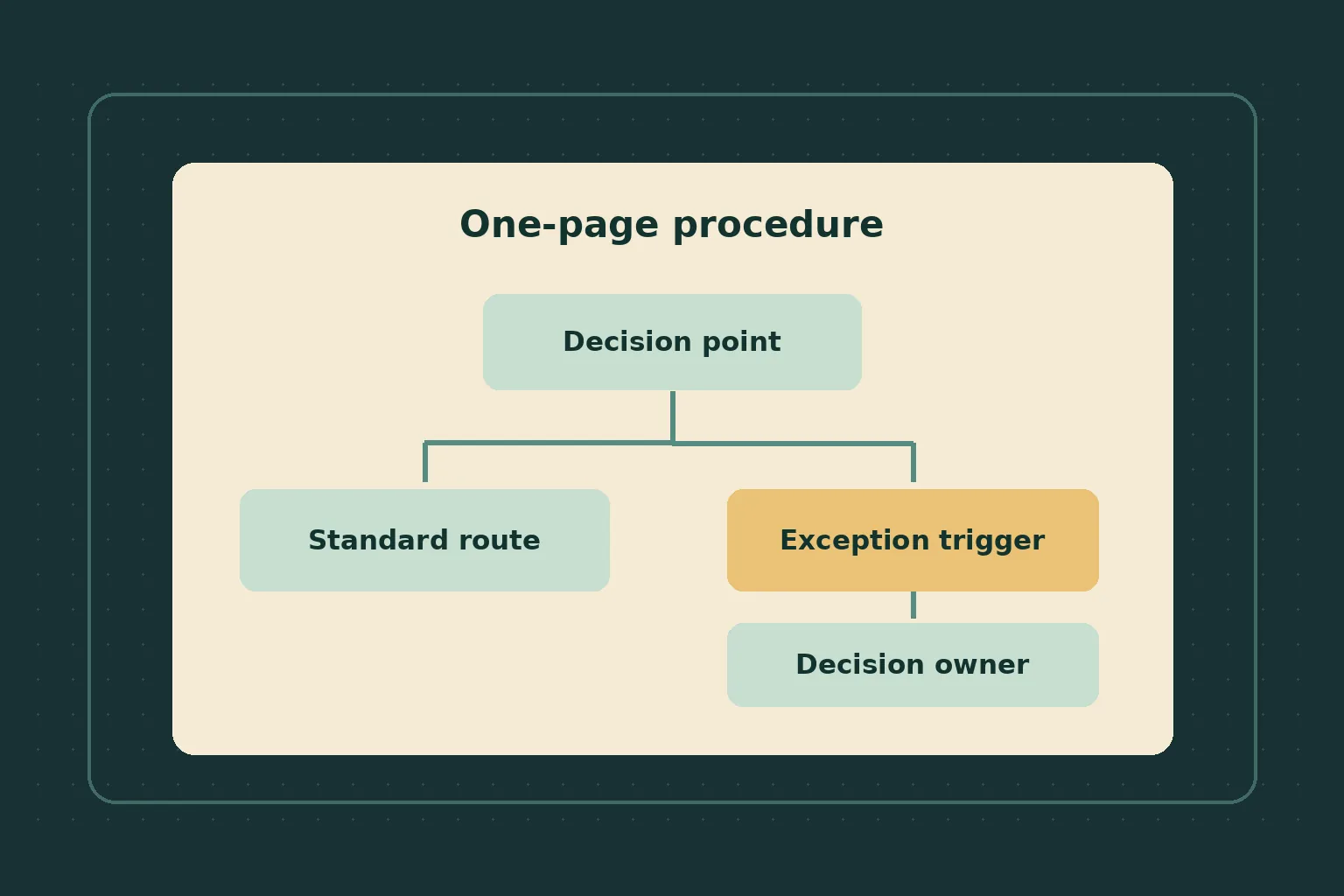
Pick the smallest decision that makes the affected work manageable. You might protect a confirmed window for the task with the fixed deadline, move a flexible task, defer a lower-priority update, or ask the appropriate authority to resolve a clash. State who will act and what to do if the assumption turns out to be wrong.
In the orientation example, a note could read: “Protect Wednesday’s review window for the orientation packet. The office coordinator will send the completed proofread copy by Tuesday afternoon. If that copy is still incomplete at the cutoff, the office manager will reevaluate the sequence at Wednesday’s existing review.” The owner knows which action belongs to them, why the time was set aside, and when the plan will be reconsidered.
When a deferred task stays in the queue, give it a reasonable next review point. “Move the guide refresh to the following weekly check” is more useful than leaving an unlabeled item on the new week’s list. Record who owns the work until then. If another team was expecting the update, the owner can tell them which internal commitment changed and when it will be checked again.
Alliance’s leadership and management consulting overview describes assigning responsibilities and tracking management actions. The dated adjustment is what makes the weekly discussion usable after people return to their work.
Use a simple priority order when several administrative commitments compete. Begin with the date the team already agreed to and the impact a change would have on other office work. Then ask which commitment actually needs the constrained resource. A task with a later deadline may deserve early work if it unlocks another team’s next action. If two owners disagree on what can move, capture both dependencies and ask the manager with authority over the commitments to decide. That decision is more useful when each owner can explain what would change for the next person.
Compare the adjustment with what actually happened
At the next regular check, revisit the dated decision before opening the new list. Ask whether the expected resource became available, whether the work was actually ready for that resource, and whether the moved item remained within its agreed bounds. Keep the original estimate visible. Otherwise, updates to the schedule can make it hard to tell which assumption was accurate.
For the fictional orientation packet, suppose the proofread copy arrived on time and used the Wednesday window. The summary still slipped because its input was two days late. That tells the team the next worksheet should include the internal input cutoff as a separate dependency. It gives the manager a more specific question than “Why did we get behind?”
Check the cause with the person who owns it. A delay may reflect an unusual absence, an overlooked dependency, or a recurring office bottleneck. The right adjustment depends on which one occurred. If another team was waiting on the late work, ask whether they received the revised date and whether it caused an additional scheduling conflict. Record that consequence so a change that helps one calendar does not simply move the difficulty elsewhere.
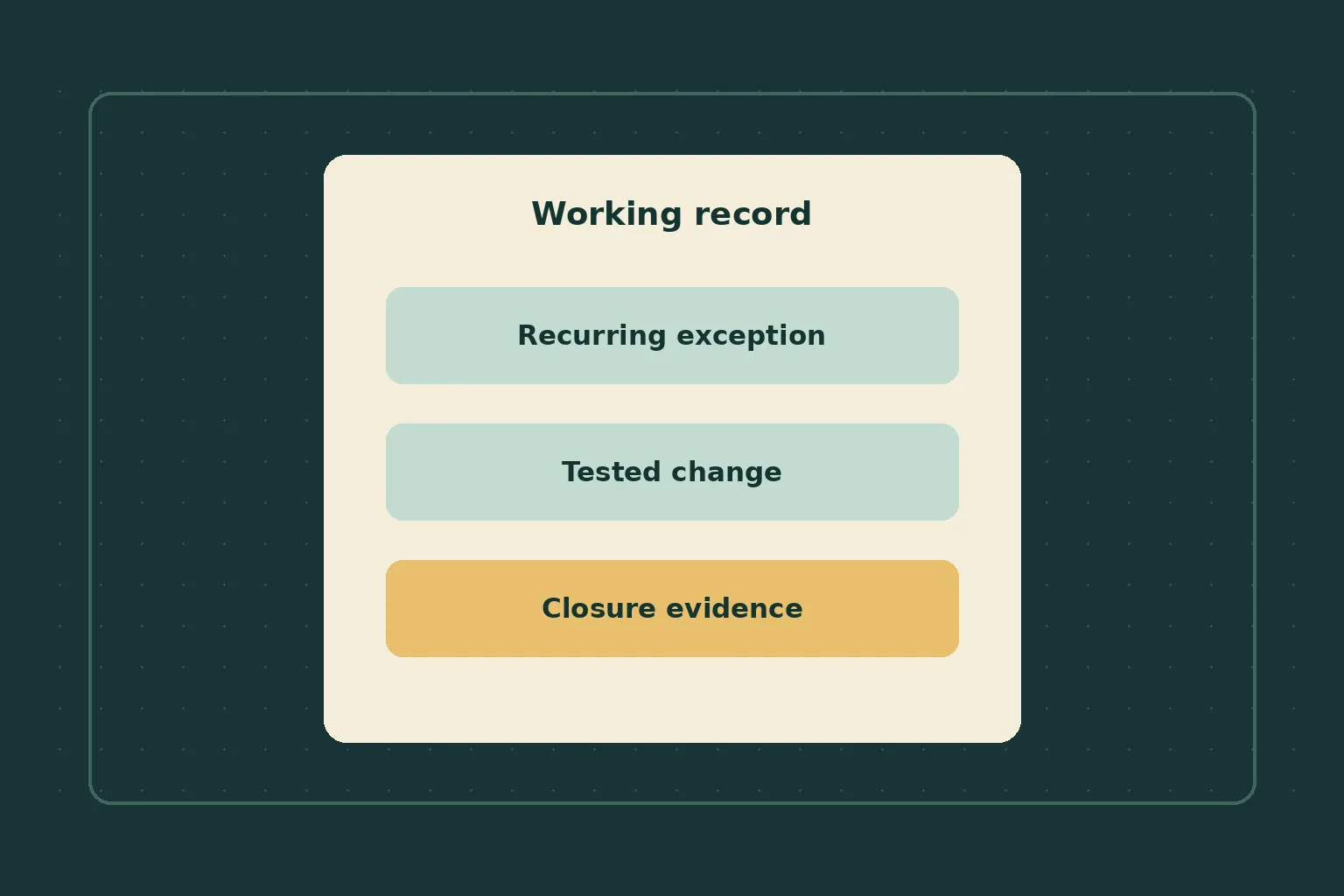
A concise note from the prior week might contain the original commitment, the adjustment, the actual result, and the source or assumption to verify next time. Retain the observation if the week was atypical and mark why. Over time, the office can improve the reliability of its planning inputs without treating a handful of busy weeks as a benchmark.
Finish the check by identifying the next actionable conflict and assigning it within the team’s normal management process. Staff should leave with a clearer picture of the internal deadline that needs protection, the resource that needs confirmation, and the person who will make the next decision.