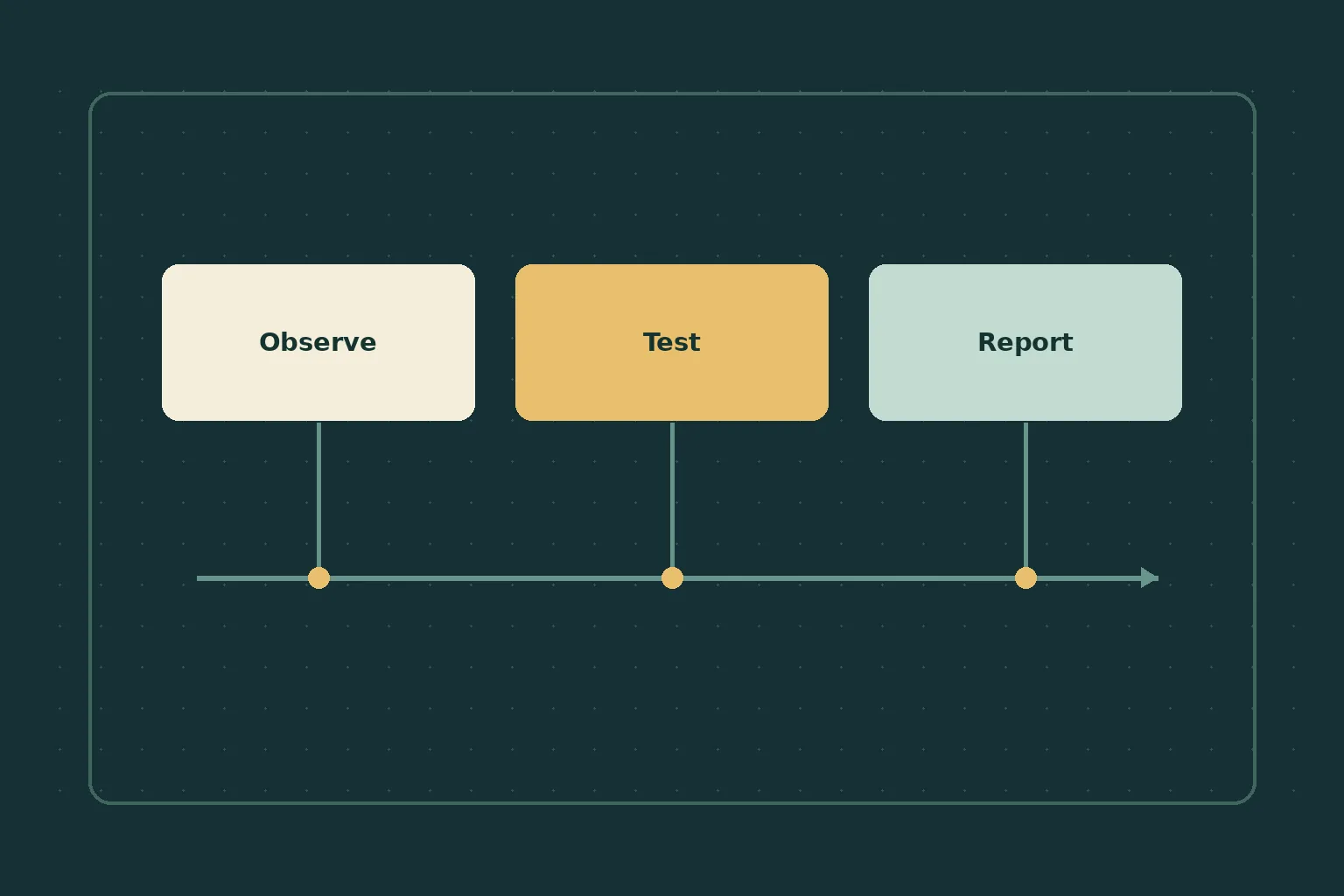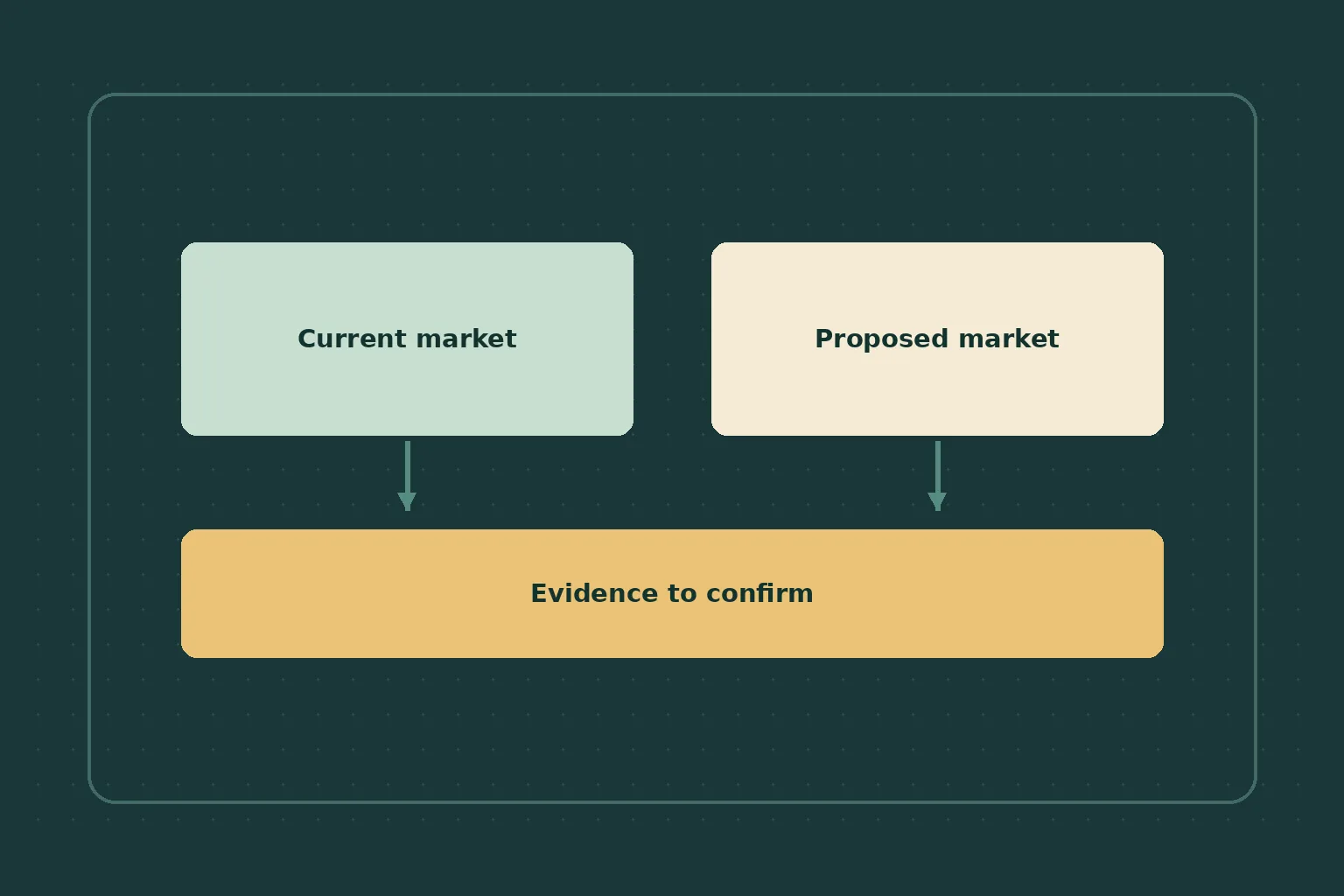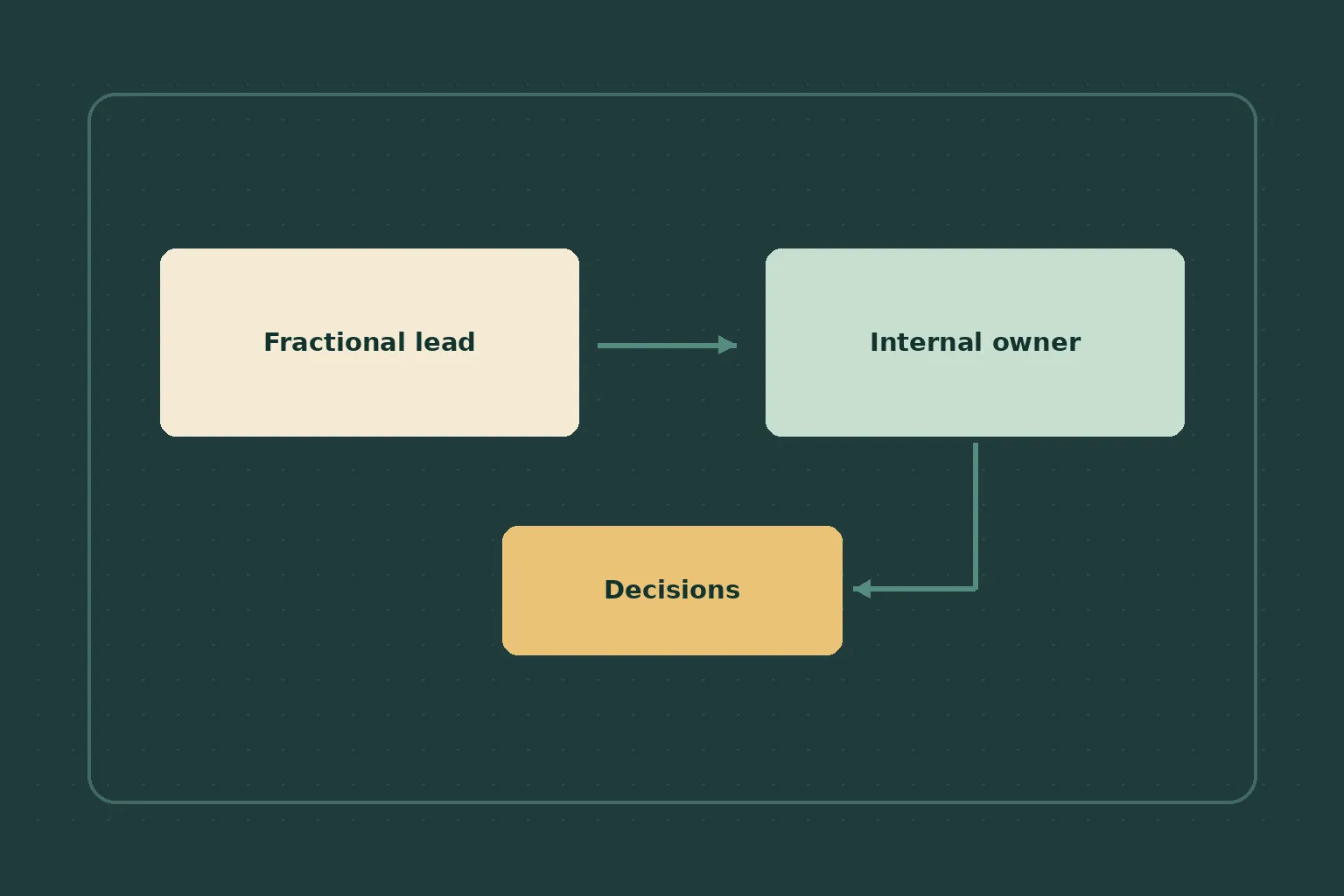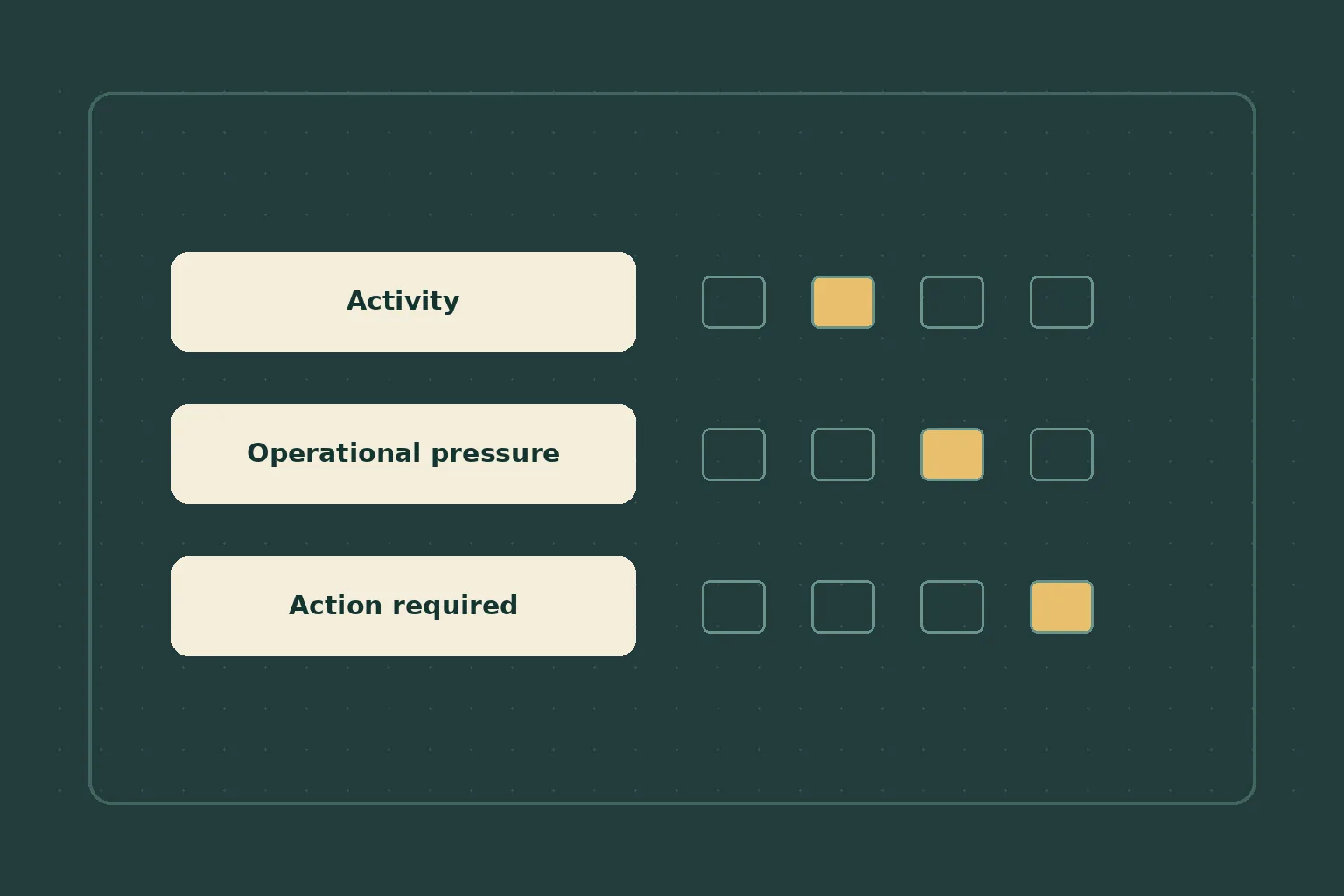
A board reviewing growth may see that more organizations have asked for information and that a new outreach phase is ready for consideration. The same packet may reveal that staff are carrying more work across shifts without a confirmed owner. Both facts belong in the discussion. The first tells the board that activity has changed. The second helps leadership explain whether the administrative process can absorb the next step.
Pair each growth signal with an operating signal, then put a decision question beside the pair. The goal is to prepare a board-level conversation about the implications of growth. Management should still own ordinary work assignments and the details of how teams correct their processes. Use aggregate, nonclinical measures and fictional examples while designing the scorecard.
Start with the question the board needs answered
Name the next decision under discussion before gathering numbers. Should leadership proceed with a second stage of an outreach plan, hold an affected activity while it tests coverage, or return with better evidence? The decision might belong to management under existing authority. In that case, say clearly what the board is being asked to review, what management will decide, and when the board will see an update.
Choose measures that could change the discussion. A total number of conversations with professional partners may show work took place. It may tell the board little about whether staff have time to respond to their inquiries. An aggregate count of requests still awaiting an acknowledged owner at the agreed review point can add context. The pair creates a concrete follow-up question about coverage.
Keep the opening page to the few pairs that matter to the decision. Link the source notes or place definitions in a short appendix. The reporting owner should know where the totals came from, and board members should be able to understand what the measures mean without decoding the team’s work queue. Alliance’s business planning and growth strategy page discusses the connection between decisions about growth and the people and capacity needed to follow through.
Pair an activity signal with a condition that could constrain it
Pick an operating signal that describes the same part of the work as the growth signal. An increase in professional inquiries can be paired with open actions awaiting acceptance from the team that handles those inquiries. A list of completed outreach conversations for one project can be paired with follow-up commitments from that same project. Pairing a local activity count with an unrelated organization-wide measure makes it harder to tell what should be examined.
Give the operating signal enough space to be read. Show the number of affected actions along with the number eligible for the check. Include a date or review window. “Fourteen open actions had no recorded owner at the agreed checkpoint” is clearer when the reader sees how many open actions were reviewed and whether all teams used the same status definition. If they did not, label the limit.
| Question for the packet | Fictional activity signal | Fictional operating signal | Discussion to prepare |
|---|---|---|---|
| Are the same kinds of partners asking more questions? | 110 new professional inquiries versus 95 in the prior complete period | 14 of 38 open actions awaited owner acknowledgment at the checkpoint versus 6 of 29 | Where does the ownership gap sit, and should the affected activity wait for review? |
| How much of the current outreach phase has moved? | 18 of 20 planned partner conversations recorded versus 16 of 20 | 7 follow-ups still lacked a staged next action versus 3 | What follow-up work should management settle before adding another group? |
| Is the team ready to review the proposed next phase? | Management has prepared a defined proposal for the next partner group | Backup coverage remains unverified for two planned contact windows | Can management confirm coverage before asking for a decision on timing? |
These figures are examples for building a discussion. Each organization should decide which measures it can verify and which decisions they support. The inquiry row does not say more partner inquiries caused the increase in unowned actions. It tells the reader there is a pattern worth examining alongside the increase in activity. Management can then check where the exception occurred and whether a process, coverage, or recording change explains it.
Write definitions that will still work next period
For each measure, record the numerator, denominator when applicable, period, source, owner, and any inclusion rule. For example, define a professional inquiry as one new general business request recorded in the appropriate project channel during the named period. Define whether a repeated message on an existing request counts. If another team already owns the authoritative definition, ask that owner to specify the wording rather than inventing a second convention for the board.
Choose a clear point to measure operational exceptions. The number of open actions awaiting acknowledgment at close on a review day differs from the number that ever awaited acknowledgment during the period. Both may be useful, but they describe different conditions. Show which convention the team used. Include a reference to the prior period’s definition so a later reviewer can identify a change.
Make source reliability part of the note. If one location changed its recording procedure mid-period, show which figures remain comparable. If the team has not reconciled duplicate records, label the measure provisional and name the owner who will review it. A blank value should explain whether data were unavailable, the metric did not apply, or a check is pending. Alliance’s performance metrics and KPI development page describes defining calculations, checking data sources, and assigning reporting owners.
Give the board one comparable view
Use the same completed periods for both sides of a pair when possible. Where one measure comes from an end-of-period snapshot and the other counts activity throughout the period, label both. A point-in-time exception count cannot show how long each exception lasted. If management has a separately verified measure of duration, put it in the notes rather than treating the snapshot as a substitute.
Before the packet goes out, ask a reviewer to trace one changed figure back to its definition and source. Suppose the current period includes a newly added partner group while the previous period did not. Show the all-group activity total and, if the source supports it, a like-for-like view of the original groups. Put the scope change beside both values. The board can then discuss expansion of the group and changes within the original scope as separate observations. If there is no comparable slice, keep the difference visible and avoid a trend label until the reporting owner confirms what can be compared.
Put the qualitative explanation beside the measure
Ask the manager closest to the process to give a short explanation grounded in what the team can verify. “Several exceptions occurred on scheduled training days, and the team is checking whether the planned backup had the current instructions” is more precise than calling the month a staffing issue. It tells the reader what was observed and what remains unresolved. Keep it short enough to read beside the measure.
Give a conflicting observation the same opportunity to appear. For instance, if one team saw a sharp increase in unowned actions and two others did not, show how much of the increase came from the affected team and whether the measures share a definition. It may be possible to localize the issue without showing details about any person. Avoid an organization-wide explanation until the owner has checked whether the pattern is shared.
Separate leadership questions from administrative follow-up. If the board asks whether the operating condition should delay a proposal, management can bring the options and implications. If the question is who should check a queue tomorrow, management should record the appropriate next action under the existing process. Alliance’s cross-department communication and coordination page describes visible status, actionable handoffs, and ownership across teams.
Draw out a decision without scoring everything
Agree with leadership on when a paired signal should trigger review. A trigger could be a recurring exception in comparable periods, an unresolved condition that affects a specific proposal, or uncertainty that prevents the owner from explaining a material change. The trigger is a reason to ask a named person for evidence or options. It does not determine what the decision maker must choose.
Use the organization’s own authority and available evidence to set those triggers. A single high count during a planned closure might need context before it drives a change. A recurring small exception at a key handoff may need attention it would not get in an overall average. Set the review date with the decision owner and make space for the team to explain what happened. Keep the reason for review visible even if the team uses colors as a visual aid.
Avoid averaging separate signals into one reassuring score. An average can conceal that one activity accelerated while a condition at a required handoff worsened. If leadership needs a summary, show a short status beside each pair and explain the specific constraint. A board member should be able to see where the tradeoff sits without asking how one number offset another.
Walk through a fictional packet
Suppose inquiries rise from 95 to 110 between two complete periods. The working record shows 14 of 38 open actions awaiting acknowledgment at the review point, compared with 6 of 29. One team explains that it changed who checks the queue at the end of the day. Another has not finished checking whether its status entries were recorded consistently. The packet should show the increase, the exception, and the unresolved reporting question together.
At the meeting, leadership explains that the next outreach phase would use the same general inquiry channel. It proposes keeping the current phase at its approved scope while managers examine coverage and confirm whether the exception counts are comparable. The decision owner agrees to revisit timing at the next meeting under the organization’s ordinary authority. The summary records the agreement and names the people who will return with the two checks.
In the following packet, the relevant item is visible beside the latest activity figures. If the reporting check found a definition change, the owner describes it and provides a comparable view if the source allows. If the operating check found a specific gap, management identifies the affected window and how it plans to review it. The issue stays open until the designated owner can explain what the evidence means for the decision. Alliance’s executive and leadership advisory page addresses translating leadership discussions into defined choices, accountable owners, and practical next steps.
Carry the question into the next packet
Close every item with the decision or request, the owner, and the date it will return. “Review backup coverage” is incomplete. A usable entry says which operating condition is under review, who will verify it, and what evidence would allow the next scheduled conversation to settle the issue. If the decision has been deferred, name the missing evidence and the conditions that would reopen it.
Before finalizing the next scorecard, ask a reader who was absent from the previous meeting to find the unresolved item and explain why it still matters. They should be able to connect the latest figures to the earlier question, see any change in definition, and identify who can respond. If they can find activity totals but not the condition behind a held proposal, restore that link on the first page.
A board scorecard earns its space when it helps leaders decide what to ask, what to hold for evidence, and what management will bring back. Show the growth activity and the operating condition in the same view, with enough context for the board to discuss both.