A behavioral health organization can have a growth priority that everybody supports and still lack someone who can get it moving. Marketing can update a page. Outreach can contact professional partners. Admissions can decide how a general inquiry moves through its team. When those actions depend on each other, leaders may consider bringing in someone part-time to coordinate them.
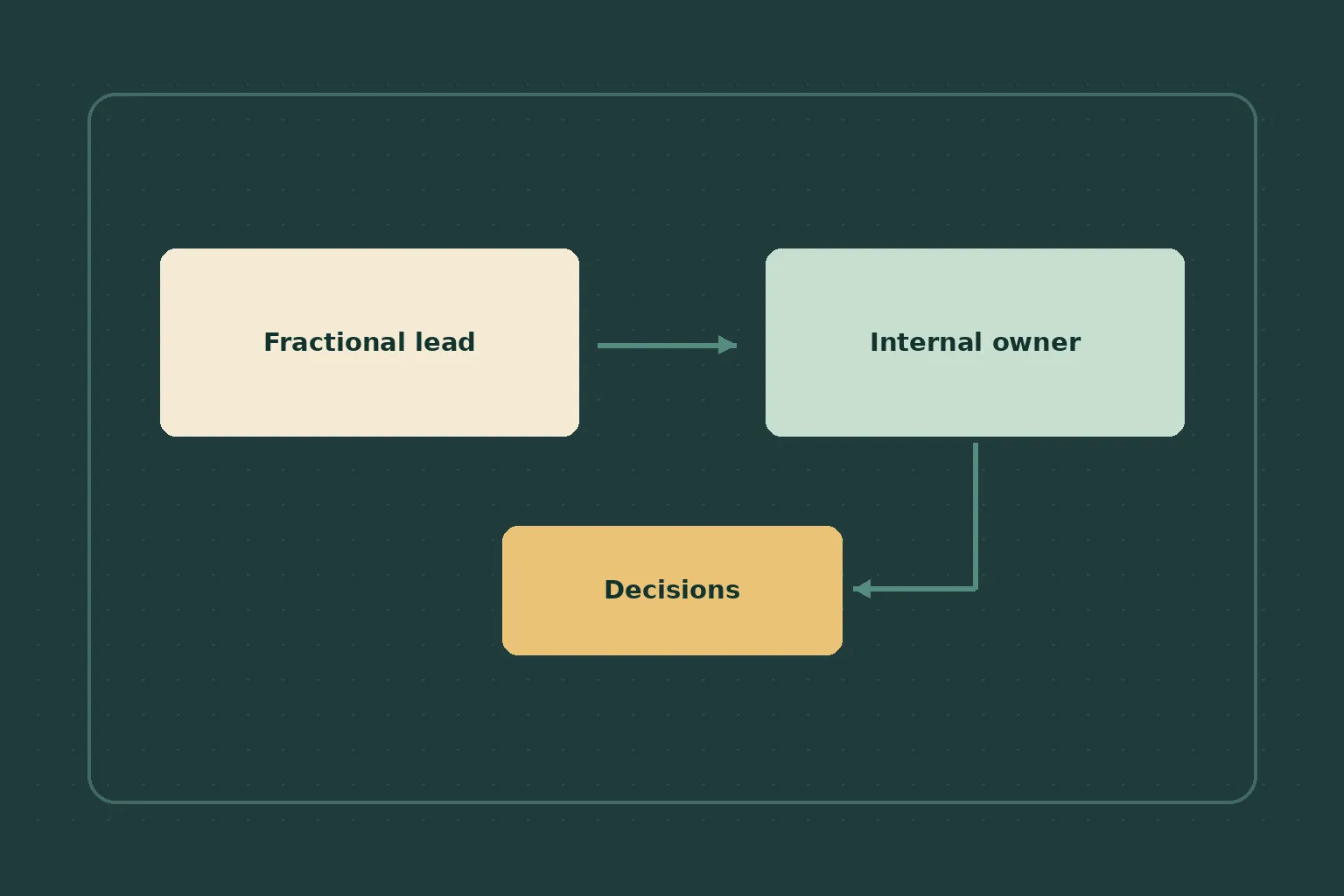
Before writing the role, separate two problems. The first is capacity: the organization knows who decides, but that person or team has too little time to coordinate a defined piece of work. The second is authority: people disagree about who can change priorities, commit staff time, or approve what goes out. Bringing in a fractional growth lead can help with coordination. The organization still needs to settle which decisions belong to it, what work it delegates, and who takes over when the scope ends.
Start with one decision that has stalled
Choose a recent business decision that affected more than one department. Write the decision as a question and list what happened when people tried to answer it. For example, a fictional organization wants to move the date of a professional outreach pilot. The outreach team can revise its calendar. Admissions has to confirm when its staff can handle general partner inquiries. Marketing needs an approved date before it updates the resource the outreach team shares.
Look for the point where the work stopped. If everyone knew the director could decide and nobody had assembled the options, the gap was coordination. If outreach and admissions each expected the other to approve the date, the gap was authority. If the director approved a date but an affected department could not do the work, the plan was missing an execution commitment. Each answer points to a different change.
Repeat the exercise with another ordinary decision to see whether the problem recurs. A single delay during an absence may call for backup coverage. A pattern of unclear authority across teams calls for a designated internal decision maker and an escalation route. Alliance’s executive and leadership advisory page describes related work on clarifying leadership responsibilities and translating decisions into accountable next steps.
Define what one person can own for a limited period
Give the proposed fractional lead a concrete assignment, the decisions they can prepare or make, and a review point. One example is coordinating a six-week project to align an organization’s approved partner materials with the staff responsible for answering general professional inquiries. The lead might compare team calendars, keep the change record current, prepare options, and follow up on agreed tasks.
Take the scope to the managers who own the underlying work. Ask which tasks the lead can complete directly and which require a department to make a change. A lead can bring the website editor an approved change. That does not automatically give the lead the authority or access to publish it. A lead can coordinate the schedule around agreed work. A manager still needs to confirm what the department can deliver.
Use the same test when you put an internal manager in the role. An internal owner can have the correct title and still lack time or authority to do the work. Give that person time to review decisions, make their scope visible to other managers, and name a backup for the work that cannot wait for their return. Alliance’s fractional growth and operational leadership page discusses defined growth and operational responsibilities alongside an organization’s own leadership team.
Put decision, execution, and handoff in separate rows
Create a short worksheet for the assignment. For each recurring decision, identify who assembles the options, who can approve a choice, whose work changes, and who records the outcome. Use names or staffed roles the team recognizes. Assign a backup where a decision cannot wait. A label such as “growth” is too broad if two people can reasonably interpret it as their authority.
| Work to assign | A scoped lead could own | Internal ownership to identify |
|---|---|---|
| Decide when to start the approved outreach test | Collect timing options, document dependencies, and recommend a date | Sponsor who approves the date and resolves a conflict between departments |
| Coordinate the agreed test | Update the working calendar, present blockers, and confirm that managers see approved changes | Managers who assign staff, confirm coverage, and carry out changes in their departments |
| Update the resource the test uses | Assemble approved revisions and check that teams can find the current version | Authorized editor and factual owners who approve or publish the revised resource |
| Review the test and hand off open work | Prepare the summary, list unresolved items, and walk through the records with the incoming owner | Continuing owner who accepts open work and maintains the decision record |
Keep authority attached to actual decisions. A lead may be allowed to sequence existing assignments within a defined project. A change that affects outreach commitments, staffing, or public information may need different approval. Write the boundary as an everyday example. “Can move internal draft reviews within the agreed week” is easier to apply than “can coordinate schedules.” “Take any change to public timing to the sponsor before it is shared” tells the lead where a routine decision ends.
Tell affected staff where to see the latest approved decisions. A message asking someone to look at a change is an update. A note asking a specific person to choose between options by Thursday is a decision request. If the team treats every note as an instruction, people may begin work while the decision is still open. Alliance’s cross-department communication and coordination page describes related work on separating updates from decision requests and making ownership visible.
Choose the arrangement around the gap
A defined fractional assignment may fit when an internal sponsor has authority, several departments know what they own, and the work needs regular coordination that existing managers cannot take on. The sponsor stays available for consequential decisions and names a person who can take over the working records. The fractional lead can spend their time preparing decisions and coordinating work instead of repeatedly asking who owns the next step.
Name or strengthen an internal owner first when decisions routinely affect several departments and staff have no consistent person to ask. Start with the decisions they need most often. Ask leadership to state who can resolve a conflicting priority, what that role can approve, and how staff should reach them. Once that is settled, the same team may find that it needs limited outside preparation, regular coordination, or no additional role for the current project.
A combination can make sense when an internal owner is new to the work. Pair that person with scoped support on a defined project. Have both attend the first review, then have the internal owner run a later review while the fractional lead observes. The goal is to learn where information, relationships, and current instructions sit so the internal owner can use them without reconstructing the engagement afterward.
In each arrangement, ask what happens between scheduled reviews. A part-time lead may be available on agreed days. An urgent business decision still needs an identified person who can act through the existing process. Set expectations for ordinary questions, questions that can wait for the next review, and changes that need a timely internal decision. The arrangement should fit the work’s actual rhythm.
Rehearse one change before staffing the role
Use the fictional outreach timing decision to test the scope. Give the participants a draft date and tell them the team responsible for responding to partner inquiries cannot cover the first two days. Ask the proposed lead to prepare options rather than resolve the issue. The options might include moving the start, limiting the initial activity, or holding until another manager confirms coverage.
Then ask who can decide, who informs each department, who updates the approved resource, and what remains on hold until the decision is recorded. Give the person responsible for the update only the information they would actually receive. Can they tell the difference between a proposed date and a confirmed date? If they cannot, establish where confirmation appears and who sends it.
Repeat the exercise with the sponsor unavailable. The proposed lead can prepare the facts and route the decision to the authorized backup. If leadership did not designate a backup, record what work can continue under the existing approval and what waits. The exercise is useful because it reveals whether the agreement works when the obvious person is unavailable, before there is a public commitment or a live change.
Give the engagement a review and a handoff
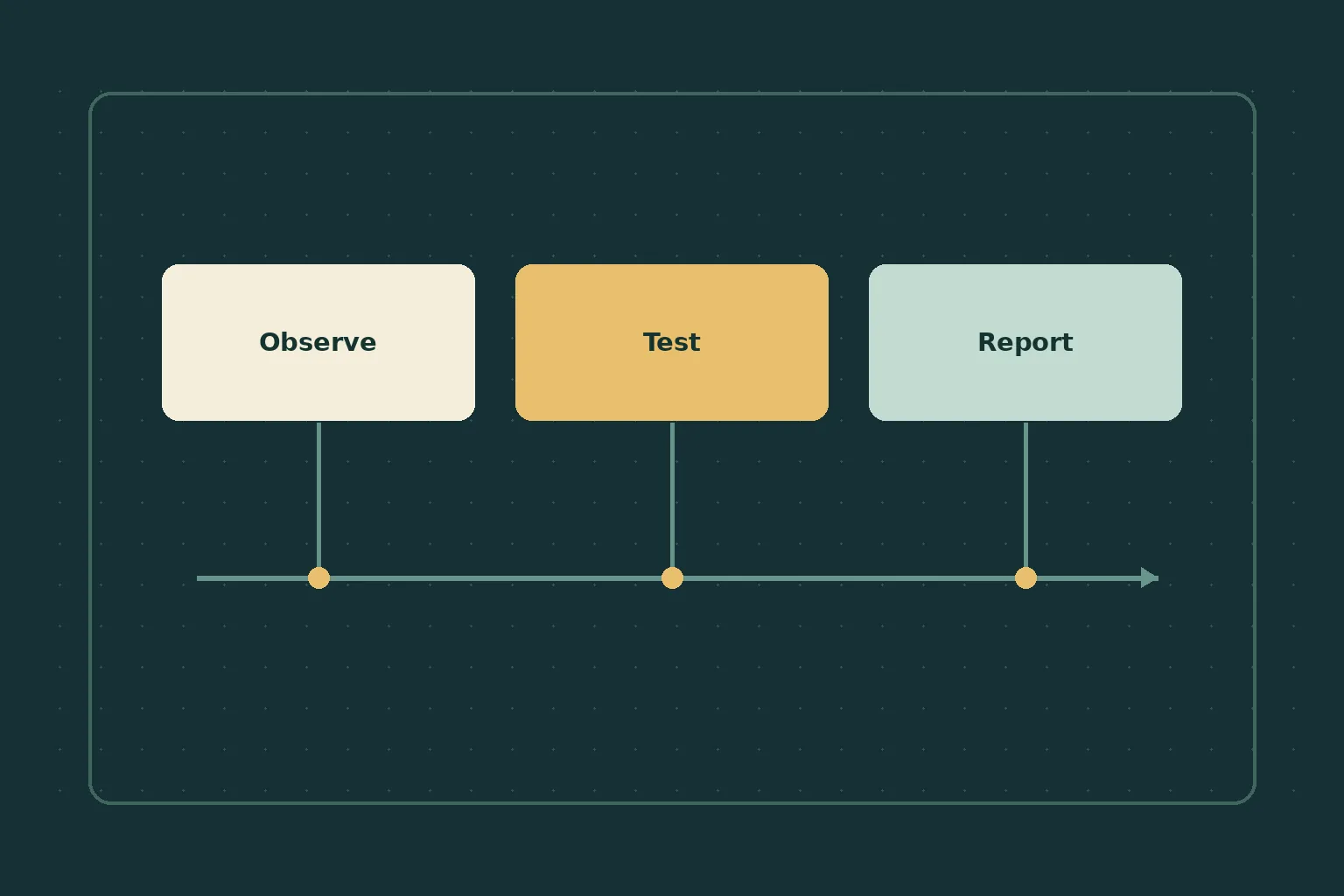
At the first regular check-in, review one recent decision from start to finish. Look for an owner, an approved action, a department that acted, and a visible result. If the record stops at “discussed,” ask where the decision went afterward. If decisions are clear but follow-through is late, the next adjustment may be an execution issue such as competing work or an inaccessible record. Deal with the actual gap rather than widening the role by default.
Decide in advance what the internal owner should receive at the end. A useful handoff includes the current priorities, a dated decision log, a clear list of open work, and directions to the authoritative records. Each live item needs an owner, the next action, and any dependency that affects timing. A folder of slides can explain the project’s history, but the next owner also needs to know how to change a decision record or ask the right person a question.
Schedule a practical transfer before the last day. Have the incoming owner use the records to look up an open item, find the person responsible for the next decision, and carry it through the next scheduled review. Ask what they would do if a relevant fact changed after the engagement. If they need the former lead’s inbox or memory to answer, have the team move that instruction or context into its approved record while both people are available. Alliance’s ongoing consulting and implementation support page describes connecting approved priorities to daily work, with internal decision makers and owners for handoffs.
A team can also rehearse what will happen to the work before closing any project access. Ask the continuing owner to point to the calendar, approved wording, and decision records they will use on their first day alone. If one item still sits in a private workspace, hand responsibility for relocating it to the internal record owner. Confirm that the successor can open the approved copy before treating the handoff as complete.
Review the arrangement against the work it was meant to do
Use the original problem statement to evaluate the arrangement. Did it make a defined project easier to coordinate? Could staff identify who made decisions? Did the internal owner take over the working records and the next open issue? Bring one example of a decision that moved and one that did not. Comparing the two gives the sponsor a clearer basis for keeping the arrangement, narrowing it, or returning the work to the team.
Before assigning the role, write one sentence for each of three responsibilities: who decides, who does the work, and who takes it over. Then test those answers against a realistic change. If the route still depends on someone being in the right meeting, the roles need more definition. If the authority is already clear and the effort needs steady coordination for a specific period, the team can scope that work without confusing it with permanent ownership.